










 About Us
 Brand
Brand
 Career
 Contact Us



 +91-7314623098




In 2026, the UAE workforce is going to see a major transition due to several forces converging at once. Rapid digitisation is changing how work gets done. AI is now a part of everyday decision-making, and the UAE tops global rankings in AI adoption in the workplace. But you also have a younger generation of employees coming to the workforce whose demands go beyond just a stable job. They want growth, purpose and flexibility.
Layered on top of this are powerful policy shifts like the UAE’s AI 2031 strategy and the Emirati Talent Competitiveness Council’s Nafis programme. All of which put together is redefining both the capabilities organisations need and the national talent they must develop.
For HR leaders, the question is no longer whether change is coming, but which changes truly matter. This blog filters out the noise and distils the five talent trends you should prioritise to be ready for the UAE workforce of 2026
What Is Changing in 2026 and Why Does It Matter?
Two major factors are going to play a key role in shaping talent trends in 2026. The first is the UAE’s AI vision: to become the global leader in AI by 2031. This is a part of the UAE’s Centennial 2071 plan to become the top country in the world. Now, while 2031 and 2071 are still far off, all organisations, big and small, are already on track and are moving steadily towards this goal.
The second is the Emirati Talent Competitiveness Council’s Nafis programme. According to it, all private sector companies with over 50 employees must have at least 10% of Emiriaties as part of their skilled workforce.
Put together, these factors put HR leaders under pressure. On the one hand, they need to dramatically increase the adoption of AI while simultaneously providing meaningful careers for Emirati talent.
With these facts as the foundation, let’s look at the five talent trends that will dominate the UAE workforce in 2026.
Trend 1: AI Becomes the Engine of Talent Decisions
AI adoption in the UAE is already at an all-time high. In 2024, the number stood at 56%. In 2025, it’s up to 80%. As a result, it has also begun to take centre stage in HR operations. Here is what to expect in 2026 in this regard.
AI in Hiring and Screening
Let’s begin with the most visible shift: recruitment, which is a highly time- and resource-intensive process. Analysis by Eman Research shows that introducing AI to this process can bring down the time to hire from an average of 45 days to 29 days. Cost-per-hire also sees a significant drop from $4,200 to $3,000.
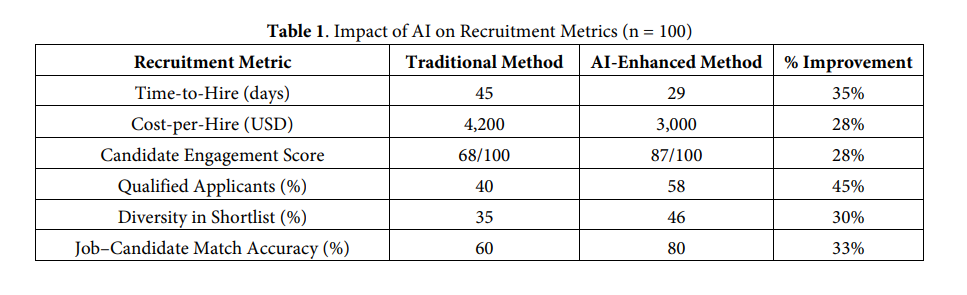
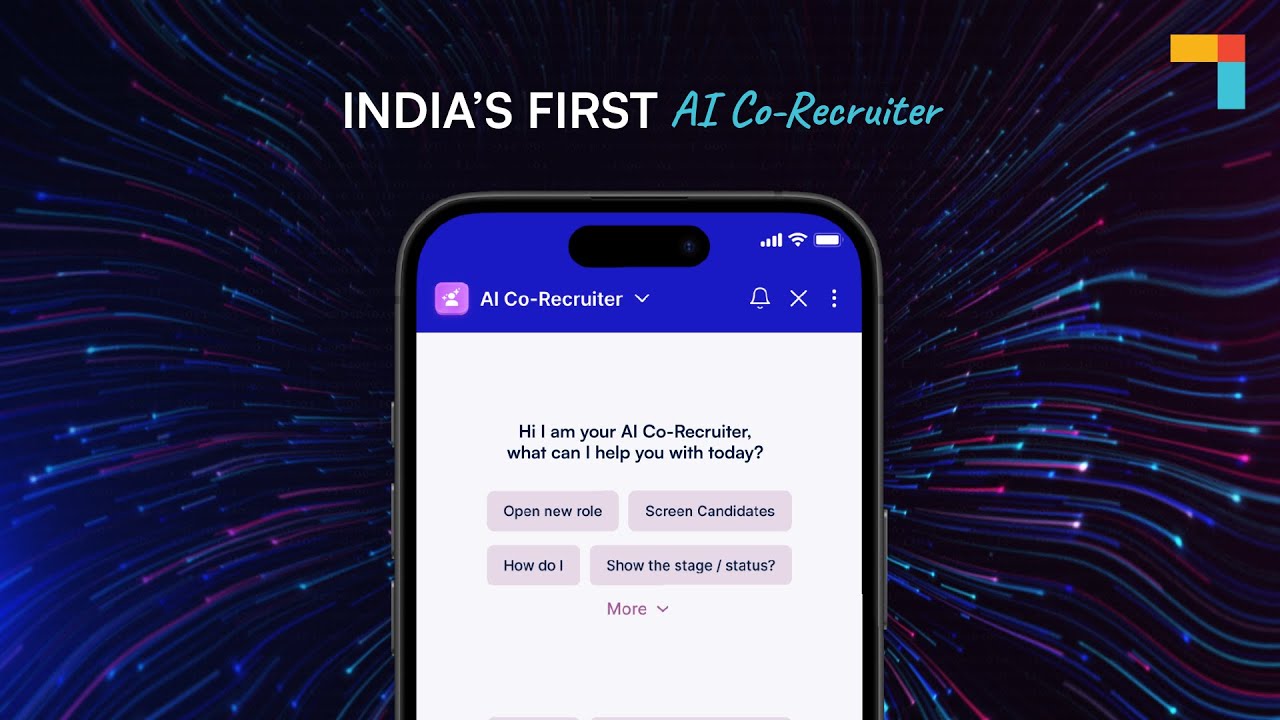
Using dedicated tools like our AI Co-recuriter can further cut manual effort across large hiring teams. The organisation using this tool reports 80% less time spent on screening, along with 85% of candidate queries being handled automatically. It’s a complete redesign of how hiring works.
AI in Engagement and Feedback
UAE’s workforce is also harnessing AI capabilities to gather feedback and improve employee engagement. Instead of relying on annual or bi-annual surveys to gather feedback, AI is used to summarise feedback, analyse patterns within, and gauge employee sentiment.
According to a Microsoft Work Trend Index, employees are turning to AI as there is less friction involved, it eliminates the fear of judgment, and is available 24/7. This shift will make it easier for HR leaders to gather the information they need to build stronger feedback cycles for their teams.
Agentic AI And New Job Roles
The next major shift is going to be toward agentic AI: tools that can make decisions, manage workflows, and handle complex processes with minimal human intervention. The implication? Over the next 12 months, AI agents will take on approximately 20% of transactional HR work.
This shift is also likely to create new roles like specialists who can design AI workflows, manage digital agents, and build new processes around them.
Trend 2: Hybrid Work Will Become the Norm in the UAE
The COVID-19 pandemic indirectly served as a proof-of-concept that work can go on regardless of where the employees are. While the rest of the world is slowly but surely trying to get employees back to their workplaces, the UAE is doubling down on hybrid work.
Shift in Hybrid Work Policy
On the 1st of April 2025, new labour regulations were implemented by the Abu Dhabi Global Market (ADGM) that incorporate remote work into the legal framework for every company operating within its jurisdiction.
As per these amendments, employee contracts in 2026 will clearly define remote and hybrid work arrangements. Companies will need to implement documented policies that cover work hours, availability expectations, and be required to provide all necessary equipment required by employees for their role.
What Does This Mean for HR Leaders?
HR leaders, too, will have to evolve to accommodate these new changes. Annual engagement surveys on their own won’t show you how hybrid and remote teams are really doing. You’ll need tools that make it easy for employees to share feedback, stay connected with their managers, and access what they need to do their jobs from anywhere.
That also means investing in systems that give people clear visibility into their goals and progress, even when most interactions are virtual. Platforms such as PeopleStrong’s performance assessment software and OKR resources like this outcome-based model guide can help by bringing goals, conversations, and support into one place. That means your hybrid teams stay engaged and properly equipped to work remotely.
Trend 3: Emiratisation Shifts From Compliance to Real Experience
2026 is the year when organisations have to meet the 10% quota of Emiratis in the workforce per the NAFIS programme. That said, this trend goes beyond just meeting the quota to avoid the AED 96,000 annual penalty for every unfilled position.
Focus on Creating Quality Careers for Emrities
Contrary to popular belief, the challenge in 2026 will not just be sourcing Emirati talent. It is providing job security for the Emiratis. According to a survey conducted by TASC Outsourcing, for 42.91% of job seekers, this is the number one priority.
However, this is not the only reason why 2026 will see this shift. The latest evaluation criteria for the Nafis Award now emphasise qualitative Emiratisation: retention rates, professional development programmes, and active use of the Nafis platform for recruitment.
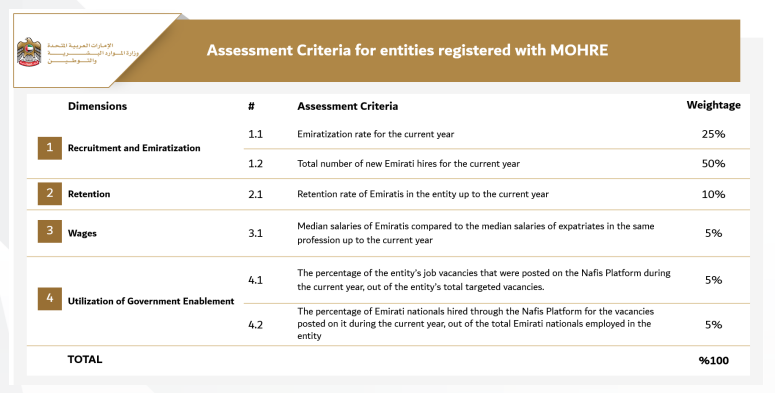
To meet the goal of getting 75,000 Emarits in the workforce, the key problem will not be hiring but retaining them. This will require addressing the experience gap by providing meaningful careers with a clear structure and room for growth.
What Does This Mean for HR Leaders?
HR leaders will need to improve the onboarding process for Emaritis. There needs to be clarity on their goals and responsibilities, and on how the role contributes to the organisation.
You will also need to explain what success looks like, which skills matter, and how they will be supported in the first 90 days. This will involve the use of more comprehensive onboarding systems that can meet and deliver these new expectations.
Trend 4: Mixed Workforce Models Will Grow Across the UAE
The UAE is already moving towards mixed workforce models, and this trend will continue into 2026. The country already has just over 1,00,000 licensed freelancers across several industries. At this rate, with which the UAE is growing, mixed workforce models will play out in several different ways.
Expansion of Project-Based Talent
Despite Emiratisation, companies still depend on short-term experts to fill skill gaps. While this concept is in no way new, based on the current trajectory of growth, this trend will continue into 2026, especially in sectors where demand spikes are unpredictable.
The UAE government is also actively supporting this move by providing freelance visas and specialised free zones like Expo City Dubai, where freelancers can operate legally. The tax-free advantage also acts as a major factor in attracting global talent.
Systems to Handle Mode of Operation
While a mixed workforce works best for an organisation’s bottom line, it also adds a layer of complexity for HR operations, which traditional Human Resource Management Systems (HRMS) aren’t designed for.
In 2026, HR teams will need platforms that track onboarding, role expectations, deliverables, and performance for every worker category. These include your permanent employees, remote workers, Emiratis, freelancers and external teams under third-party management.
Workforce Management Templates could be a possible solution that can help HT teams standardise how they track hours, allocate responsibilities, and manage distributed workforces.
Faster Cycles And Flexible Resourcing
Some sectors in the UAE are already deep into mixed workforce models. However, in 2026, this will become a standard practice. To do this, companies will have to build flexible resourcing into their workforce planning from the start.
Organisations like Oman Air have already demonstrated that it is possible and achievable.
Trend 5: How AI-Exposed Roles Will Change Skills Faster
According to the World Economic Forum’s 2025 Future of Jobs report, nearly 40% of existing skill sets will either become outdated or undergo significant overhauls within the next five years. Simply put, a skill that held value this year may not do so in the next. So what does this mean for 2026?
AI-Driven Roles Will Emerge At Breakneck Speeds
McKinsey’s Skill Change Index indicates that the demand for AI skills has grown 7x in just the past few years. Now, while this data is US-specific, if the UAE is to meet its AI 2031 goal, it too will see a similar demand.
In 2026, two major factors will drive this change:
- Adoption of more AI technology into the workforce and
- The expectation for employees to learn the tech and work alongside it.
This will present a new challenge for HR leaders – keeping pace with this growing demand.
Job Definitions, Learning Paths, and Performance Standards Will Need a Refresh
In 2026, static job descriptions will no longer work. HR teams will have to stay updated on the demands of their tech teams and continually update job descriptions to acquire the right skill sets.
The same level of adaptiveness will also be required in L&D programmes. Now, while the UAE already ranks third in terms of AI training according to KPMG, learning paths will need to get tighter and will require frequent updates.
Employees will have to be given clear guidance on what skills to learn, how to apply them, and how all of it ties back to their job roles. Expect a change in performance measurement, too. HR teams will have to rethink how they measure productivity with AI in the mix.
Continuous Skill Development Becomes a Business Requirement
In 2026, the role of HR leaders will switch from talent managers to skills strategists. You will not have to anticipate skill requirements and identify those skill gaps in the organisation.
All of this will have to be done before it becomes critical, for which you will have to build systems in place to gather real-time data instead of relying on periodic surveys. In short, in 2026, your pressure points will not only be hiring the right talent but also upskilling existing employees fast enough to match AI skill expectations.
What 2026 Means for You As HR Leaders?
The writing on the wall is clear: You need to rethink how you manage the expectations of the UAE’s workforce in 2026. The key is not to look at each trend in isolation but to recognise that each of them is interwined and work accordingly.
What you need is a clear approach to handle this change. This starts with creating the infrastructure and the framework to support these shifts and adapting yourselves to be agile.
The final piece of the puzzle will be management principles that can handle the switch to a mixed workforce working in a hybrid work environment, along with increased AI adoption in the mix. The sooner you make this happen, the better positioned you will be to execute on the UAE’s ambitious vision for 2031 and beyond.
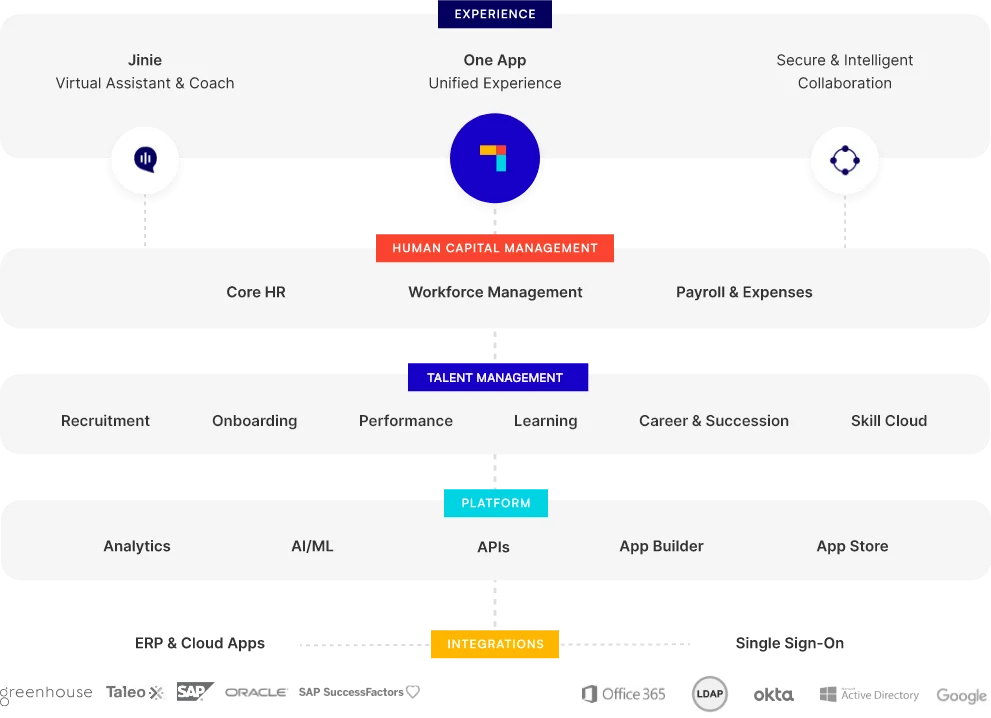
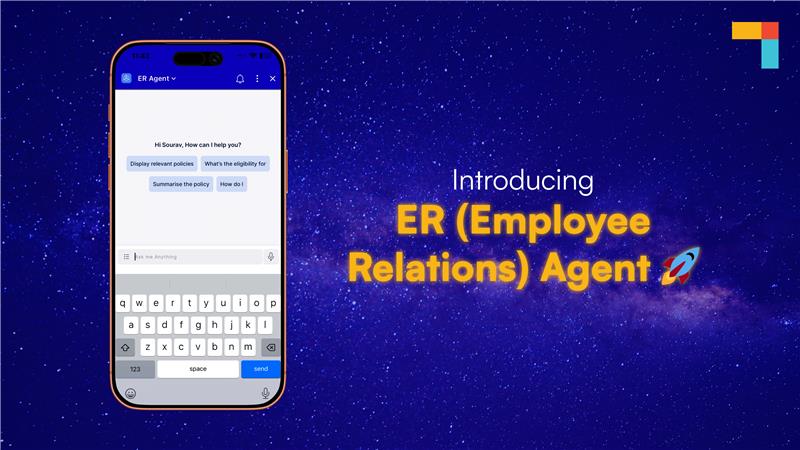
Now, to make all this happen, you need an underlying HR infrastructure to support it. PeopleStrong‘s comprehensive HR Tech 4.0 platform is built for exactly this kind of complexity. From AI-powered recruitment tools to ER Agents that can handle routine HR queries autonomously, its capabilities can and will equip you to meet the demands of 2026.
Talk to our experts to modernise your HR ecosystem with PeopleStrong today!