











 About Us
 Brand
Brand
 Career
 Contact Us



 +91-7314623098







Think about reporting to work every day, fully knowing that your contributions are critical, your decisions have weight, and your efforts are celebrated. Now, think about the reverse – being micromanaged, not being trusted at all, and feeling as though you are stuck in a monotonous routine without any form of control.
Your business’s employee empowerment measures can either make or break the employee experience in the scenarios outlined above.
A study of 7,000 employees noted that those who claim to feel empowered have levels of engagement at the 79th percentile, while those who do not are at the 24th. That is a huge disparity. Empowered employees are the backbone of any motivated, high-performing, enhanced workforce.
But what does employee empowerment mean in the context of Human Resource Management, and how can companies nurture a culture that promotes it? Let’s delve into these questions.
What is Employee Empowerment?
Employee empowerment is a managerial strategy that gives employees the freedom and authority to make decisions and access the resources necessary to ensure they take responsibility for their tasks. Rather than depending on a hierarchical structure for constant monitoring, empowered employees are trusted to make decisions, successfully resolve issues, and actively participate in achieving business goals.
Engagement is powerfully correlated with empowerment – businesses with high levels of employee engagement are 21% more profitable than those businesses with low employee engagement levels.
Empowering employees is giving them the right resources, training, and assistance to work autonomously within the company’s framework. This initiative helps in improving the culture of accountability, engagement, and innovation within the organization. especially when supported by employee engagement survey tools that help leaders understand employee needs and workplace sentiment.
How Does Employee Empowerment Work?
Employee empowerment involves creating an environment where employees have the information, resources, authority, and support needed to make decisions within their areas of responsibility. Rather than relying solely on hierarchical decision-making, organisations establish clear goals, expectations, and accountability frameworks that enable employees to take ownership of their work.
Effective employee empowerment is supported by transparent communication, access to relevant information, ongoing development opportunities, and trust between employees and leaders. When employees are empowered to make decisions and solve problems independently, organisations can improve responsiveness, encourage innovation, and enhance overall workplace effectiveness.
Why is Employee Empowerment Important?
Employee empowerment helps organisations build a more engaged, agile, and productive workforce. When employees are trusted to contribute ideas, make decisions, and take ownership of their responsibilities, they are often more motivated to perform at their best and contribute to organisational success.
Empowerment can also support faster decision-making, improved collaboration, stronger customer experiences, and greater workforce adaptability. By fostering a culture of trust and accountability, organisations can create an environment where employees feel valued, supported, and invested in achieving shared goals.
Objectives of Employee Empowerment
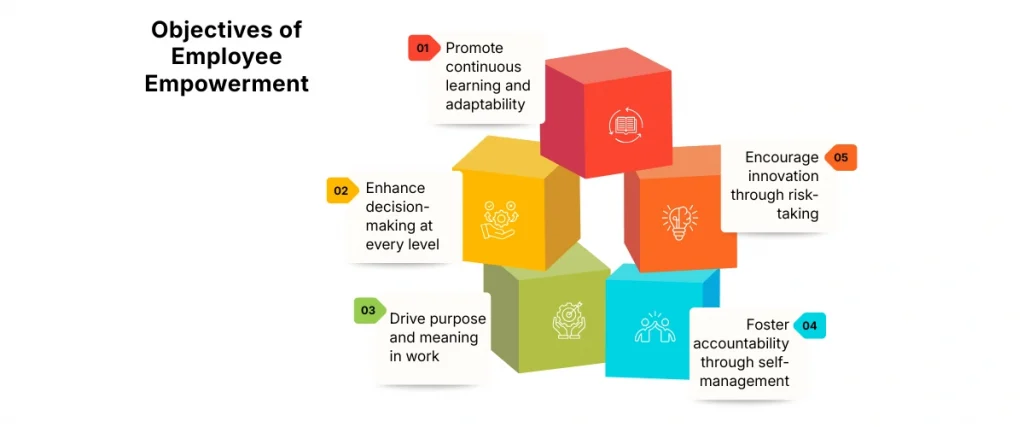
Promote Continuous Learning and Adaptability
Employee empowerment encourages individuals to expand their capabilities, develop new skills, and adapt to changing business requirements. Providing opportunities for continuous learning helps employees build confidence and respond effectively to evolving workplace challenges.
Enhance Decision-Making at Every Level
One of the primary objectives of employee empowerment is to enable informed decision-making across the organisation. Employees who are closest to day-to-day operations often have valuable insights that can contribute to improved efficiency, customer experiences, and business outcomes.
Drive Purpose and Meaning in Work
Empowerment helps employees understand how their contributions support broader organisational objectives. When individuals can see the impact of their work, they are more likely to feel engaged, motivated, and connected to the organisation’s success.
Foster Accountability Through Self-Management
Employee empowerment encourages individuals to take ownership of their responsibilities, priorities, and outcomes. By providing autonomy alongside clear expectations, organisations can promote accountability while supporting greater employee confidence and professional growth.
Encourage Innovation Through Risk-Taking
Empowered workplaces create opportunities for employees to share ideas, explore new approaches, and contribute to continuous improvement. Encouraging responsible experimentation and learning from experience can help organisations foster innovation while supporting long-term growth and adaptability.
Benefits of Employee Empowerment: Why It’s Worth It
Certain companies enhance employee engagement through fresh ideas, work initiatives, and actively improving workplace culture. Employees’ work performance is also taken into consideration.
Decision-makers providing employee empowerment benefits to employees is directly proportional to increased productivity and lowered turnover. Here’s the breakdown of how it affects empowerment on the employee level and business level:
For Employees:
- Increased motivation and job satisfaction: Employees who are given a lot of autonomy and trust feel more engaged in their work.
- Improved skills and professional growth: A chance to make a decision provides learning opportunities, and this fosters career advancement.
- Greater confidence and ownership: Employees feel more accountable for tasks ahead, which helps them contribute to roles beyond their official scope.
- Stronger workplace relationships: Empowerment promotes the development of open communication, hence better collaboration.
- Higher work-life balance: Decentralized decision-making increases tranquility and reduces stress, hence enhancing wellness.
For Organizations:
- Higher productivity and innovation: Employees who feel challenged tend to take initiative and provide solutions to problems in a more creative manner, which in turn helps in innovation.
- Stronger employer branding and reduced attrition: A culture of empowerment empowers everyone and also helps to recruit and retain the best-skilled professionals.
- Strong leadership pipeline: Employees tend to learn leadership skills which helps to fill gaps in succession planning.
- Better decision-making at all levels: Everyone who knows the set business philosophy makes sound decisions.
- Improved customer experience: Employees in charge of the customers are able to serve them proactively, having been empowered.
- Lower operational bottlenecks: Deciding on the office itself reduces the time wasted on processes and increases ineffectiveness as there is not enough trust.
Role of HR in Building an Empowered Workforce
HR has a huge impact on making employees feel trusted, valued, and capable of making meaningful contributions to the organization. It also helps address disengagement. Strong communication among employees allows employers to deliver 47% higher returns to the shareholders. In contrast, 1 in 3 disengaged employees do not believe their employer can be trusted.
This ranges from policy formulation and implementation for self-governance to self-improvement, easy access to necessary resources, and skills that employees need to be proactive to succeed.
Here are some suggestions to broaden and deepen the defined strategies of HR for employee empowerment:
- Cultivating the right environment through training and upskilling enables an employee to be competent in making decisions.
- Supporting open communication so employees feel appreciated and valued.
- Setting clear objectives and parameters while maintaining some freedom in how they are achieved.
- Identifying and celebrating proactivity to strengthen already developed positive behaviors.
How HR Technology Simplifies Empowerment Efforts
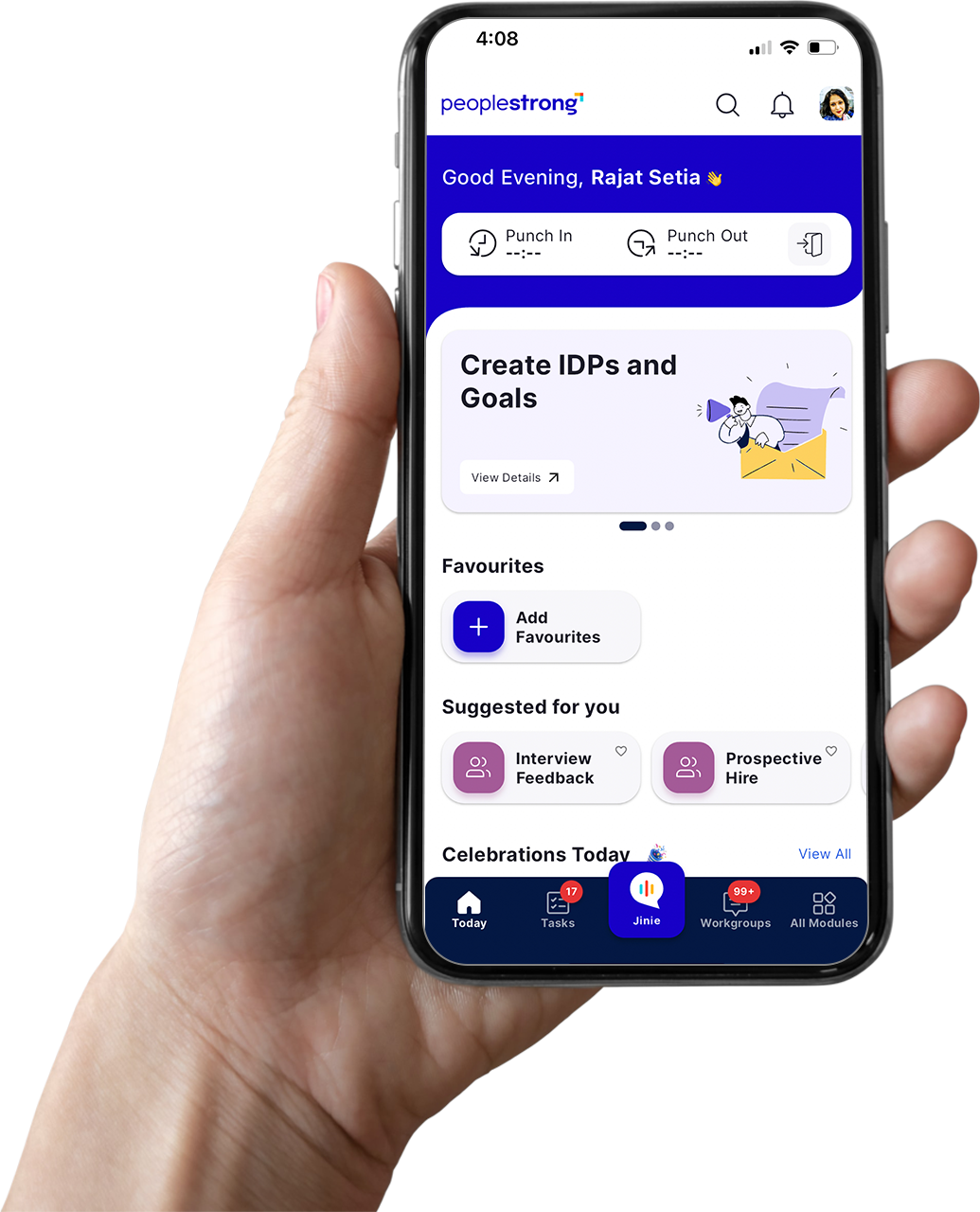
Contemporary HR tools simplify and scale the notion of empowerment. Platforms such as Peoplestrong simplify and centralize performance management, set goals, and provide ongoing feedback, allowing employees to monitor their development and take responsibility for it.
Through AI-generated insights and automated workflows, HR personnel can shift their focus from overseeing every detail to building a constructive micromanaging office environment.
Types of Employee Empowerment in the Workplace
Employee empowerment takes different forms, depending on how organizations support and enable their workforce. It can be structural, psychological, social, or technological, each crucial to creating a more engaged and productive team.
Below is a breakdown of the different types of employee empowerment:
| Type of Empowerment | Key Focus | How It Works |
| Structural Empowerment | Decision-making authority & leadership involvement | Employees are given autonomy to make decisions, participate in leadership discussions, and influence company policies. |
| Psychological Empowerment | Boosting confidence & motivation | Employees feel a sense of purpose, competence, and ownership over their work, leading to higher engagement. |
| Social Empowerment | Encouraging collaboration & knowledge sharing | Organizations promote teamwork and open communication, ensuring employees support each other’s growth. |
| Technological Empowerment | Enabling efficiency through HR Tech | Platforms like PeopleStrong use AI and ML-driven innovations to automate tasks, provide real-time insights, and enhance productivity. |
Factors that Influence Employee Empowerment
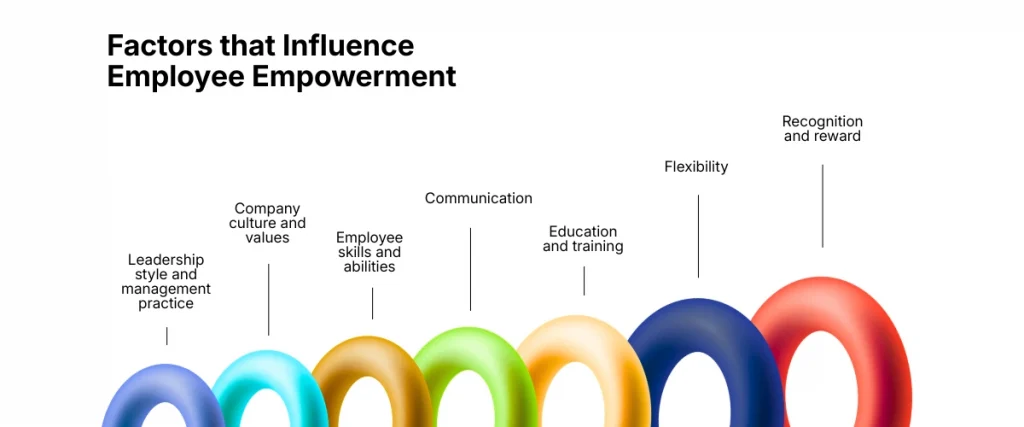
Leadership Style and Management Practice
Leadership plays a significant role in shaping employee empowerment. Managers who encourage autonomy, provide guidance, and support decision-making help create an environment where employees feel confident taking ownership of their work. Leadership approaches that promote trust, accountability, and collaboration can strengthen empowerment across the organisation.
Company Culture and Values
Organisational culture influences how comfortable employees feel contributing ideas, making decisions, and taking initiative. A culture that values transparency, inclusion, collaboration, and open communication is more likely to support employee empowerment and encourage active participation across teams.
Employee Skills and Abilities
Employee empowerment is most effective when individuals have the skills, knowledge, and confidence required to perform their responsibilities successfully. Organisations should ensure employees have access to the resources, guidance, and support needed to make informed decisions and contribute effectively.
Communication
Clear and consistent communication is essential for employee empowerment. Employees are better positioned to make decisions when they understand organisational goals, business priorities, and role expectations. Transparent communication also helps build trust and alignment across the workforce.
Education and Training
Learning and development initiatives help employees build the capabilities needed to take on greater responsibility and make informed decisions. Training programmes, skill development opportunities, and continuous learning initiatives can strengthen employee confidence and support workplace empowerment.
Flexibility
Providing employees with flexibility in how they approach their work can encourage greater ownership and accountability. Flexible work practices and outcome-focused approaches can help employees contribute more effectively while supporting productivity and innovation.
Recognition and Reward
Recognition programmes play an important role in reinforcing positive behaviours and contributions. Acknowledging employee achievements, innovation, and initiative can encourage greater engagement while supporting a culture where employees feel valued and empowered.
What Does an Empowered Organisation Look Like?
Decentralised Decision-Making
In an empowered organisation, employees have appropriate authority to make decisions within their areas of responsibility. Clear guidelines and accountability frameworks enable teams to respond efficiently while remaining aligned with organisational objectives.
Opportunities for Skill Development
Empowered organisations invest in continuous learning and professional development. Employees are encouraged to build new skills, explore career growth opportunities, and participate in development programmes that support both individual and organisational success.
Collaborative Culture
Collaboration is a key characteristic of empowered workplaces. Employees are encouraged to share ideas, work across functions, and contribute to organisational goals through open communication and knowledge sharing.
Accountability with Support
Employee empowerment balances autonomy with accountability. While employees are trusted to manage responsibilities and make decisions, they also receive the guidance, resources, and support needed to achieve desired outcomes.
Low Micromanagement Levels
Empowered organisations focus on outcomes rather than excessive oversight. Managers provide direction and support while allowing employees the flexibility to determine how work is completed most effectively.
Surveys and Feedback Mechanisms
Regular feedback channels help organisations understand employee perspectives and identify opportunities for improvement. Employee surveys, feedback programmes, and open communication forums support continuous dialogue and contribute to a culture of trust and engagement.
Process of Employee Empowerment: 5 Steps to Success
A structured approach ensures employee empowerment and leads to increased engagement and productivity. Here’s a five-step process to achieve successful employee empowerment.
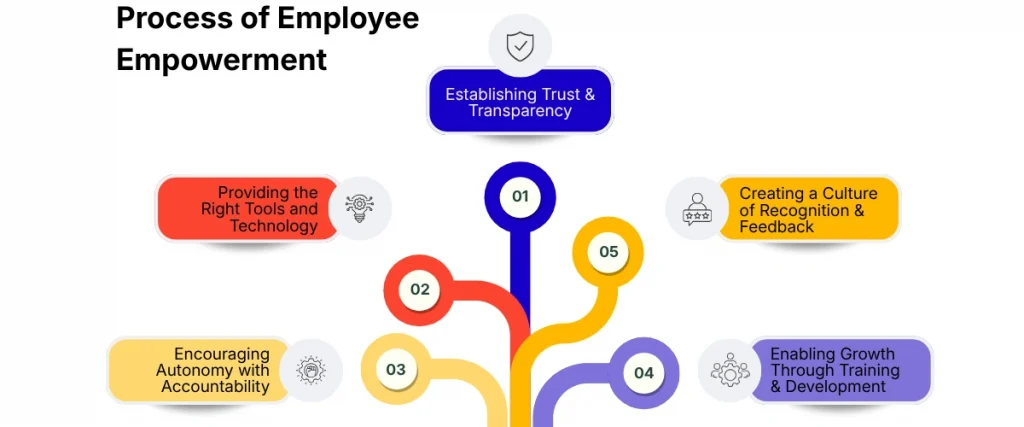
Step 1: Establishing Trust & Transparency
Transparency and trust are crucial for positive employee engagement, but there only seems to be a 9% communication skills effectiveness rating with the surveyed employee engagement index.
The first pillar of employee empowerment is trust. Employees take initiative and make informed business decisions when they know that their leaders will support them. To build transparency, HR is responsible for:
- Communication of roles, responsibilities, and expectations.
- Fostering two-way communication between leadership and employees.
- Communicating company goals, strategies, and performance metrics so they resonate with employees’ efforts.
Building trust takes time and requires the right steps. Employee’s willingness to take ownership and make mistakes takes time. The more freedom they have in terms of making mistakes, the more ownership they are willing to take. Nurturing a culture that focuses on learning from mistakes instead of punishing them is essential for long-term empowerment.
Step 2: Providing the Right Tools and Technology
Employees can perform their work effectively only when they have the right resources at hand. Inadequate tools or old processes can hinder initiative. Modern HR technology scales an organization’s ability to empower employees by facilitating communication, collaboration, and HR self-service functions.
Empowerment through technology is critical—companies that apply HR technology for collaboration and workflow automation can achieve 23% reduced human errors, which increases productivity.
For example, Peoplestrong’s talent management platform enables employees to view training, performance insights, and collaboration tools in real time. With PeopleStrong, decisions do not wait for managerial approvals. Employees can actively manage their workload, monitor and update their progress, and stay engaged regardless of location.
Step 3: Encouraging Autonomy with Accountability
Allowing autonomy when there is no accountability can be disastrous, and micromanaging is not a viable solution as it can suppress motivation. Creating a balance means clearly defining goals and allowing employees to decide how they achieve them.
HR teams can enable this by:
- Moving away from micromanagement to managing by objectives.
- Encouraging a mentorship role for managers instead of a control role.
- Empowering employees to make decisions within clear boundaries.
- Adopting performance management systems that focus on results rather than processes and compliance.
A greater sense of ownership and serious engagement toward one’s work comes with the realization that autonomy bears responsibility.
Step 4: Enabling Growth Through Training & Development
Empowerment is not limited to decision-making but also entails adequate training that prepares one for success. Continuously learning new skills gives employees the confidence to undertake new tasks.
Despite 41% citing it as an important aspect of job satisfaction, only 29% are pleased with the progression in their careers.
As HRs, you can drive empowerment through:
- Constructing individual-centric personalized learning paths that align with their professional goals.
- On-the-job training and mentorship-based development programs.
- Granting access to industry-relevant e-learning resources and certifications.
- Fostering cross-departmental teamwork for multi-functional skill building.
Step 5: Creating a Culture of Recognition & Feedback
In a study conducted recently, 37% of employees cited recognition from their superiors as a distinguishing factor towards their success. Furthermore, 85% of employees have shown that they’re more proactive when receiving consistent feedback.
Appreciation empowers employees, and positive actions are encouraged. Employees feel valued and, in turn, are willing to go beyond their job specifications. Moreover, constructive criticism assists them in developing and honing their abilities.
Comprehensive feedback and recognition culture consists of:
- Instant appreciation via digital channels.
- Social recognition among colleagues to promote teamwork.
- Regular feedback meetings with line managers.
- A way for employees to provide feedback to management.
Tips and Best Practices for Employee Empowerment
To create a fully engaged workforce, organizations must have a culture where employees trust, feel capable, and are motivated to take initiative. Follow these 5 best practices to maximize employee empowerment in human resource management:
1. Encourage Employee-Driven Problem-Solving
Employees should use an initiative-driven approach rather than wait for managers to make the decisions. To achieve this, employees could take up challenges and try to come up with real, actionable solutions.
One suitable method is to utilize “problem-solving sessions,” where teams are divided into groups and analyze real workplace issues.
Moreover, some organizations can create “innovation hours” where employees work on novel ideas to improve current processes. This promotes responsibility and proactive thinking.
2. Set Clear Expectations and Provide Autonomy
An employee’s primary goal should be well defined but the methods used to achieve them need to be flexible. In companies, setting goal-focused workflows may be a preferred way of work since they do not need to be micro-managed, nor are they required to follow rigid steps. Instead, employees can be monitored by how they perform, and companies can set goals for them.
For example, defining key performance indicators enables employees to work with minimal supervision and still meet business goals. In this regard, autonomy also means allowing employees to determine how and when they work, provided the results are satisfactory.
3. Offer Ongoing Learning & Career Growth Opportunities
An empowered workforce must have access to constant learning and career advancement opportunities. Modern learning approaches can be implemented with gamification, which helps accelerate performance by creating an engaging environment that capitalizes on employees’ strengths.
With learning and development in mind, companies can implement digital learning platforms where employees can access training specific to their needs, multi-level management courses, and various industry certifications. The same applies to tools that monitor progress towards personal and professional goals and contribute to value realization.
4. Establish Continuous Feedback Mechanisms
Empowerment works in environments that not only solicit feedback from employees but offer regular, constructive criticism where idea sharing is encouraged.
Rather than confining themselves to annual reviews, companies may opt for continuous feedback loops where employees are constantly given feedback about their work, as well as cases where they can share their thoughts.
A formal feedback system might involve monthly check-in meetings between managers and staff, instantaneous recognition of milestone achievements, and peer evaluation tools where colleagues can give feedback on each other’s performance.
5. Use HR Tech to Streamline Empowerment Initiatives
Technology plays a critical role in making empowerment seamless and scalable. Organizations can utilize HR platforms to automate routine tasks, provide real-time performance insights, and enable employees to access career development resources without waiting for approvals.
Self-service HR portals allow employees to track their learning progress, set career goals, and request feedback instantly. AI-driven insights can also help personalize learning recommendations, ensuring employees receive relevant training that aligns with their strengths and career paths.
How to measure employee empowerment success
Measuring employee empowerment requires organisations to evaluate both employee perceptions and business outcomes. A combination of workforce feedback, engagement data, and operational metrics can provide a more comprehensive understanding of empowerment levels across the organisation.
Employee engagement surveys can help assess whether employees feel trusted, supported, and empowered to make decisions within their roles. Organisations may also monitor indicators such as participation in learning programmes, internal mobility, and employee feedback to understand how empowerment initiatives are influencing the workforce experience.
From an operational perspective, organisations can track metrics such as employee retention, productivity, customer satisfaction, project delivery timelines, and innovation outcomes. Reviewing employee-generated ideas, process improvement initiatives, and cross-functional collaboration efforts can also provide valuable insight into how effectively empowerment is being embedded within the workplace culture.
Together, these measures help organisations evaluate the impact of employee empowerment initiatives and identify opportunities for continuous improvement.
Case Study in Action: How Cholamandalam Finance Empowered 10,000+ Employees with a Transparent Performance System
Imagine managing 10,000+ on-field employees across 1,166 branches, each expecting a fair, transparent, and bias-free performance review. For Cholamandalam Finance, a leading financial services provider, this was a major challenge. Traditional review processes were slow, subjective, and lacked consistency—leading to dissatisfaction and disengagement.
To fix this, the company introduced an automated, data-driven performance management system that put fairness and efficiency at the center of employee empowerment. The results?
✅ 30 days: Performance reviews for 10,000+ employees were completed in record time.
✅ 87% employee agreement: Staff trusted the system-generated ratings, eliminating doubts about fairness.
✅ 1,166 branches streamlined: A complex, multi-location review process was simplified like never before.
By using technology to remove bias and speed up evaluations, Cholamandalam Finance empowered its workforce with clarity, trust, and accountability—all key drivers of engagement and performance.
This transformation proves that when employees feel valued and fairly assessed, they perform better, stay motivated, and contribute more to business success.

Read Full Case Study: How Cholamandalam Finance Built a High-Performance Team
Empowerment is the Key to a Thriving Workforce: Make Sure You Do it Right
Employee empowerment isn’t just a nice-to-have—it’s a strategic advantage that drives engagement, productivity, and innovation. By developing trust, providing autonomy, enabling growth, and using HR technology, organizations can create a workforce that’s motivated, accountable, and future-ready.
The right tools make empowerment seamless, from streamlining performance management to enhancing career growth and collaboration. Modern HR tech solutions automate workflows, provide real-time insights, and ensure employees have everything they need to succeed.
Looking to build a more engaged and high-performing workforce?
Explore PeopleStrong’s HR Tech 4.0 solutions—trusted by top enterprises across APAC—to simplify and scale your employee empowerment strategy.
Discover how PeopleStrong can transform your workforce today!

FAQs
What are the three elements of employee empowerment?
Employee empowerment is commonly built on three key elements: access to information, decision-making authority, and accountability. Employees should have the knowledge required to perform their roles effectively, the confidence and authority to make appropriate decisions, and clear ownership of their responsibilities and outcomes.
What are examples of employee empowerment?
Examples of employee empowerment include allowing employees to make role-related decisions independently, encouraging participation in problem-solving initiatives, involving teams in decision-making processes, and providing opportunities to contribute ideas for business improvement. Empowerment can also include self-directed learning, cross-functional collaboration, and ownership of projects or customer interactions.
How do you improve employee empowerment?
Organisations can strengthen employee empowerment by promoting transparency, providing access to relevant information, encouraging participation in decision-making, and offering development opportunities. Clear communication, supportive leadership, and well-defined responsibilities can also help employees feel more confident in taking ownership of their work.
What is the manager’s role in employee empowerment?
Managers play an important role in creating an environment where employees feel trusted and supported. This includes setting clear expectations, providing guidance and resources, encouraging independent thinking, and helping employees develop new skills. Effective managers focus on enabling success rather than controlling every aspect of how work is completed.
How HR can help foster employee empowerment?
HR can support employee empowerment by developing policies, programmes, and workplace practices that encourage autonomy, collaboration, and professional growth. This may include leadership development initiatives, learning opportunities, career development frameworks, recognition programmes, and performance management practices that support employee ownership and accountability.
How can employee empowerment positively impact organisational culture?
Employee empowerment can contribute to a more collaborative, engaged, and inclusive workplace culture. When employees feel trusted to make decisions and contribute ideas, organisations often benefit from improved communication, stronger teamwork, higher engagement levels, and greater innovation across teams.
How can employee empowerment benefit customer satisfaction?
Empowered employees are often better positioned to respond quickly to customer needs and resolve issues effectively. Providing employees with appropriate decision-making authority can help improve responsiveness, enhance service quality, and contribute to a more positive customer experience.
Can employee empowerment lead to conflicts within the organisation?
Employee empowerment can create challenges if responsibilities, decision-making boundaries, or expectations are not clearly defined. Establishing clear guidelines, effective communication practices, and accountability frameworks can help organisations encourage empowerment while maintaining alignment and consistency across teams.
How does employee empowerment differ from traditional management styles?
Traditional management approaches often rely on hierarchical decision-making and greater managerial oversight. Employee empowerment focuses on giving employees more autonomy, encouraging participation in decision-making, and creating opportunities for individuals to take ownership of their work while remaining aligned with organisational goals.
Can employee empowerment backfire?
Employee empowerment is most effective when supported by appropriate training, resources, and guidance. Challenges may arise if employees are given decision-making authority without sufficient information, support, or clarity regarding expectations. Establishing clear frameworks can help organisations balance autonomy with accountability.
How does technology facilitate employee empowerment in the modern workplace?
Technology can support employee empowerment by providing access to information, self-service tools, collaboration platforms, learning resources, and performance insights. Modern workplace technologies enable employees to complete tasks more efficiently, access relevant data independently, and collaborate effectively across locations and teams.
What are employee empowerment techniques?
Common employee empowerment techniques include delegation of responsibilities, participative decision-making, continuous learning opportunities, coaching and mentoring programmes, employee recognition initiatives, cross-functional collaboration, and regular feedback mechanisms. These approaches help employees build confidence, capability, and ownership.
What’s the right time for employee empowerment?
Employee empowerment is most effective when embedded as an ongoing organisational practice rather than introduced only in response to specific challenges. Organisations that encourage autonomy, trust, and accountability as part of their culture are often better positioned to support employee engagement, innovation, and long-term business performance.