












 About Us
 Brand
Brand
 Career
 Contact Us



 +91-7314623098



Employee leave regulation in India is a complex mix of statutory requirements, regional labour law and changing workplace norms. Organisations need to have different leave types to comply with statutory requirements of the Factories Act, Shops and Establishments Acts (state-specific), Maternity Benefit Act, etc., and to meet personal, cultural and medical needs.
Whether it is for industrial units or corporate offices, a well-defined leave policy assures statutory compliance, reduces administrative disputes and maintains smooth operational continuity. Given below is a quick summary of the 11 major types of leaves in India for employees along with their purpose, legal status and common policy guidelines.
What are Leaves?
In the context of employment, leave is time away from work which is authorised and during which the employee’s job is protected, and in most cases, pay continues as usual. There are many reasons to take leave – physical recuperation, medical treatment, family obligations, personal rites of passage and the simple work-life balance. In India, there are three overlapping sources of leave entitlements – central labour laws like the Factories Act and the Maternity Benefit Act, state-level Shops and Establishments Acts and company-specific HR policy. To understand the different types of leave in a company context, you need to first understand which of the three buckets a given leave falls under. This is because this is what determines whether it’s a legal minimum or a discretionary perk.
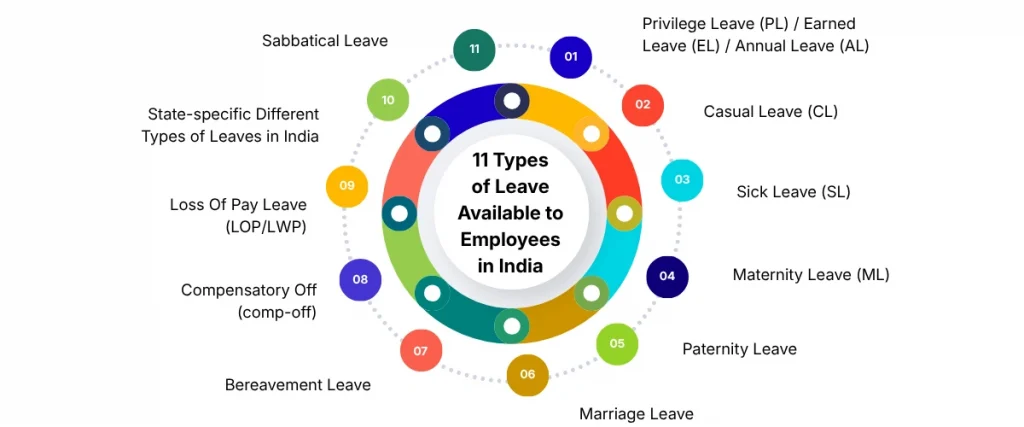
11 Types of Leave Available to Employees in India
Here’s a breakdown of the most common types of leaves in India, covering both statutory entitlements and the policy-driven categories most organisations add on top.
Privilege Leave (PL) / Earned Leave (EL) / Annual Leave (AL)
Earned leave constitutes the primary long-duration paid leave that accrues based on days worked. This is why some organisations refer to it as “privilege leave,” and others as “annual leave.” As per the Factories Act, 1948, any worker who works for 240 days in a calendar year will earn leave @ 1 day in 20 days worked, and the Shops and Establishments Acts of various states give anywhere from 12 to 30 days annually. This is generally the only leave category that can be carried forward to the next year and encashed for its cash value, subject to a cap, most commonly 30 days under the Factories Act, though some states allow higher ceilings. Because it’s meant for planned time off, employees are typically expected to apply well in advance rather than take it on short notice.
Casual Leave (CL)
Casual Leave is for short, unforeseen personal matters such as a family emergency, a technician coming to your home or a sudden errand that cannot wait. Most state Shops and Establishments Acts make it mandatory, but there is no one central statute that makes it mandatory. Almost all companies provide it as a matter of practice. Standard entitlements are 6 to 12 days a year, often with a restriction of two or three days at a time. Employers usually do not need a detailed reason. Casual leave is use-it-or-lose-it, unlike earned leave, which is carried forward or encashed at the end of the year.
Sick Leave (SL)
Sick leave (also called medical leave) is paid time away from work for employees to recover from illness or injury. No national law specifies the exact number of days and the entitlement comes from state rules and company policy. Indian employers mostly offer somewhere between 7 to 15 days a year. Normally, employers ask for a medical certificate if a sick leave lasts more than two or three days in a row. Like casual leave, sick leave not taken is usually not accruable or payable on departure or termination of an employee.
Maternity Leave (ML)
The Maternity Benefit Act (amended 2017) entitles female employees with a minimum of 80 days of service in the preceding 12 months to paid maternity leave. The statutory framework provides for 26 weeks of fully paid leave for the first two children (up to 8 weeks before delivery), reducing to 12 weeks for a third child, adoptive or commissioning mothers. The law also requires crèche facilities for organisations with 50 or more employees and allows for work from home arrangements after leave where job roles allow, applicable to establishments with 10 or more workers.
Paternity Leave
There is no central law requiring paternity leave in the private sector, unlike the maternity leave. Government employees are entitled to 15 days under the Central Civil Services (Leave) Rules, but paternity leave in private companies is a policy decision, usually between 5 and 15 days, although some progressive employers offer a lot more as a part of their talent strategy. It’s available to everyone for a certain period of time after the child is born or adopted and requires documentation, such as a birth certificate.
Marriage Leave
Marriage leave gives employees time off for their own wedding, and occasionally for close family weddings, though it isn’t a legal requirement anywhere in India. Companies that offer it typically provide 3 to 5 days, sometimes up to 10-15 in more generous policies, often requiring proof like a wedding invitation or marriage certificate. Employees at companies without a dedicated marriage leave category typically just use their earned leave for wedding-related time off.
Bereavement Leave
The bereavement leave, alternatively known as compassionate leave, provides the employee with paid leave in case of the death of an immediate family member, helping him/her cope with the situation and perform his or her duties. It is not a statutory obligation in India, thus it becomes solely up to the management to provide such leave, usually ranging from 3 to 12 days based on the relation with the deceased.
Compensatory Off (comp-off)
Comp-off is granted when an employee works on a designated day off, a weekend, a public holiday, or significantly beyond normal hours, as compensation for that lost personal time. Most policies grant one paid day off for each qualifying day worked, and employees are typically required to use it within a defined window, commonly 30 to 90 days, or it lapses. Some companies offer a choice between comp-off and overtime pay depending on the role.
Loss Of Pay Leave (LOP/LWP)
Loss of Pay leave, sometimes called Leave Without Pay, applies when an employee has exhausted all their paid leave balances but still needs time away from work. Unlike other leave categories, LOP doesn’t come with any accumulated balance, the corresponding number of days is simply deducted from the employee’s salary during payroll processing. This applies whether the absence was pre-approved or not, though unapproved absences may carry additional consequences depending on company policy.
State-specific different types of leaves in India
India’s leave system is largely governed by state Shops and Establishments Acts. Several states also have additional, localised leave provisions for local festivals and cultural events.
In Tamil Nadu and Kerala, leave is usually granted for harvest festivals like Pongal and Onam, in West Bengal it is Durga Puja and in Maharashtra it is Ganesh Chaturthi. These state-specific leaves are usually paid and mandatory, and range from one to five days depending on the local significance of the festival. Organisations with offices in more than one state need to keep separate holiday and leave calendars for each location in order to remain compliant with the regional differences.
Sabbatical Leave
A sabbatical is an extended break, typically ranging from a few months up to a year, usually unpaid, during which the employee retains their position and can return to the organisation afterward. It’s commonly taken for further education, research, personal projects, or recovery from a major life event, and eligibility usually requires a minimum tenure of 5 to 7 years with the company. Unlike shorter leave types, sabbaticals require detailed planning and prior approval, and are more common in sectors like IT, academia, and research-driven organisations.
Types of Leave as Per Different Labour Law in India
Indian leave entitlements flow from four main legal sources, and understanding which one governs a particular leave type helps clarify what’s legally required versus what’s a company add-on:
- The Factories Act, 1948 regulates earned or privilege leave for factory workers, entitling one day of leave for every 20 days worked by an adult worker who has put in 240 days of continuous service in one year.
- The Shops and Establishments Acts of states provide for commercial establishments and usually provide for 12 to 30 days of earned leave per year, along with casual and sick leave provisions, although varying significantly from state to state.
- The Maternity Benefit Act, 1961 (amended 2017) entitles women to 26 weeks of paid maternity leave for the first two children and 12 weeks onwards from the third child onwards, along with adoption and surrogacy provisions, creche facilities, and eligibility linked to 80 days of service in the past 12 months.
- The Contract Labour Act makes it mandatory that the contract workers are provided with statutory leave benefits the same as the permanent employees, so long as they satisfy certain eligibility criteria such as the 240-day criterion.
Only three entitlements sit on a genuine national statutory floor: earned leave, maternity leave, and paid public holidays. Everything else, casual leave, sick leave, paternity leave, bereavement leave, marriage leave, and sabbaticals, falls under either state-level regulation or is entirely at the employer’s discretion. This is also why India’s ongoing labour codes reform aims to standardise and harmonise these fragmented rules over time, including proposals to allow uniform carry-forward of up to 30 days of earned leave nationwide.
Why does the company need a leave policy?
Leave policy is not just a mandatory documentation exercise for compliance but an essential management requirement for ensuring a systematic and balanced organisational work environment. Without a well-defined policy on leave, HR departments will have to take arbitrary and unpredictable decisions regarding whom to give leave and under what circumstances, thereby inviting ill feelings and legal liability. A leave policy would also ensure compliance of the organisation with the particular labour regulations applicable to its operations, given that there may be different sets of labour laws governing different states and sectors. Apart from being required for compliance, a good leave policy reflects positively on the commitment of the organisation towards the welfare of its employees, contributing to employee retention. It also helps in combating attrition caused by work-related stress in an age where recruitment is extremely difficult for organisations in India.
What to include in a company leave policy?
A comprehensive leave policy should clearly define:
- Eligibility criteria for each leave type, including any minimum service period or probation completion requirements
- Entitlement quantities– the exact number of days for each leave category, and whether they differ by role, location, or tenure
- Application process – how much advance notice is required, who approves requests, and what documentation (if any) is needed
- Carry-forward and encashment rules – which leave types can roll over to the next year, any caps on accumulation, and whether unused leave is paid out at resignation or retirement
- State-specific provisions – additional festival or regional leave that applies based on the employee’s work location
- Leave during probation – whether new hires can access certain leave categories before completing their probation period
- Special circumstances – how leave is handled during notice periods, extended medical situations, or overlapping leave requests
- Communication channels – how employees should apply for leave and how managers should respond, ideally through a self-service system rather than email chains
How can leave management software keep track of employee leave types?
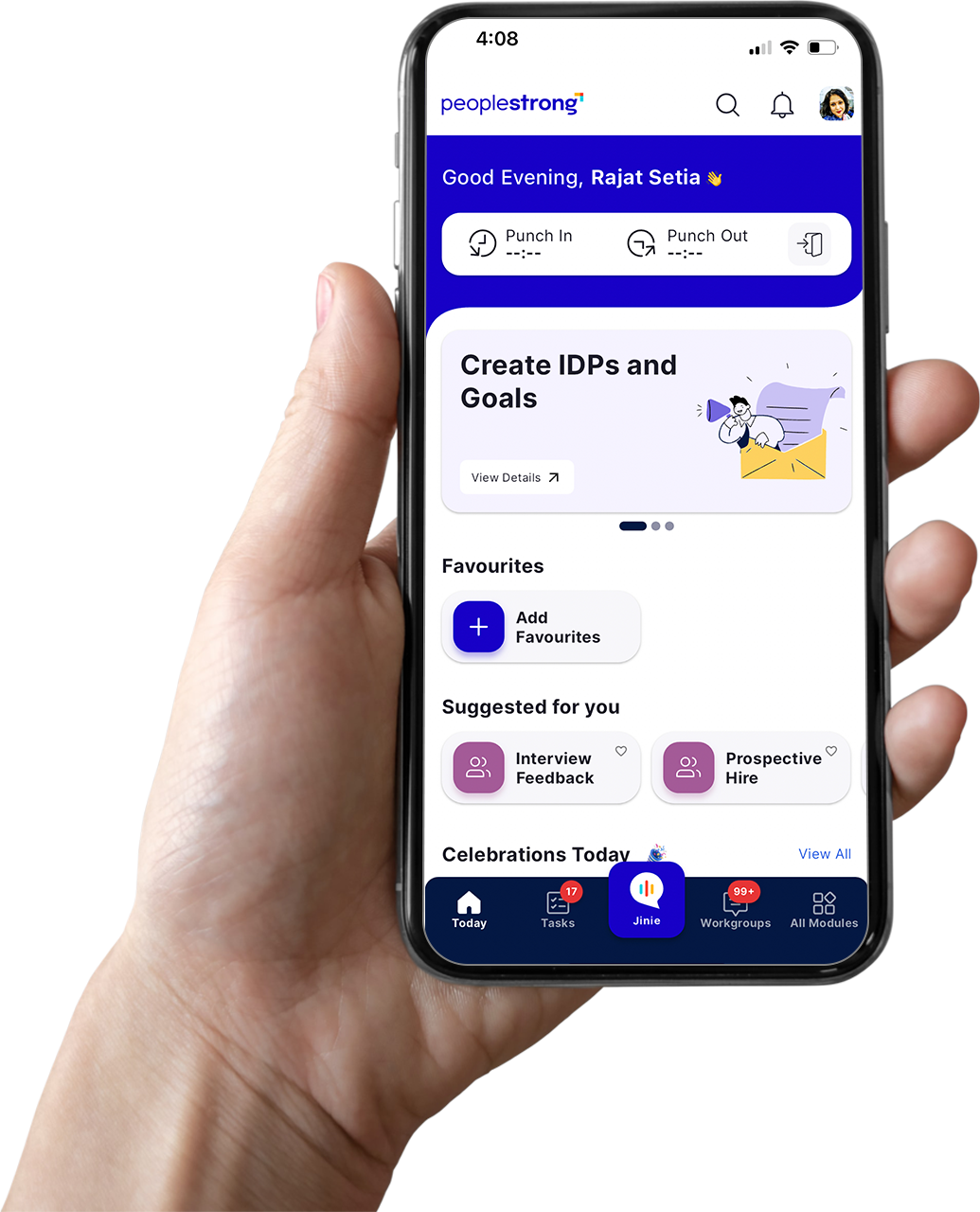
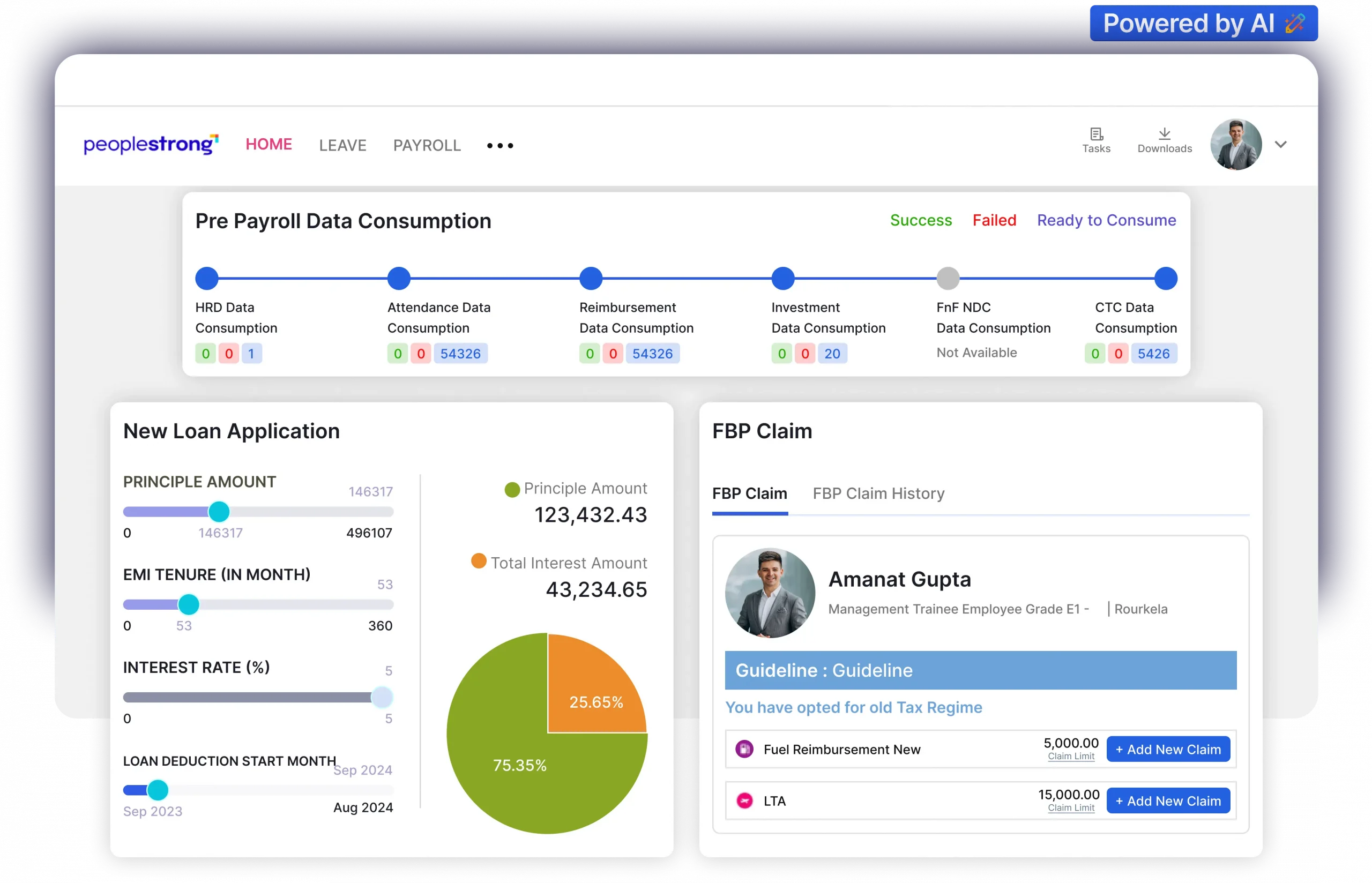
It’s difficult to manually manage around a dozen of leave types using spreadsheets once the firm grows to more than a few people due to mis-calculations of balances, loss of approval emails, inconsistent implementation of state-specific leave types. This is where leave management software comes into play as it centralises all the leaves types for easy tracking within the same system. Employees can be able to view the balance of their leaves and even request for leaves via the mobile app. Managers will have automated approval processes while HR can access all the information about leaves for all employees in one place. The best leave management systems automate application of state-specific leave policies like varying caps on casual leaves or regional festival leaves based on the work location of an employee. They can easily prepare compliance reports. It is this automation which makes the difference between a leave policy which is only written and a policy which is strictly enforced by the firm.
Conclusion
The fact of the matter is, the leave policy structure of India is far more complicated than it would seem at first look. There are few leaves in the statutory structure of India, and the rest of the leaves are either state-regulated or depend on organisational decisions. As for Human Resources, what needs to be done to come up with an effective leave policy is to ensure that the requirements of the legal minimum are met in all states where the organisation operates. Then, the decision-making process comes to how much further to go when it comes to such leaves as paternity, bereavement and sabbatical leave. In the end, the leave policy should be understandable and clear to its recipients no matter what type of leave policy is adopted.
Frequently Asked Questions
Can unused earned leave be carried forward?
Yes, up to a statutory cap. Under the Factories Act, this is typically 30 days, though some state Shops and Establishments Acts allow higher limits. Most employers set their own carry-forward threshold and either lapse or encash any excess balance, commonly at year-end or when an employee exits the company.
Are contract employees entitled to the same leave benefits?
Contract workers are generally entitled to core statutory benefits like earned leave, public holidays, and maternity leave where eligibility criteria are met, under the same underlying statutes that cover direct employees. However, policy-driven categories like paternity leave, marriage leave, or sabbaticals are usually reserved for permanent staff, since these aren’t legally mandated for anyone.
Can companies create additional leave categories beyond statutory requirements?
Yes. Employers are free to introduce additional leave types, such as mental health days, menstrual leave, or gender-neutral parental leave, as long as these additions don’t reduce or replace any existing statutory entitlement, particularly protected categories like maternity leave.
How many days of casual leave are typically provided in India?
Most Indian companies offer between 6 and 12 days of casual leave per year, though this varies by state and company policy. It’s usually capped at two or three consecutive days per instance to ensure it’s used for short-term needs rather than extended absences.
What is the eligibility criterion for maternity leave in India?
Under the Maternity Benefit Act, a female employee must have worked at least 80 days in the 12 months immediately preceding her expected delivery date to be eligible. The Act applies to establishments with 10 or more employees; those working in smaller organisations or who are self-employed fall outside its coverage.
Do different types of leaves have different approval processes?
Yes. Categories like casual and sick leave are typically approved with minimal notice and little to no documentation, while planned leave like earned leave usually requires advance notice and manager sign-off. Statutory leave such as maternity leave involves more formal documentation and HR coordination, and sabbaticals often require a detailed proposal and approval from senior leadership given their longer duration.