











 About Us
 Brand
Brand
 Career
 Contact Us



 +91-7314623098







You fight hard to hire, train, and make good employees perform in your company, and just when you think you can move on to the next task, they up and leave, forcing you to carry on the hiring, training, coaching, and rehiring cycle perpetually. You’re not the only ones feeling this pressure. About 54% of employees around the world think now is a good time to find another job, and about 52% of employees are already actively seeking new jobs.
Engaging them, and giving a fulfilling experience to everyone who comes to work is the best way to keep them interested, loyal, and ready-to-perform. In this article, you’ll learn small employee engagement strategies that can make a huge difference to your multi-generational workforce.
What is Employee Engagement?
Employee engagement is the emotional commitment and enthusiasm that employees have towards their work, the organization, and its goals. It goes beyond job satisfaction, encompassing how invested employees are in contributing to the success of the company. Engaged employees are motivated, take pride in their work, and are more likely to go above and beyond their job responsibilities.
They feel valued, connected to the organization’s mission, and actively participate in improving processes, innovation, and collaboration. When employees are engaged, they are more likely to show loyalty, remain with the company for longer, and be advocates for the brand. Due to competing deadlines, and insurmountable workloads in all industries, everyone is swamped, and organizations tend not to prioritize people initiatives and focus on engagement, to use that time and emotional bandwidth to catch up on other tasks. That’s why only about 23% of employees around the world are engaged, 15% are actively disengaged (they’ve mentally checked out from work and are waiting to leave) and 62% are not engaged (they’re on the verge of losing faith in the company and their job).
By ramping up employee engagement efforts, you can convert the 62% of employees and capitalize on the 23% who are already committed to your organization. But, is all the time, effort, and budget investment for employee engagement really necessary is a question every HR team has asked itself.
Why is Employee Engagement Important?
Employee engagement is more than an HR function. It’s a significant factor in the overall life experience for employees. Studies say that when employees find their work and work relationships meaningful, employment is associated with high daily levels of enjoyment. Engaged employees have the strongest emotional health, and have what it takes to tap into their potential to deliver great results and also inspire others to do the same.
It’s not just the emotional quotient that goes up when people are engaged at work. Gallup’s decades of research reveals that organizations with highly engaged people experience:
- 78% decrease in absenteeism
- 21% increase in turnover
- 10% increase in customer loyalty
- 17% increase in productivity
- 23% increase in profitability
- 68% increase in wellbeing
- 22% increase in organizational citizenship
When people feel happy and well at work, they perform better and go out of the way to meet customer demands. Putting the human in employee experience makes all initiatives appealing to the workforce, and they end up forming deep emotional bonds with the organizations that listen to them, offer a safe space for them to freely vent, give feedback, make mistakes and learn, and become a better professional and human at once.
It doesn’t take big bucks or decades to achieve this. Operating with empathy, trust, and confidence in our people and bringing in initiatives that take care of everyone will do the trick. People already have a lot going on in their personal lives. By making their work life easier and enjoyable, you contribute to their quality of life.
The role of HR in employee engagement
HR plays the role of the master planner of employee engagement, going way past mere supervision of administration into planning the entire lifecycle of employees. Today’s HR is charged with the task of designing an inclusive environment, setting up clear lines of communication, and making sure that the personal development of individuals is perfectly aligned with organisational goals. Through the use of employee engagement tactics, HR creates the environmental motivators.
Benefits of employee engagement
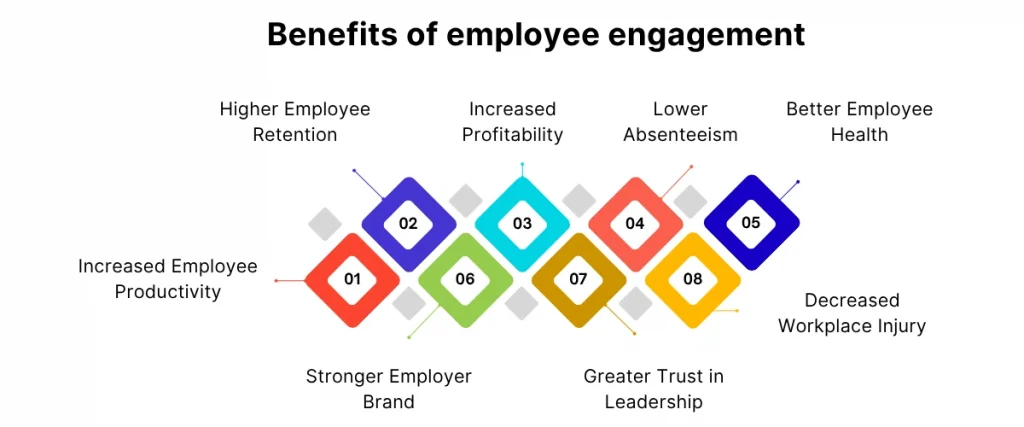
Increased employee productivity
Engaged teams perform with sharper focus and greater alignment. Gallup’s longitudinal studies show that highly engaged business units experience a 17% increase in productivity, consistently outpacing detached workforces in daily output and operational efficiency.
Higher employee retention
People who are valued and supported are much less inclined to look for other job opportunities. Cultivating a strong sense of belonging in employees will help reduce the employee turnover rate by as much as 21%.
Increased profitability
Higher performance leads to higher profits. Companies that fall in the top quarter in terms of employee engagement have higher profits by 23%, thanks to innovations, effective client management, and efficient processes.
Lower absenteeism
A healthy, engaged work environment naturally reduces unplanned time off. Disengaged employees are far more prone to burnout or withdraw; conversely, highly engaged teams see an average 78% drop in absenteeism rates.
Better employee health
Engaged work environments reduce structural stress and promote balanced workloads. This focus on individual well-being yields a 68% increase in overall employee wellness, lowering chronic stress and medical leave needs.
Decreased workplace injury
Safety and attentiveness go hand-in-hand. Employees who are emotionally invested in their tasks stay highly aware of their surroundings, leading to significantly fewer operational oversights and a safer workplace floor.
Greater trust in leadership
A deliberate focus on engagement builds a bridge between executive strategy and the frontline. Regular, honest interaction fosters strong organisational trust, making it vastly easier to navigate market transitions smoothly.
Stronger employer brand
Engaged employees naturally become brand ambassadors. When your people praise your internal workplace culture externally, it strengthens your market footprint, drawing top-tier applicants organically and lowering overall recruitment spend.
What are the key drivers of employee engagement?
Effective Leadership and Management
Direct managers are crucial for maintaining daily engagement. Leaders who mentor instead of micromanage, clear operational roadblocks, and set transparent expectations establish the foundational safety required for teams to take pride in their output.
Recognition and Appreciation
Employees need to know that their extra effort does not go unnoticed. Regular validation for both minor milestones and massive project wins ensures individuals feel valued for their unique contributions.
Career Growth and Development
People rarely want to feel stagnant. Providing individualized training, open mentorship channels, and clear promotional pathways allows talent to envision a long-term future within the business.
Meaningful Work and Purpose
To sustain high engagement, professionals must understand how their individual work directly impacts broader corporate goals. Knowing that your daily output matters creates an intrinsic motivator that salary alone cannot buy.
Workplace Culture and Inclusion
A collaborative, psychologically safe environment allows people to show up authentically. Cultivating a workplace where diverse perspectives are actively respected drives deep psychological ownership across teams.
Employee Well-being and Work-Life Balance
Sustainable performance requires rest. Companies that respect personal boundaries, actively combat burnout, and offer true workplace flexibility build highly resilient, focused teams.
Open Communication and Feedback
Two-way communication channels dismantle organisational silos. When employees can share ideas, ask questions, and receive constructive feedback freely, they feel respected as vital partners in the business.
11 Strategies to Improve Employee Engagement
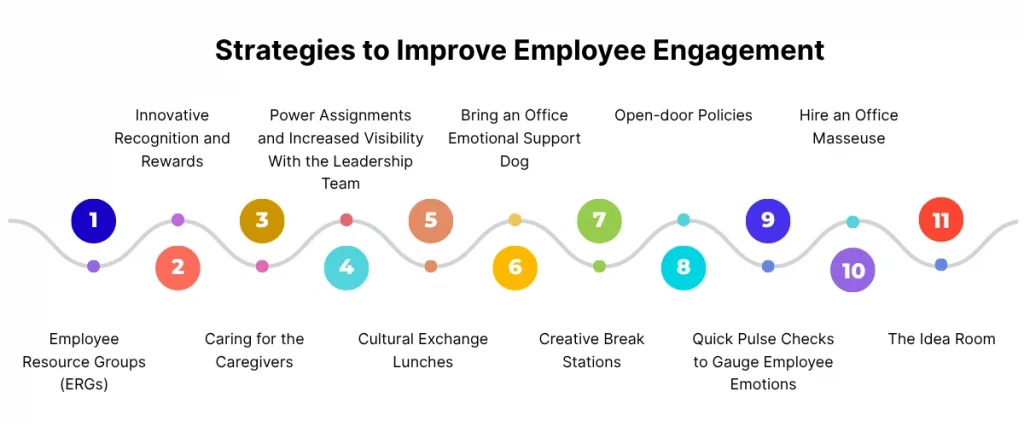
1. Employee Resource Groups (ERGs)
We all know the feeling of being home, or being in our comfort zone, with a group of like-minded people we connect with deeply, and with whom we have shared life experiences. That’s what employee resource groups are for. They are voluntary, employee-led groups within an organization that aim to foster a diverse and inclusive workplace. They are typically organized around shared characteristics such as race, gender, sexual orientation, or other common interests or experiences.
ERGs provide support, networking opportunities, and a platform for employees to share insights and advocate for policies that promote inclusivity. They also help raise awareness about issues affecting underrepresented groups, contributing to employee engagement, retention, and overall organizational culture.
When employees are part of groups that resemble them, they tend to feel connected to their roots and develop more fondness for the community, and the company as a whole. This increases their citizenship and helps them engage better with the team.
2. Innovative Recognition and Rewards
Spot awards are amazing for fueling employee morale and lifting spirits in the middle of a mundane workday. As soon as your managers notice great work done by an employee, encourage the managers to instantly appreciate them with applause, and some confetti, or a badge, to show how much they value them. If this idea gets signed off on by the leadership, you’d have to ensure managers have the spot recognition package (of the materials you want them to celebrate with) with them at all times in the office. It’ll be a game changer in terms of motivation, and have employees pushing themselves to deliver the best they can to the organization.
Another innovative recognition idea is to have peer nominations for awards in the workplace, where team members nominate who deserves an award the best, and show their support to their friends at work. It can be a huge positive influence in the workplace and prove to be a chance for your employees to enjoy the camaraderie of those who have their best interests in mind.
If you have to hotdesk at work and have your employees reserve a seat every time they come to the office, a unique recognition idea that always works like a charm is to give a dedicated office or a secluded workspace to an overachiever who never lets you down. It shows you put them on a pedestal and cements their loyalty to the company.
When employees find meaning and reward in their work that’s proportionate to the effort and commitment they put in, they enjoy higher productivity and joy.
3. Caring for the Caregivers
With multiple generations in the workplace, you have a major chunk of employees who are either new parents or have elderly parents at home to take care of. These caregivers are spent emotionally, mentally, and physically at home and at work, and it takes a heavy toll on them, and it increases their chance of falling sick. Even when they take time off work, they end up caring for loved ones at home, have almost no time for socializing, and don’t have the hours to get a good night’s sleep to tend to themselves. The majority of the world’s employees continue to struggle at work and in life with direct consequences on organizational productivity.
In these circumstances, if they are required to come to the office every day, and do everything for their loved ones after their 9-5 and commute, they’re more likely to switch to a job that offers more flexibility, and allows for remote work, whenever needed. To keep your caregiving employees engaged and truly committed to your organization, you’ll definitely need to offer flexible work options, backup care services, and paid caregiving leave.
Health and wellness stipends or childcare assistance programs can offer financial relief, while employee assistance programs (EAPs) can provide access to counseling or caregiving coaching. You may also want to consider giving them discounts or a fully sponsored spa day or wellness retreat, so they can allocate one day to take care of themselves and come back refreshed, and with more affinity to you, for understanding the stress they’re in.
4. Power Assignments and Increased Visibility With the Leadership Team
When people work in a startup and are the core founding members of a fantastic team, they interact together, build amazing things from scratch, and watch their vision come true. But, as the company grows into a mid-sized organization or a multi-national, the personal connection people have with the leaders diminishes, and they rarely get to see them in person, except for review meetings. Employees who join work with their immediate managers and rarely get noticed by the leadership team.
You can help star-performing new joiners or experienced employees feel like they’re part of the founding team by giving them an opportunity to work directly with the leaders, travel with them, learn from them, and look at things from their point of view. This kind of exposure at the beginning stages of their career could totally shift their career and catapult it to a different level.
Once they interact with leaders, they develop a strategic outlook on the work they do, which also helps bring out the leader in them and cement their loyalty to the company that promises growth and unlimited potential. Take a round-robin method, wherein every team gets to nominate one person every 6 months to work with a C-suite member, work with them on a project, shadow them, and learn from them for a quarter.
5. Cultural Exchange Lunches
Everyone loves variety in their jobs, not to mention bonding over new experiences with the people they work for and creating a memory. During festivities, invite people over from other geographies to visit your offices in another corner of the world, so they can spend some time exploring the city, mingle with their counterparts in the office, have lunches, catch up on work, and make memories showing around the city to the new people who have come all the way from another country.
These events encourage employees from diverse backgrounds to share their cultures, traditions, and personal stories through food, breaking down barriers, and promoting open dialogue. By creating opportunities for employees to learn about each other’s experiences in a casual setting, cross-cultural lunches build deeper interpersonal connections, empathy, and a sense of belonging. This inclusive atmosphere helps employees feel more understood and appreciated, leading to higher morale and greater commitment to the organization.
6. Bring an Office Emotional Support Dog
We go through 400 emotions a day, and sometimes, no matter how hard we try, it’s difficult to cope with overwhelming emotions. For employees already battling emotional issues, or mental health concerns, sitting in a confined space and concentrating on work can be debilitating.
An emotional support dog in the workplace adds a touch of warmth, lots of love, and hope to employees. The sheer joy of seeing an adorable being walk about as you work immensely boosts your morale and ramps up your energy levels. Get a trained emotional support dog to your office, after ensuring no one is allergic to it.
7. Creative Break Stations
In most organizations, work starts around 9 am and goes on until 7 pm or longer, and there’s little time to dissociate from work and get back to it rejuvenated. Work keeps getting monotonous for employees until a point they can’t take it anymore, when they ask for their manager for time off, to simply catch a break from the mundane routine and go do something they are immensely passionate about.
When the organization doesn’t hold space for it, employees tend to choose those who do. You don’t want to lose exceptional talent over something that could cost you less, but give you more returns. That’s where these small creative break stations come in! Install a desk near every 10 desks, or choose easily accessible areas in the office where employees can unwind.
These could be corners, unused rooms, or even outdoor spaces. Ensure the location is quiet and inviting, away from high-traffic zones. with a bunch of colored paper, crayons, a sewing kit, puzzles, building blocks, or whiteboards for brainstorming. Make sure the area feels distinct from regular workspaces, signaling that it’s for relaxation and creative play.
Anything that helps employees get into real quick after getting off of a meeting, to relax, unwind, gather their thoughts, or get back to work. It really helps employees to take the edge off of the pressure they are in. Sometimes the most ingenious ideas and creative breakthroughs come from spontaneous creative endeavors and can prove to be a huge asset to the team, and the company. Employees feel truly spirited and filled with energy when they can take creative breaks, and actively dissociate from work. When this becomes a habit, there’s no room for boredom. Only engaged employees at work. Studies also show that half of employees who are engaged at work are thriving in life overall.
8. Open-door Policies
Being listened to is a huge part of being accepted, and valued. Every employee wants it, and companies can do two things about this very need – a safe space for employees with the topmost people in the company to vent what’s on their mind, and a regular, confidential forum where all employees can voice out their feedback about various aspects of the company.
Address the first part of the equation with an open door policy – where any employee can fix an appointment with the leadership team of the company on their calendar for 30 minutes, and talk to them about anything they have in mind – no screening, or agenda to be revealed, to maintain completely confidentiality.
The open-door policy allows for effective problem-solving and collaboration across all levels of the organization. When employees know they can easily approach their managers or leaders with questions or issues, it promotes quicker resolutions and encourages a proactive mindset. This policy not only streamlines communication but also helps identify potential challenges before they escalate, allowing for timely interventions.
This same practice applies to talking to managers and skip-level managers as well. Managers account for about 70% of the variance in team engagement. When managers are engaged, their employees are engaged as well.

Suggested Read:
26 Essential HR Policies Every Organization Needs
9. Quick Pulse Checks to Gauge Employee Emotions
Annual or semi-annual surveys are great to have and are also becoming the norm. As people, we love to be heard as and when we have something to say, instead of waiting around to say something that’s bothering us. That’s why checking in with employees at random intervals is important. If a manager is aggressive, violent, or verbally abusive to teammates, and the department reports a negative emotion every time you run a pulse check, it’s time to dig deep and investigate the root cause.
These instant checks show employees you care about them truly, and not just because you need to administer a mandatory survey every year. You can also root out any potential issues looming in the background before they plague your company. It could be building resentment, a toxic manager, bullying in the workplace, people breaching other’s boundaries, unhealthy competition, too much workload, etc. When you quickly troubleshoot and solve problems for them, you win their trust and they become more engaged than ever.
10. Hire an Office Masseuse
Regular access to massage therapy can help alleviate physical tension, improve circulation, and reduce the negative effects of prolonged sitting, which are common in office environments.
When employees feel physically better, they are more likely to be productive, focused, and motivated, leading to improved overall job performance. Additionally, the presence of an office masseuse demonstrates that the organization values employee well-being, fostering a culture of care and support that can enhance employee satisfaction and loyalty.
11. The Idea Room
This is an amazing idea that works for creative, technical, and non-technical teams alike. You can generate as many ideas as you want with this one exercise, and make everyone feel heard at every meeting. At the start of every meeting, divide the room into two segments, or if you’re doing an online meeting, create two breakout rooms. One is the green room, and another is the red room. First, everyone works in the green room. This is where the manager or the team leader poses a question or a scenario that needs ideation, and everyone starts chiming in with ideas. All ideas are welcome and are duly noted.
Everyone inspires others and pushes each other’s limits to think out of the box. No ridiculing or blocking anyone’s ideas. Once all ideas are fleshed out, people move to the red room. This is where the ideas filtering starts. Everyone chimes in again, with why certain ideas need to stay and move. For every suggestion for removal, the team needs to be given valid reasons. For every idea that needs to stay, the team needs to answer 6 whys as part of the why-why activity, so that the ideas that remain are strong, failproof, and show promise.
This is a truly inspiring and motivating exercise if done right. Everyone gets to tap into their potential and contribute to the best of their ability, regardless of their position or years of experience. It also makes for quality interactions for both in-office and remote workers. Studies show that work interactions don’t necessarily have to be in person to provide a benefit. All forms of social time are associated with a better mood.
What Causes an Employee Engagement Strategy to Fail?
The most common reason an employee engagement strategy crumbles is a lack of authentic action following feedback. Collecting employee data via surveys without implementing actual changes breeds cynicism, leaving teams feeling ignored.
Additional points of failure include:
- One-size-fits-all programmes: Forcing identical engagement metrics onto completely distinct departments (e.g., treating engineering teams and field sales forces exactly the same).
- Superficial “fun” initiatives: Substituting ping-pong tables and free snacks for deep structural improvements like fair compensation, psychological safety, and clear advancement opportunities.
- Lack of middle management buy-in: Rolling out global corporate programmes without training or empowering line managers to champion them daily.
How to Build an Employee Engagement Plan
To build an employee engagement plan that delivers multi-year value, organisations must treat engagement as an ongoing business process rather than a short-term HR project.
- Gather Baseline Data: Launch a thorough organisational survey alongside focused department discussions to pinpoint exactly where friction lies.
- Co-Create Action Items: Involve representatives from all corporate levels to design specific initiatives, ensuring ownership doesn’t sit solely with HR.
- Equip Line Managers: Provide supervisors with the training, tools, and schedule flexibility needed to support their teams’ well-being and growth.
- Iterate & Communicate: Publicly share the changes implemented based on employee feedback, track your operational metrics, and continuously adjust your approach.
How to Measure Employee Engagement?
1. Surveys and Questionnaires
Employee engagement surveys are a common and direct way to measure engagement. These surveys typically include questions about job satisfaction, alignment with company values, recognition, and workplace culture. Metrics often measured here include:
- Engagement score – The percentage of employees who report high levels of satisfaction and commitment
- Workplace happiness
- Employee satisfaction
- Survey response rate – A high response rate may indicate engagement in itself, while a low rate could suggest disengagement or apathy
2. Key Performance Indicators (KPIs)
Tracking KPIs can provide indirect yet valuable insights into engagement levels. Some metrics to monitor include:
- Absenteeism rate
- Turnover rate
- Productivity levels
- Customer satisfaction ratings
- Time to complete tasks
Suggested Read:
Ultimate Guide to Key Performance Indicators (KPIs) for HRs
3. Focus Groups and One-on-One Interviews
Through focus groups or personal interviews, you can gather in-depth qualitative data about engagement levels.
- Qualitative feedback – Deep insights into what motivates or demotivates employees.
- Recurring themes– Identifying common challenges or drivers of engagement.
- Employee morale – Direct discussions about feelings towards leadership, culture, and personal growth.
- Engagement trends– Highlighting common themes across departments, which can help in shaping policies.
4. Employee Net Promoter Score (eNPS)
The Employee Net Promoter Score (eNPS) measures how likely employees are to recommend their workplace to others. It is a direct gauge of loyalty and engagement.
| Promoters (score of 9-10) | Employees who are highly engaged and likely to recommend the company. |
| Passives (score of 7-8) | Employees who are satisfied but not actively promoting the company |
| Detractors (score of 0-6) | Employees who are disengaged and could potentially speak negatively about the company |
Divide the number of promoters, passives, or detractors by the total number of responses and multiply by 100. Once you arrive at the promoter percentage and detractor percentage, subtract the former from the latter and you get the eNPS score.
Best Practices for Employee engagement
- Maintain complete transparency: Share survey results and executive action plans openly, even when the data reveals uncomfortable truths.
- Celebrate small, daily wins: Don’t hold back praise for annual reviews; make recognition a natural, immediate part of your weekly workflow.
- Prioritize psychological safety: Create an environment where employees can critique workflows or flag mistakes without worrying about professional fallout.
- Link individual work to macro strategy: Continually remind your teams exactly how their daily output feeds into major corporate milestones.
How Can PeopleStrong Help?
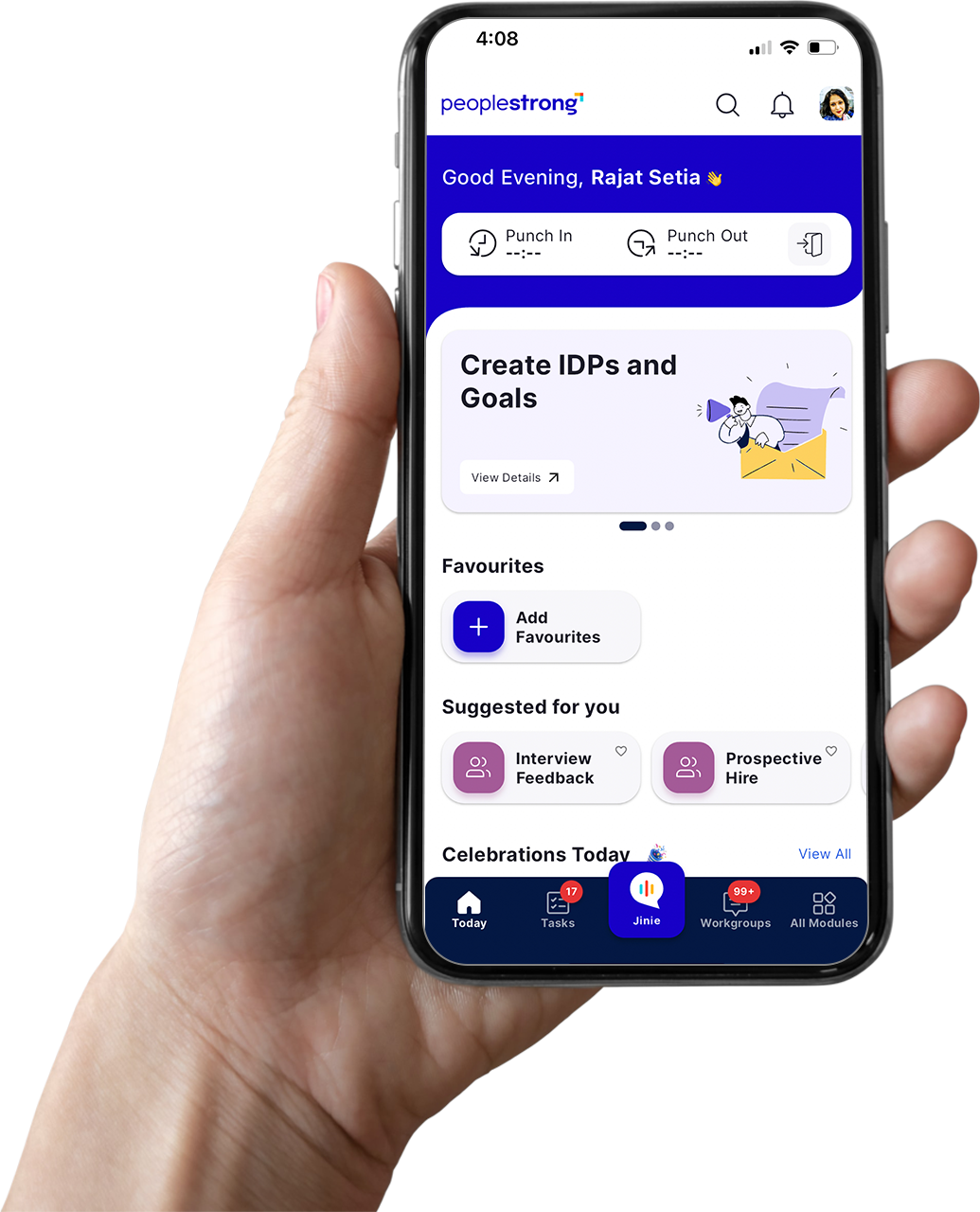
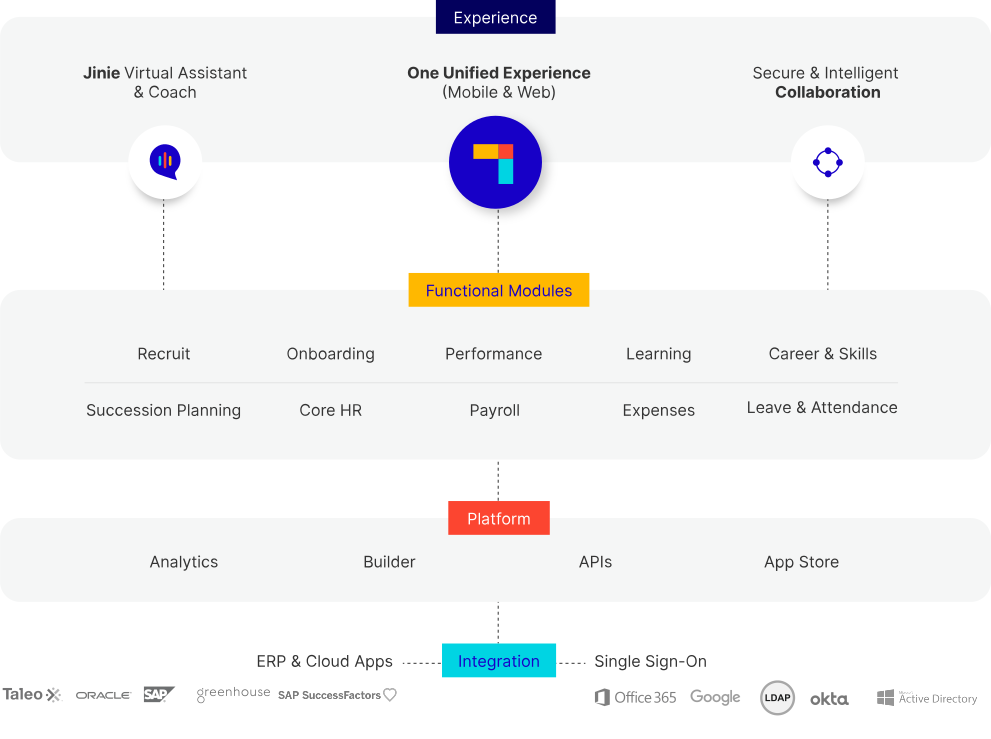
PeopleStrong HCM is a real game-changer when it comes to keeping your team motivated and connected. It’s packed with features designed to create a more engaged and productive workforce. One of its standout features is the real-time feedback and surveys. Employees can share their thoughts through pulse surveys and engagement polls, and HR teams get instant insights to act on. This creates a feedback loop where employees feel heard, and leadership can respond quickly to any issues or suggestions. It fosters a culture where employee voices matter, and that’s a huge boost to morale.
Contact us today to get a complete walkthrough of the product and see how we can meet your unique HR needs.

Frequently Asked Questions
Why is communication important for employee engagement?
Transparent communication eliminates anxiety and aligns teams. When professionals understand corporate strategy and feel secure sharing upward feedback, they take deeper ownership of their roles.
What improves employee engagement the most?
Effective, supportive leadership paired with clear career progression. Employees remain highly engaged when they trust their direct managers and see an achievable, long-term growth path inside the company.
How does employee recognition improve engagement?
Recognition satisfies a fundamental psychological need to feel valued. Celebrating individual effort reinforces positive behaviours, boosts confidence, and inspires continuous discretionary effort.
What tools help improve employee engagement?
Comprehensive Human Capital Management (HCM) platforms, modern pulse-survey tools, interactive learning hubs, and peer-to-peer recognition portals work together to create a unified, digital employee experience.
Why is employee engagement important for retention?
Engaged professionals feel a strong emotional bond with their company. When employees are fulfilled, supported, and recognised, they see little reason to look for outside career opportunities.
How can an employee engagement platform help engage employees?
An integrated platform brings data and communication under one roof. It simplifies daily workflows, delivers real-time pulse polls, monitors performance metrics, and lets hybrid or distributed teams connect effortlessly.
What are employee engagement models, and how do they work?
Employee engagement models are proven strategic frameworks (like the Gallup Q12 or the Aon Hewitt model) that pinpoint specific operational variables, such as workplace safety, leadership trust, and career growth, to help businesses systematically track and elevate employee satisfaction.