











 About Us
 Brand
Brand
 Career
 Contact Us



 +91-7314623098







What’s the crux of effective human resource management? You guessed it right—audits!

According to statistics, 52% of businesses report at least one incident of HR-related complaints, lawsuits, or charges. Regular HR audits not only prevent such situations from arising but also ensure legal compliance, process efficiency, and fair treatment for employees.
Yet, most companies either entirely neglect this process or, worse, conduct it negligently, resulting in faulty audits that do more bad than good.
So, let’s change that. Read this blog as we guide you on how to conduct an efficient HR audit.
What is an HR Audit?
An HR audit is a holistic evaluation of an organization’s HR department, including its policies, procedures, practices, etc.
This evaluation mainly aims to assess the efficiency of an organization’s HR. For instance, its compliance with laws, alignment with business objectives, and so on. Apart from this, an HR audit also reveals the risks, inefficiencies, and potential areas for improvement in key HR processes like recruitment, compensation, and performance management to ensure maximum effectiveness in each of them.
Consider this example:
XYZ is a steel manufacturing company. Despite having strong safety regulations and protocols, occurrences of accidents and mishaps have alarmingly increased in its plants over the last few months.
Thus, management decided to conduct an HR audit of its workforce. The audit revealed that the laborers had not received proper training to work with the new machinery. Based on the findings, the company updated its safety protocols, provided mandatory training, and implemented a tracking system to ensure compliance, reduce risks, and promote employee well-being.
What is the Purpose of HR Audit?
HR audits are multipurpose. They fulfill different needs for different organizations. However, the four core objectives of HR audit are:
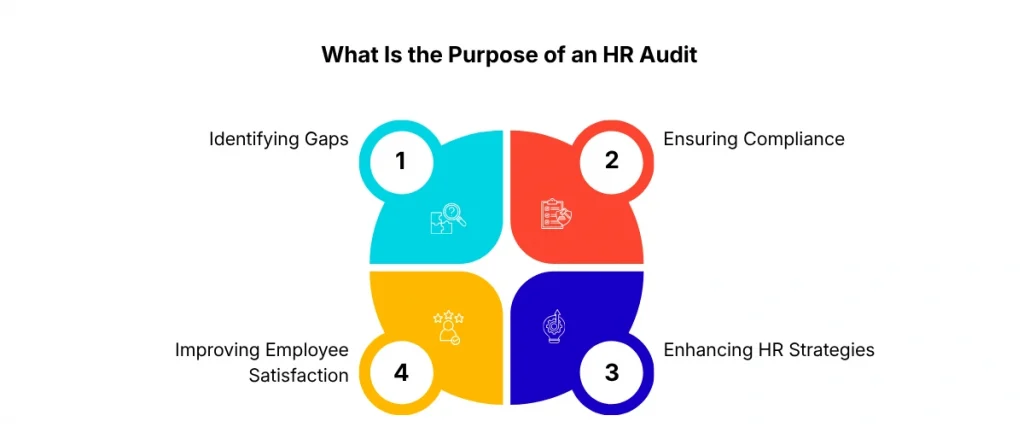
1. Identifying Gaps
According to data, about 87% of companies either already have or anticipate a skill gap in their workforce. While this may sound trivial, if not addressed promptly, this skill gap can have several repercussions on your team’s efficiency, productivity, and adaptability.
HR audits help prevent this. Regular evaluations not only keep you in check with your team’s skill and knowledge levels but also help discover ways to elevate them.
2. Ensuring Compliance
Maintaining legal compliance is not an easy feat. Statistically speaking, over 60% of companies struggle to stay up to date with every law, regulation, and standard revolving around business and employees. However, the consequences of non-compliance are far more severe. If found guilty, you can be penalized or even sued!
HR audits are an ideal way to avoid this risk. They alert you in advance of any non-compliance so you can take corrective measures, minimizing the chances of legal risks and penalties.
3. Enhancing HR Strategies
Do you know—a whopping 71% of HR leaders miss out on competent candidates due to inefficient hiring processes? As such, many instances of ineffective HR obstruct an organization from building a solid workforce. If you look closely, such negative outcomes stem from poor strategies.
However, organizations that conduct regular HR audits are not only able to spot these inefficiencies in their strategies. But the data-driven reports also help them align with the organization’s overall goals for better productivity and profitability.
4. Improving Employee Satisfaction
In today’s cutthroat competition, finding and retaining top talent is crucial for any organization that wants to sustain itself in the market. However, 81% of employees are considering leaving their jobs due to dissatisfaction. This can lead to loss of expertise, disrupted workflows, and knowledge drain from a company.
However, HR audits can prevent this catastrophe from emerging. Identifying and eliminating internal malpractices like workplace bias and discrimination increases employee satisfaction, thereby reducing the risk of resignation.
Importance of HR Audit
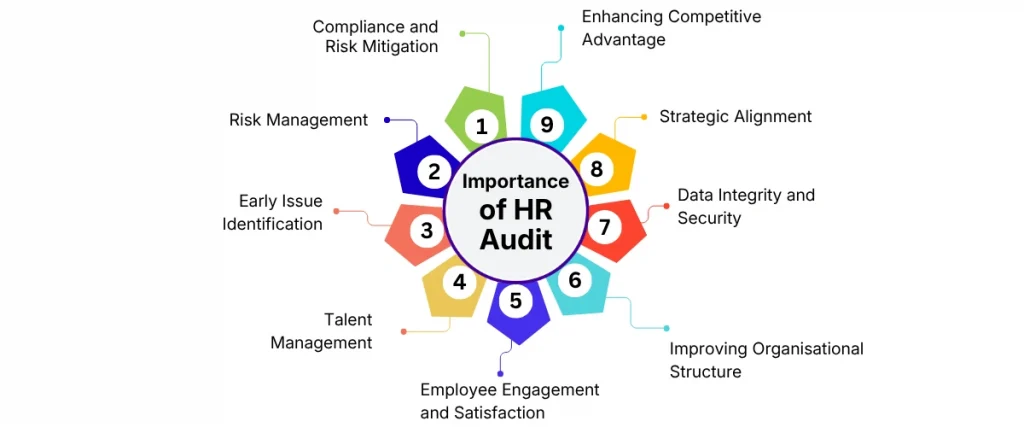
1. Compliance and Risk Mitigation
Employment laws, workplace regulations, and compliance requirements continue to evolve. Regular HR audits help organisations assess whether their policies, processes, and documentation remain aligned with current legal and regulatory obligations. This proactive approach can help reduce compliance risks and support stronger governance practices.
2. Risk Management
HR audits help organisations identify potential risks across key areas such as employee documentation, policy implementation, payroll processes, employee classification, and workplace practices. By addressing gaps early, organisations can strengthen internal controls and minimise operational, financial, and compliance-related risks.
3. Early Issue Identification
An HR audit provides an opportunity to identify emerging workforce challenges before they escalate. Reviewing employee data, workplace practices, and HR processes can help organisations uncover concerns related to employee engagement, communication, workforce planning, or policy effectiveness and take corrective action where necessary.
4. Talent Management
HR audits help organisations evaluate the effectiveness of their talent management practices, including recruitment, onboarding, performance management, learning, and career development. These insights can support better workforce planning and help ensure talent strategies remain aligned with organisational objectives.
5. Employee Engagement and Satisfaction
Assessing HR processes and employee-related data can provide valuable insights into workforce experiences and engagement levels. HR audits can help organisations identify opportunities to strengthen employee support, improve communication, and enhance workplace experiences that contribute to higher levels of employee satisfaction.
6. Improving Organisational Structure
Regular reviews of organisational structures can help businesses assess reporting relationships, workforce distribution, and role clarity. HR audits may identify opportunities to improve collaboration, streamline responsibilities, and ensure organisational structures effectively support business goals.
7. Data Integrity and Security
HR functions manage significant volumes of sensitive employee information. HR audits help evaluate data management practices, access controls, record retention processes, and information security measures to ensure employee data is maintained accurately and securely while supporting compliance with applicable privacy requirements.
8. Strategic Alignment
HR audits help determine whether people practices are supporting broader business objectives. By reviewing workforce initiatives, talent strategies, and HR processes, organisations can assess how effectively HR activities contribute to organisational growth, workforce capability, and long-term business priorities.
9. Enhancing Competitive Advantage
Effective HR practices can play an important role in attracting, developing, and retaining talent. HR audits help organisations identify opportunities to improve workforce processes, employee experiences, and talent management strategies, ultimately supporting stronger organisational performance and long-term competitiveness.
What Are the Types of HR Audits?
There are several different types of HR audits, each associated with a specific HR function or process. For example:
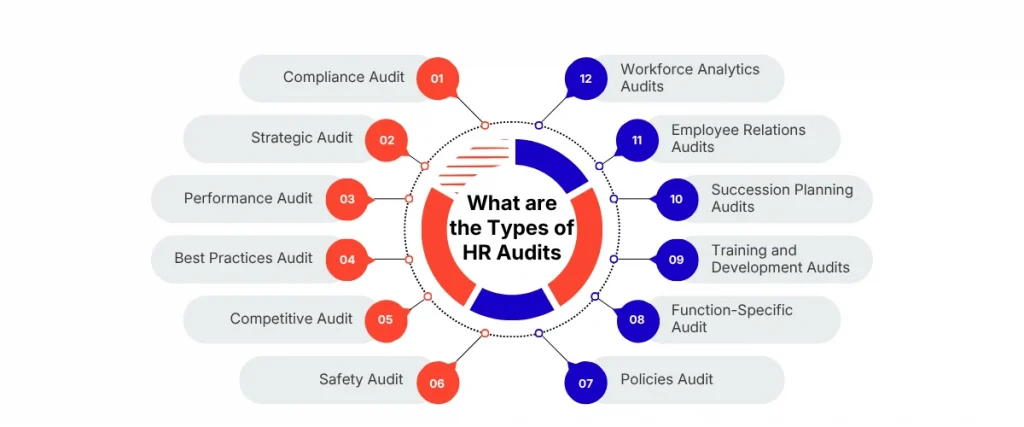
1. Compliance Audit
This type of HR audit evaluates whether the organization is compliant with all the laws and regulations crucial to the well-being of its employees, such as labor laws, minimum wage laws, anti-discrimination laws, workplace safety regulations, etc.
2. Strategic Audit
A strategic HR audit focuses on aligning an organization’s HR strategies with its larger goals. It evaluates aspects like HR systems and processes to identify gaps and suggest improvements.
3. Performance Audit
A performance HR audit evaluates the employee performance management system of an organization to ensure it is fair, productive and result-oriented. This includes assessing aspects like goal-setting, feedback, appraisal, etc.
4. Best Practices Audit
This type of HR audit evaluates recruitment, onboarding, offboarding, and other elemental HR practices of an organization. Its main aim is to examine whether these practices are fair and at par with industry.
5. Competitive Audit
A competitive HR audit evaluates the compensation and benefits an organization provides to its employees. For instance, its pay structure, packages, reward programs, etc. This helps ensure the organization remains competitive, equitable, and aligned with industry standards.
6. Safety Audit
This HR audit assesses how well an organization’s HR policies adhere to safety laws, regulations, and best practices. For instance, if workplace conditions are safe, employees are trained to handle risky tasks, etc. This helps reduce risks and ensure workforce safety.
7. Policies Audit
A policies HR audit examines the HR policies of an organization, such as termination and paid time-off, to ensure they are relevant and appropriate.
8. Function-Specific Audit
A function-specific HR audit evaluates a specific HR function, like performance management or payroll, to optimize it for efficiency.
9. Training and Development Audits
This audit evaluates the effectiveness of an organisation’s learning and development initiatives. It reviews training programmes, skill development activities, learning participation, and training outcomes to assess whether these investments are supporting employee growth and organisational objectives. The audit may also examine how training effectiveness is measured and aligned with workforce capability requirements.
10. Succession Planning Audits
A succession planning audit reviews the organisation’s approach to identifying and developing future leaders for critical roles. It assesses talent pipelines, leadership readiness, development plans, and succession frameworks to determine whether the organisation is prepared for future leadership transitions and workforce continuity needs.
11. Employee Relations Audits
This audit examines employee relations practices, workplace policies, grievance management processes, disciplinary procedures, and conflict resolution mechanisms. The objective is to assess whether employee concerns are managed consistently, fairly, and in accordance with organisational policies and applicable employment requirements.
12. Workforce Analytics Audits
A workforce analytics audit evaluates the quality, accuracy, and reliability of HR data used to support decision-making. This may include reviewing workforce metrics such as employee turnover, absenteeism, recruitment performance, workforce productivity, and talent management indicators. The audit helps organisations strengthen reporting accuracy and improve confidence in workforce insights.
Steps for Conducting an HR Audit
Now that you know about the benefits and importance of HR audits, follow these steps to conduct them in your organization:
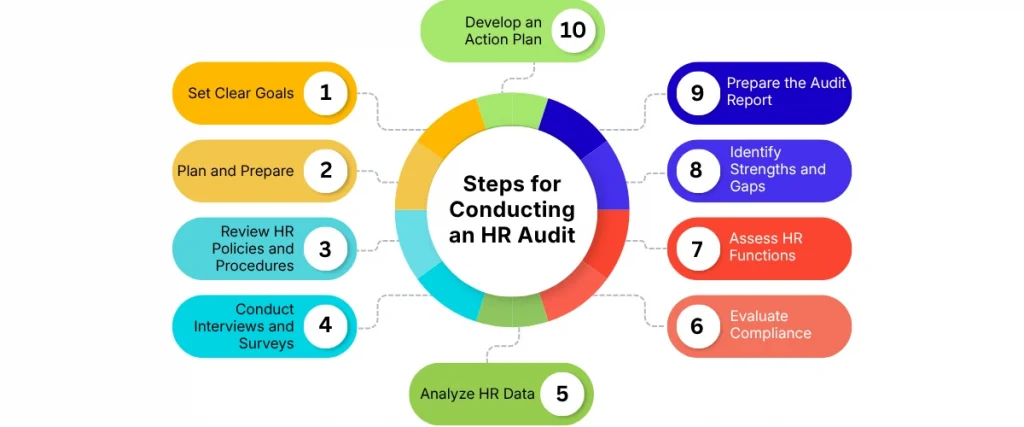
Step 1: Set Clear Goals
The foundation of an effective audit is planning. So, start by planning and defining the goals of your HR audit. Are you conducting this assessment to evaluate compliance? To promote employee satisfaction? Understand and highlight your goal before moving toward execution.
Step 2: Plan and Prepare
Now that you have your objective in place, it’s time to prepare the preliminaries. So, determine the scope of your audit, identify key stakeholders, and gather necessary documents like HR policies, employee records, payroll data, compliance records, etc. Once done, build an audit team and assign responsibilities to every member.
Step 3: Review HR Policies and Procedures
You cannot delve deep into the root cause of any HR-related inefficiency without familiarizing yourself with your organization’s ongoing HR policies and procedures. So, examine your organization’s existing HR policies, handbooks, and standard operating procedures (SOPs) to gain a fair understanding of its HR standing. Check whether they are aligned with necessary laws and regulations and highlight ones that need amendments.
Step 4: Conduct Interviews and Surveys
While analyzing documents and procedures is essential, you will need more insights to ensure your audit comprehensively addresses every HR aspect. So, gather feedback from employees, managers, and HR personnel through interviews, surveys, and focus groups. Ask for their opinions on workplace culture, training, support, etc.
Step 5: Analyze HR Data
You cannot conduct an HR audit without accounting for vital HR data, such as employee turnover rate, hiring rate, and employee satisfaction score. These figures provide actionable insights into potential issues and challenges in the organization, so collect and analyze them.
Step 6: Evaluate Compliance
Next, evaluate the company’s compliance with major HR-related laws and regulations, such as labor laws, wage regulations, and anti-discrimination policies. This will help you identify and eliminate non-compliance risks to prevent legal issues.
Step 7: Assess HR Functions
HR functions like recruitment, onboarding, offboarding, etc., are at the forefront of effective HR. Assess these functions for fairness and efficiency. Underline issues, if any.
Step 8: Identify Strengths and Gaps
Now that you have a comprehensive set of findings compare them against industry standards. Identify areas where the HR department excels and pinpoint areas for improvement.
Step 9: Prepare the Audit Report
Once done, summarize your findings and prepare a data-driven report. Include key insights, identified risks, and corrective measures to make it actionable.
Step 10: Develop an Action Plan
Lastly, create a structured action plan based on your audit report to bring your efforts to life. Assign responsibilities, set deadlines, and prioritize actions for maximum efficiency.
HR Audit Checklist
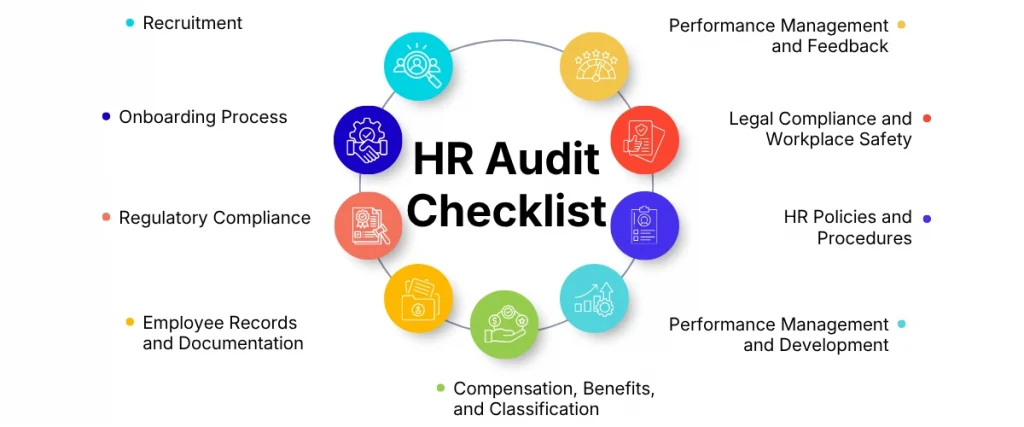
Recruitment
Review recruitment processes to ensure hiring practices are consistent, documented, and aligned with organisational policies. This includes evaluating job descriptions, interview frameworks, candidate assessment methods, background verification processes, and recruitment records. The review should also assess whether hiring decisions are supported by standardised and objective evaluation criteria.
Onboarding Process
Assess onboarding activities to determine whether new employees receive the information, resources, and support required to become productive members of the organisation. This may include reviewing induction programmes, training schedules, technology provisioning, documentation processes, and employee communications.
Regulatory Compliance
Evaluate compliance with applicable employment laws, statutory requirements, and internal policies. This includes reviewing employee documentation, mandatory workplace training, regulatory filings, and compliance reporting processes. Regular reviews help organisations identify potential compliance gaps and strengthen governance practices.
Employee Records and Documentation
Review employee records to ensure information is accurate, complete, and securely maintained. Assess document retention practices, access controls, record management procedures, and compliance with applicable data privacy requirements.
Compensation, Benefits, and Classification
Examine compensation structures, payroll processes, employee classifications, and benefits administration practices. The review should assess whether policies are applied consistently and remain aligned with organisational requirements and regulatory obligations.
Performance Management and Development
Evaluate performance management frameworks, goal-setting processes, development planning, and career progression initiatives. Reviewing these practices helps organisations understand how effectively employee performance and professional growth are being supported.
HR Policies and Procedures
Review HR policies and procedures to ensure they remain current, relevant, and aligned with organisational objectives. Policies should reflect evolving workplace practices, business requirements, and compliance expectations.
Legal Compliance and Workplace Safety
Assess workplace safety programmes, incident reporting procedures, emergency preparedness measures, and compliance with health and safety regulations. Regular reviews can help identify risks and support a safer working environment.
Performance Management & Feedback
Evaluate employee feedback mechanisms, manager-employee communication practices, and performance review processes. Effective feedback systems support employee engagement, development, and continuous improvement.
What are the Benefits of an HR Audit?
Identify Reasons for Low Productivity
An HR audit can help organisations identify process inefficiencies, skill gaps, resource constraints, or policy-related challenges that may be affecting workforce productivity. These insights support targeted improvement initiatives and more effective workforce management.
Gain a Competitive Advantage
Regular HR audits help organisations strengthen workforce processes, improve operational efficiency, and enhance employee experiences. By identifying opportunities for improvement, organisations can build stronger HR capabilities that support long-term business objectives.
Staying Up to Date with Laws and Regulations
Employment regulations continue to evolve across jurisdictions. HR audits help organisations review existing practices, assess compliance requirements, and identify areas that may require updates to policies, procedures, or documentation.
Improve Talent Acquisition Strategies
Reviewing recruitment processes and hiring outcomes helps organisations evaluate sourcing effectiveness, candidate experience, hiring efficiency, and workforce planning efforts. These insights can support continuous improvement across talent acquisition functions.
Low Employee Turnover
HR audits can help identify factors that influence employee retention, including career development opportunities, employee engagement, performance management practices, and workplace policies. Addressing these areas can contribute to a more positive employee experience and improved retention outcomes.
Improve Safety in the Workplace
Workplace safety assessments help organisations evaluate existing policies, procedures, and risk management practices. Regular audits support compliance efforts while contributing to a safer and more secure working environment for employees.
When Should You Conduct an HR Audit?
The efficiency of an HR audit doesn’t entirely lie in its execution. If you do not conduct the audit at the right time, you will not be able to leverage its pros to the best of its ability. So, here are three ideal occasions for conducting an HR audit:
1. Annually or Bi-Annually
Regular HR audits help in many ways—from maintaining compliance to realigning HR strategies. So, even if there’s no apparent need, try conducting an HR audit at least once or twice a year as a best practice.
2. During Organizational Changes
If your company is preparing to undergo any massive change, like a merger or an acquisition, conducting an HR audit will help you navigate the change more effortlessly.
3. Before Implementing New HR Policies
Conducting HR audits before implementing new policies is a great way to ensure they are well-structured and equipped to support any existing gaps or inefficiencies in your workforce.
Conclusion
HR audits are essential for ensuring compliance, improving efficiency, and strengthening HR functions. They help organizations identify risks, optimize policies, and enhance employee satisfaction.
However, navigating the steps of a comprehensive HR audit can be overwhelming, especially if you have no prior experience.
This is where PeopleStrong makes a difference. With a range of HR solutions, our HR Tech 4.0 streamlines HR processes, simplifying audits while making them more effective and manageable.
So what are you waiting for? Conduct full-fledged HR audits with confidence—get in touch today!

FAQs
What are the five components of an HR audit?
The components of an HR audit may vary from company to company. However, five key elements essential for an effective HR audit are recruitment, legal compliance, compensation and benefits, employee relations, and performance management.
What are the advantages of an HR audit?
An HR audit has several benefits. For instance, it ensures that your organization identifies areas for improvement, follows the best HR practices, appropriately addresses workforce issues, and is legally compliant.
Are there any limitations of HR audit?
Certain limitations associated with HR audits include bias, limited resources, employees’ resistance to change, and the inability to implement measures.
Who Performs HR Audits?
HR audits may be conducted by internal HR teams, compliance specialists, internal audit functions, or external consultants. The approach often depends on the organisation’s size, objectives, and available expertise. While larger organisations may have dedicated teams responsible for audit activities, external auditors can provide independent assessments and additional subject-matter expertise when reviewing HR policies, processes, and compliance practices.
Is an HR Audit Mandatory?
There is no universal legal requirement for organisations to conduct a comprehensive HR audit. However, many employment-related obligations, such as maintaining employee records, payroll documentation, workplace policies, and statutory filings, are subject to regulatory requirements. Regular HR audits can help organisations assess compliance, identify potential risks, and ensure HR practices remain aligned with evolving legal and business requirements.
What Are the Key Approaches to HR Audit?
Organisations may adopt different approaches depending on their objectives. Common methods include the compliance approach, which reviews HR practices against applicable regulations and policies; the comparative approach, which benchmarks HR performance against industry standards; the statistical approach, which analyses workforce data and HR metrics; and the best-practice approach, which evaluates processes against recognised HR frameworks and standards.
What is HR Audit Scope?
The scope of an HR audit defines the areas, processes, and policies that will be reviewed during the assessment. Depending on organisational priorities, an audit may focus on specific functions such as payroll, recruitment, employee records, performance management, or compliance. In broader reviews, the audit may evaluate multiple HR processes across the employee lifecycle to provide a comprehensive assessment of HR effectiveness and risk management.
How Long Does an HR Audit Take?
The duration of an HR audit varies based on factors such as organisational size, workforce complexity, the scope of review, and the availability of documentation. A focused audit of a specific HR function may be completed within a few days, while a comprehensive review covering multiple HR processes may take several weeks. Establishing a clearly defined scope and objectives can help organisations manage timelines more effectively.