











 About Us
 Brand
Brand
 Career
 Contact Us


 +91-7314623098






Human Resources has evolved significantly over the last decade. Once viewed primarily as an administrative function focused on policies, payroll, and compliance, HR now plays a much broader role in shaping organisational performance, workforce strategy, and employee experience.
The shift is being driven by changing workforce expectations and rapid technological advancement. According to the World Economic Forum Future of Jobs Report 2025, 39% of workers’ core skills are expected to change by 2030, increasing the need for workforce planning, continuous learning, and organisational adaptability. As a result, HR leaders are becoming key partners in helping organisations navigate change while building future-ready workforces.
What Are the Main Roles of HR?
While the role of HR continues to evolve, several core responsibilities remain fundamental to workforce management:
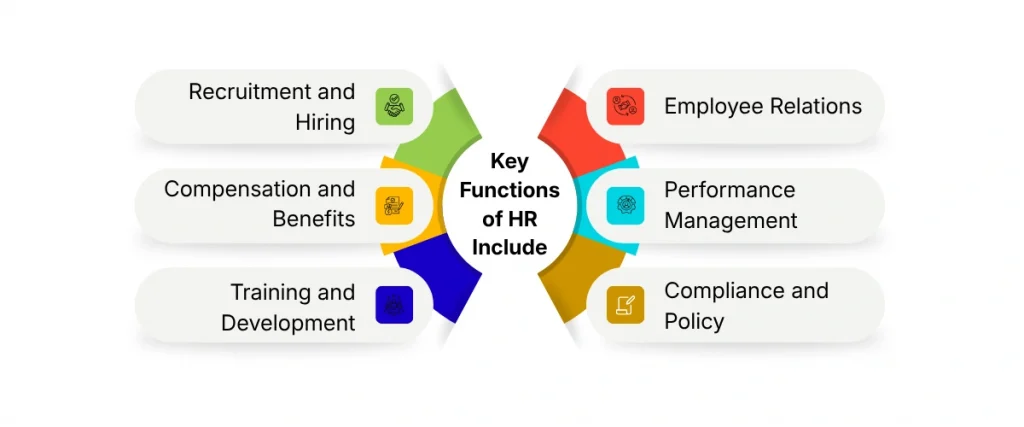
Recruitment and Hiring
Identifying, attracting, and onboarding talent remains a critical HR responsibility. Modern recruitment strategies increasingly focus on candidate experience, employer branding, and workforce planning alongside traditional hiring activities.
Compensation and Benefits
HR teams manage compensation structures, employee benefits, rewards programmes, and payroll-related policies to support employee wellbeing and workforce competitiveness.
Training and Development
Learning and development initiatives help employees build new skills, support career growth, and prepare organisations for future workforce requirements.
Compliance and Policy
HR ensures organisational policies and workplace practices remain aligned with employment regulations, industry standards, and governance requirements.
Performance Management
Performance management processes support employee development, goal alignment, continuous feedback, and organisational performance improvement.
Employee Relations
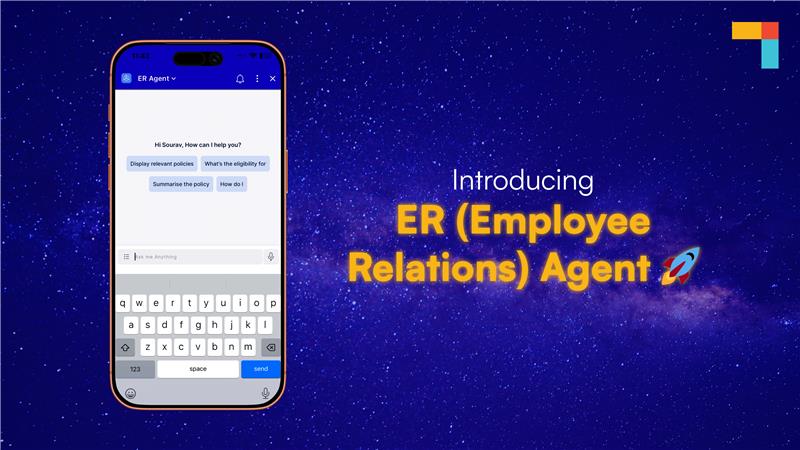
HR plays an important role in supporting workplace relationships, managing employee concerns, and promoting a positive and inclusive work environment.
Although these responsibilities remain central to HR, the methods, technologies, and strategic importance associated with them have evolved significantly.
How is the Role of HR Changing?
The role of HR is becoming increasingly proactive and business-focused. Rather than responding solely to workforce challenges, HR leaders are expected to anticipate future talent requirements, support organisational transformation, and contribute to long-term business strategy.
According to the World Economic Forum’s Future of Jobs Report 2025, 77% of employers plan to invest in workforce upskilling and reskilling initiatives by 2030. As workforce expectations and skills requirements continue to evolve, HR is playing a more active role in preparing organisations for future business needs.
The growing importance of workforce strategy, employee experience, and talent development has positioned HR as a key contributor to organisational performance and sustainable growth.
The Changing Role of HR Manager
Modern HR leaders balance operational responsibilities with strategic priorities. They are increasingly involved in workforce planning, organisational development, talent management, and business transformation initiatives.
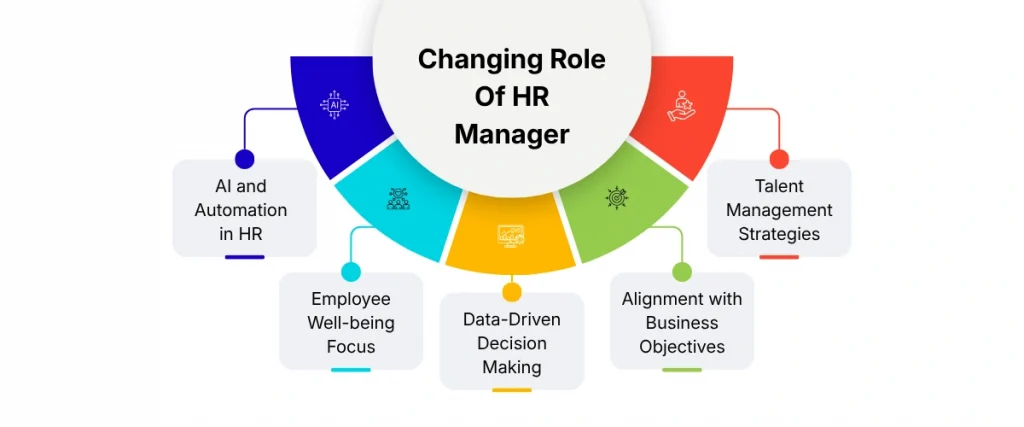
AI and Automation in HR
Automation technologies are helping HR teams streamline administrative activities such as candidate screening, leave management, payroll processing, and employee support. By reducing manual workloads, HR professionals can dedicate more time to strategic initiatives, employee development, and workforce planning.
Employee Well-being Focus
Employee wellbeing has become an important business priority rather than a standalone HR initiative. Organisations are increasingly investing in mental health support, flexible working arrangements, employee assistance programmes, and wellbeing resources.
According to the Gallup State of the Global Workplace Report, organisations with highly engaged employees report stronger productivity and business performance outcomes, highlighting the connection between employee wellbeing and organisational success.
Data-Driven Decision Making
Modern HR leaders increasingly rely on workforce data to support decision-making. Metrics such as employee engagement, retention, internal mobility, hiring effectiveness, and workforce productivity help organisations identify trends and make informed workforce decisions.
Alignment with Business Objectives
HR strategies are increasingly aligned with broader organisational goals. Whether supporting business expansion, digital transformation, or workforce restructuring, HR plays an important role in ensuring people strategies support business priorities.
Talent Management Strategies
As competition for skilled talent continues to increase, organisations are placing greater emphasis on employee retention, career development, succession planning, and internal mobility. Strategic talent management helps organisations build stronger workforce capability while reducing recruitment costs.
Technology and the Changing Role of HRM
Technology has become a key enabler of modern HR operations. Digital platforms help organisations improve efficiency, strengthen employee experiences, and gain greater visibility into workforce data.
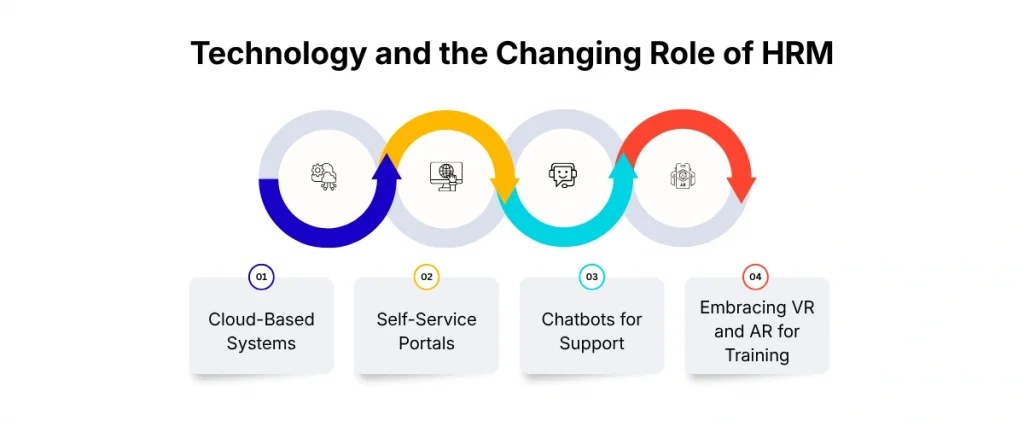
Cloud-Based Systems
Cloud-based HR platforms provide centralised access to workforce information, enabling organisations to manage employee records, payroll, performance, and workforce processes across multiple locations through a single system.
Self-Service Portals
Employee and manager self-service tools allow users to access information, update records, manage leave requests, and complete routine HR tasks independently, improving efficiency while reducing administrative effort.
Chatbots for Support
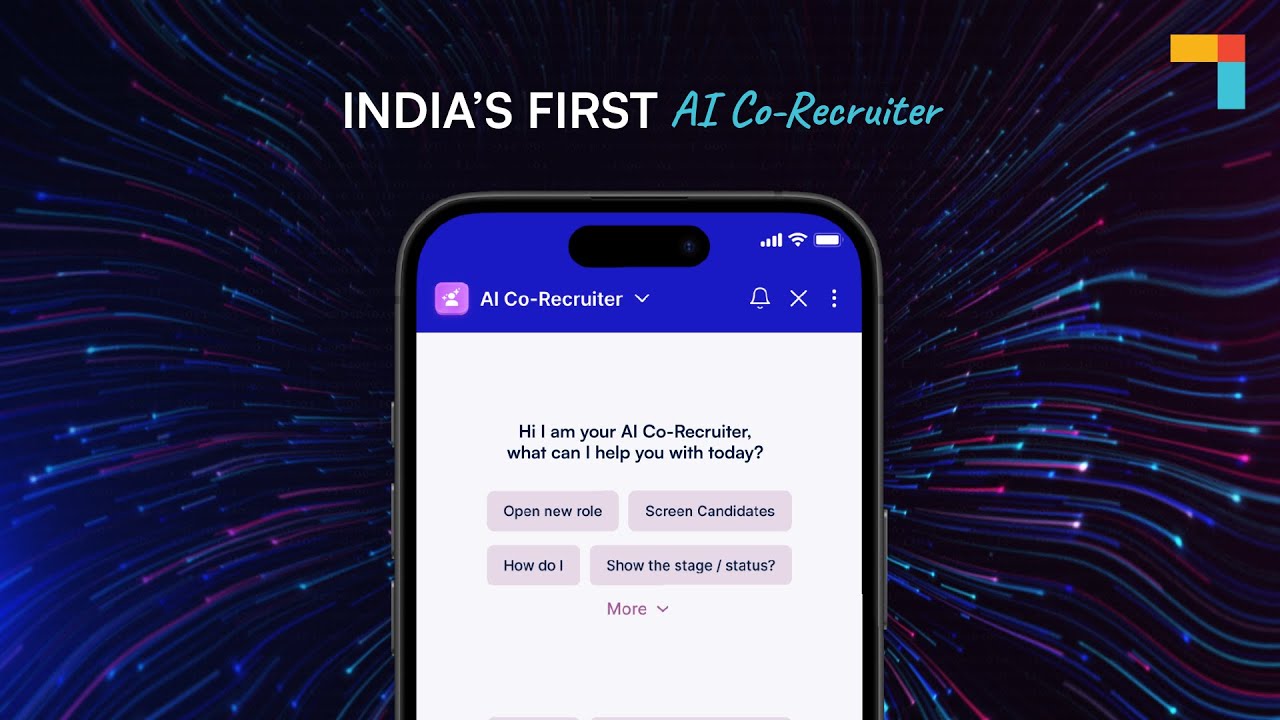
AI-powered virtual assistants can provide employees with quick access to information related to policies, benefits, leave balances, and workplace procedures, helping improve responsiveness and employee experience.
Embracing VR and AR for Training
Virtual Reality (VR) and Augmented Reality (AR) technologies are increasingly being used to support workforce training. These technologies provide immersive learning experiences that can improve knowledge retention while enabling employees to practise complex tasks in controlled environments.
The Rise of AI and Machine Learning in HR
Artificial intelligence is increasingly being integrated into HR processes to support recruitment, workforce planning, learning and development, and employee experience initiatives.
According to the Microsoft Work Trend Index 2024, 75% of knowledge workers already use AI in some form at work, reflecting the growing adoption of AI-enabled technologies across business functions.
Unbiased Recruitment
AI-supported recruitment tools can help reduce administrative effort and support more consistent candidate evaluation processes. Some solutions can also help organisations identify potentially biased language in job descriptions and improve inclusivity throughout recruitment workflows.
Predictive Analytics for Talent Retention
Machine learning models can help organisations identify workforce trends, engagement risks, and retention patterns. These insights support proactive workforce planning and employee retention strategies.
Personalised Learning Programmes
AI-powered learning platforms can recommend personalised development pathways based on employee skills, career goals, and learning requirements, helping organisations deliver more targeted learning experiences.
Mobile Technology’s Impact on HR Practices
The shift toward hybrid and field-based work models means HR must fit into the palm of an employee’s hand.
- Remote Onboarding: New hires can securely sign contracts, upload ID verification documents, and complete introductory modules via mobile applications before their official start date.
- Real-Time Feedback: The traditional, agonising annual review is being replaced by continuous, app-based micro-feedback loops between managers and teams.
- Communication and Collaboration: Mobile platforms keep distributed workforces connected, ensuring deskless or frontline workers stay informed of company announcements instantly.
The Significance of People Analytics in HR
Data is the new currency of human resource management. People analytics allows organisations to back up their talent strategies with empirical proof.
- Enhancing Employee Engagement: By running regular pulse surveys and analysing text sentiment in internal feedback, HR can pinpoint exact teams or departments experiencing low morale before it turns into high turnover.
- Measuring HR Initiatives Effectiveness: If you spend money on a new leadership training programme or mental health benefit, people analytics tracks whether those investments actually lead to lower absenteeism, higher productivity, or better retention.
As we look ahead, emerging technologies will continue to disrupt how companies manage talent.
Blockchain Integration
Blockchain technology will soon streamline background checks by providing unalterable, instantly verifiable digital records of an individual’s academic credentials, previous employment history, and professional certifications.
Gig Economy Adaptation
The modern workforce is increasingly reliant on freelancers, contractors, and project-based consultants. Future HR platforms must seamlessly manage hybrid teams, handling compliance and fast payments for non-traditional workers alongside full-time staff.
Conclusion
The changing role of HR is fundamentally about changing the focus from handling processes to unleashing people’s full potential. The introduction of technology, AI, and data analytics does not eliminate the human side of HR, it actually safeguards it. When the software takes over the mundane and routine tasks, human resources staff can dedicate their efforts to what they really excel at: creating workplace environments that are both supportive and high-performing, where employees are truly motivated to come to work and perform at their best.
FAQs
How has HR’s role changed in the workplace?
HR has shifted from being a back-office department handling support tasks and ensuring compliance with regulations to a front-office role strategically involving talent management to contribute directly to business success.
What should modern HR look like?
Contemporary HR departments should be harnessing data, embracing technology, and prioritizing an excellent employee experience. Whilst analytic tools are used for decision-making purposes, the organization of a positive work environment is kept at the core and human element.
How can HRs leverage technology for transformation?
Technology can be used to transform HR by automating the most repetitive processes such as payroll processing and resume reviewing, offering employee enrollment and information access through self-service modules, as well as analyzing employee departure and satisfaction through predictive models.
What is the future of HR technology?
Going forward, there will be more advanced AI innovations for individualized solutions, immersive VR-based training sessions, digitally encrypted certificates through blockchain, and systems designed for managing freelance workers from the gig economy.
How is AI transforming the role of HR?
AI can help by taking away unconscious bias in hiring, designing individual training programs for employees, allowing chatbots to handle simple FAQ about policies, and predicting those employees who may leave the company by analyzing certain data.
How can HR professionals navigate the changing landscape of their field?
HR workers can successfully cope with changes in the job market by enhancing their ability to analyse and understand data, continuously discovering the automation innovations available, and getting more involved in the high-level strategic parts, such as talent management, leadership coaching, and organisation planning.