











 About Us
 Brand
Brand
 Career
 Contact Us



 +91-7314623098







According to Gartner, 46% of HR leaders reported that recruiting is their top priority. However, despite this emphasis, 36% of HR leaders say they lack the necessary resources to recruit top talent effectively.
This disconnect underscores the need for a comprehensive HR strategy for organizations striving to attract and retain skilled employees.
Recruitment challenges are just the tip of the iceberg. Another critical issue is employee retention.

Alarmingly, 30% of new hires leave within the first 90 days, leading to significant disruptions and increased costs (Source: HBR).
Given these challenges, a well-defined HR strategy is essential for aligning your workforce with your organizational goals, enhancing employee engagement, and driving long-term growth.
An effective HR strategy serves as a roadmap for managing an organization’s most valuable asset—its people. It encompasses everything from workforce planning and talent acquisition to performance management and employee engagement. By aligning HR initiatives with the overall business strategy, organizations can enhance productivity, foster innovation, and create a positive work environment.
In this blog we will discuss how to create an HR strategy that supports business objectives while cultivating a resilient and agile workforce. We’ll also go through the HR strategy framework and give you real life examples of successful HR strategy.
What is an HR Strategy?
An HR strategy is a comprehensive plan that outlines how a company will manage and develop its workforce to align with its business goals. It involves systematic planning to ensure that the organization has the right people in place, with the right skills, at the right time.
This strategy serves as a roadmap for all HR-related activities, guiding the organization in areas such as recruitment, training, performance management, and employee retention.

Suggested Read:
Complete Guide to Employee Retention in a Volatile Labor Market
Why is HR strategy important?
An HR strategy helps organisations align workforce planning, talent management, and employee development with broader business objectives. Without a clear strategy, organisations may struggle to anticipate workforce needs, address skill gaps, or respond effectively to changing business priorities.
A well-defined HR strategy provides a framework for attracting, developing, and retaining talent while supporting organisational growth. It also enables leaders to make informed workforce decisions, improve resource planning, and create a more agile and future-ready organisation.
The Role of an HR Strategy in Business Success
HR leaders are stepping up and taking on a more prominent role in driving midsize business success. Their role extends beyond traditional workforce improvement metrics to encompass the implementation of innovative strategies and technology investments that spur rapid and sustained growth.
In growth-focused companies, HR priorities are translating into significant opportunities. The adoption of appropriate technologies is instrumental for midsize organizations to thrive.
Key benefits include:
- Integrated Operations: Establishing a seamless connection between HR and other business functions enhances overall efficiency.
- Global Visibility: Achieving consistent, enterprise-wide visibility supports better decision-making and strategic planning.
- Flexible Work Models: Effectively supporting hybrid and deskless working models ensures adaptability in a changing work environment.
Despite these advantages, not all midsize companies are prepared to modernize their processes comprehensively. HR leaders can navigate this challenge by identifying and addressing their organization’s most pressing pain points. By developing a strategic plan that empowers employees and promotes sustainable growth, HR can facilitate the transition towards modernization.
Ultimately, the proactive involvement of HR in technology adoption and strategic planning is crucial for midsize businesses aiming for long-term success and competitiveness in an evolving market landscape.
Modules of an Effective HR Strategy
For HR professionals, understanding and implementing key modules of an effective HR strategy can drive organizational success and foster a thriving workforce. Let’s delve into the critical areas that form the backbone of a robust HR strategy.
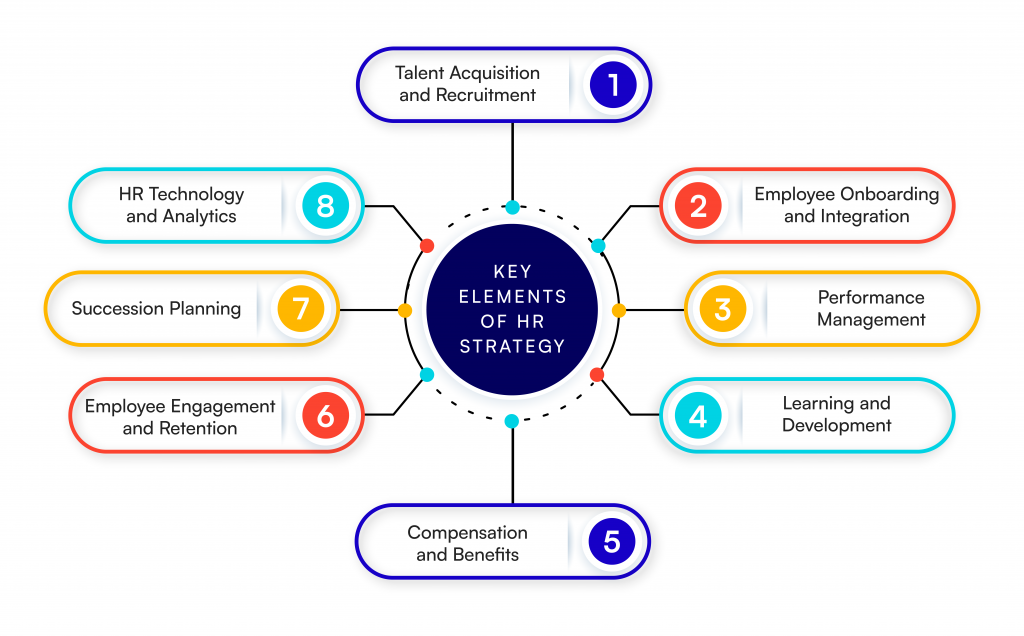
1. Talent Acquisition and Recruitment
Talent acquisition is the first step in building a capable workforce. This module focuses on attracting, sourcing, and selecting candidates who not only possess the required skills but also align with the company’s culture and values.
- Employer Branding: Creating a strong employer brand to attract top talent.
- Strategic Sourcing: Utilizing various channels to find the best candidates, including job boards, social media, and recruitment agencies.
- Candidate Assessment: Implementing robust assessment tools and techniques to evaluate candidate skills and fit.
Suggested Read:
The Ultimate Recruitment Process Guide
2. Employee Onboarding and Integration
Once the right talent is acquired, effective onboarding ensures new hires are integrated smoothly into the organization. This module covers:
- Orientation Programs: Introducing new employees to the company’s mission, values, and culture.
- Training and Development Plans: Providing necessary training to help new hires acclimate and perform effectively.
- Mentorship and Buddy Systems: Assigning mentors or buddies to support new employees during their initial days.
3. Performance Management
Performance management is crucial for maintaining high productivity and ensuring employees’ contributions align with business goals.
- Goal Setting and Alignment: Establishing clear, measurable goals that align with organizational objectives.
- Continuous Feedback: Creating a culture of ongoing feedback and open communication.
- Performance Reviews: Conducting regular performance evaluations to assess and guide employee performance.
4. Learning and Development
Continuous learning and development are vital for employee growth and organizational success. This module includes:
- Training Programs: Offering a variety of training programs to develop employees’ skills and competencies.
- Career Development Plans: Helping employees map out their career paths within the organization.
- Leadership Development: Identifying and nurturing future leaders through targeted development programs.
5. Compensation and Benefits
A competitive compensation and benefits strategy is essential for attracting and retaining top talent.
- Salary Structure: Designing a fair and competitive salary structure.
- Benefits Programs: Offering comprehensive benefits, including health insurance, retirement plans, and wellness programs.
- Incentive Plans: Implementing performance-based incentives to motivate and reward employees.
6. Employee Engagement and Retention
Engaged employees are more productive and less likely to leave the organization. This module focuses on:
- Engagement Surveys: Conducting regular surveys to gauge employee satisfaction and engagement.
- Recognition Programs: Creating programs to recognize and reward employees’ achievements and contributions.
- Work-Life Balance Initiatives: Promoting initiatives that support work-life balance, such as flexible working hours and remote work options.
7. Succession Planning
Preparing for future leadership needs is crucial for long-term success.
- Talent Identification: Identifying high-potential employees who can fill critical roles in the future.
- Development Programs: Providing tailored development opportunities to prepare identified talent for leadership roles.
- Transition Planning: Ensuring smooth transitions during leadership changes through well-defined succession plans.
8. HR Technology and Analytics
Leveraging technology and data analytics can enhance the efficiency and effectiveness of HR functions.
- HR Information Systems (HRIS): Implementing systems to manage employee data, payroll, and benefits.
- Talent Management Systems: Utilizing tools for recruiting, onboarding, and performance management.
- Data Analytics: Analyzing HR data to make informed decisions and improve HR processes.
Benefits of Strategic Human Resource Planning
Strategic human resource planning helps organisations prepare for future workforce requirements while ensuring talent investments support business objectives. Key benefits include:
- Better Resource Utilization: Workforce planning helps organisations understand current and future talent requirements, allowing them to allocate resources more effectively and maintain operational continuity.
- Consistent Talent Supply: By anticipating future workforce needs, organisations can develop talent pipelines and recruitment plans that support long-term business growth.
- Focused Employee Training: Strategic planning helps identify skill gaps and development opportunities, enabling organisations to invest in targeted learning and development initiatives.
- Superior Budget Management: A structured workforce plan provides greater visibility into recruitment, compensation, learning, and workforce-related investments, supporting more effective budgeting and resource allocation.
How to Create an HR Strategy
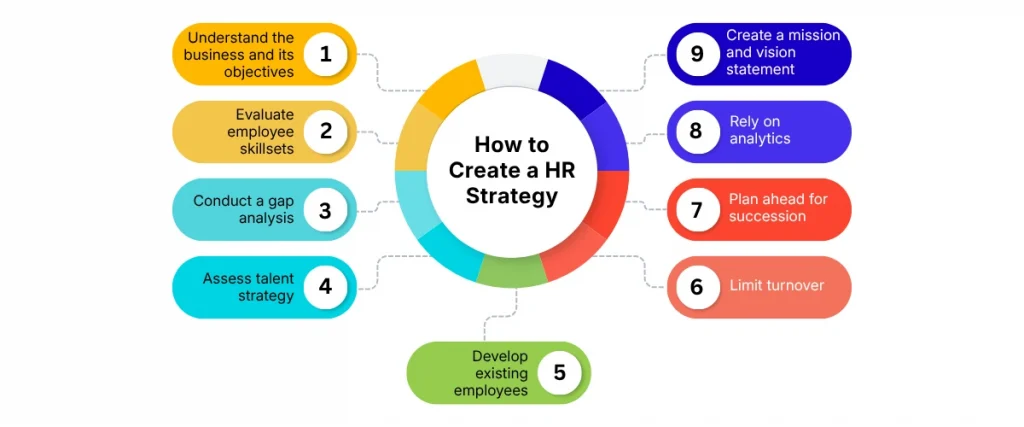
Understand the business and its objectives
An effective HR strategy begins with a clear understanding of organisational priorities, growth plans, workforce requirements, and business objectives. Collaboration between HR and business leaders helps ensure workforce initiatives support long-term goals.
Evaluate employee skillsets
Assessing workforce capabilities provides valuable insights into existing strengths, development needs, and future talent requirements. Skills assessments, performance reviews, and workforce data can support this process.
Conduct a gap analysis
Gap analysis helps organisations identify differences between current workforce capabilities and future business needs. This information can guide recruitment, learning, and workforce planning decisions.
Assess talent strategy
Reviewing talent acquisition, employee development, retention, and succession planning practices helps organisations determine whether existing strategies align with business objectives and workforce requirements.
Develop existing employees
Investing in employee development supports internal mobility, strengthens workforce capabilities, and helps organisations prepare employees for future roles and responsibilities.
Limit turnover
Understanding employee feedback, engagement trends, and workforce data can help organisations identify factors influencing retention and develop targeted retention strategies.
Plan ahead for succession
Succession planning helps organisations prepare future leaders and reduce risks associated with critical workforce transitions. Identifying and developing high-potential employees supports long-term organisational continuity.
Rely on analytics
Workforce analytics provides insights into recruitment, retention, engagement, productivity, and workforce planning. These insights support more informed and data-driven decision-making.
Create a mission and vision statement
A clear HR mission and vision helps establish priorities, guide decision-making, and communicate how HR contributes to organisational success and employee experience.
HR strategy frameworks
Here is our step by step HR strategy framework to align your HR initiatives with your business goals, attract top talent, and foster a productive workplace.
SWOT Analysis
Perform a SWOT (Strengths, Weaknesses, Opportunities, Threats) analysis to assess the current state of your HR department. Identify internal strengths and weaknesses in HR processes, talent, and capabilities.
Evaluate external opportunities and threats such as market trends, competition, and regulatory changes. This analysis provides a clear picture of where your HR stands and where improvements are needed.
Here is an example of HR SWOT Analysis:
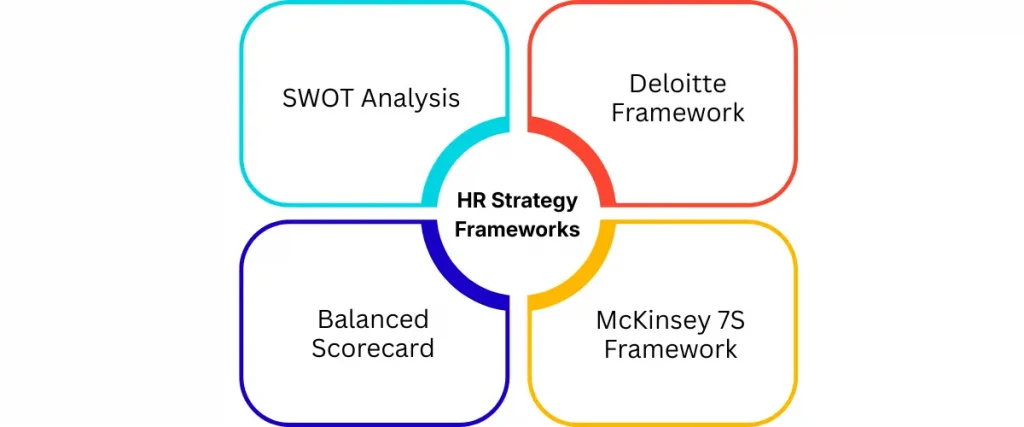
Balanced scorecard
The Balanced Scorecard framework evaluates organisational performance across four areas: financial performance, customer outcomes, internal processes, and learning and development. This approach helps organisations align workforce initiatives with broader business goals.
Deloitte framework
The Deloitte framework focuses on creating a connected workforce ecosystem that supports agility, continuous learning, employee experience, and organisational adaptability. It encourages organisations to align talent strategies with changing business needs.
McKinsey 7S framework
The McKinsey 7S Framework examines seven interconnected organisational elements: Strategy, Structure, Systems, Shared Values, Style, Staff, and Skills. It helps organisations assess alignment and identify opportunities for improvement across people and business processes.
Measuring the success of your HR strategy
The effectiveness of an HR strategy should be measured through workforce and business outcomes. Common indicators include employee retention, recruitment effectiveness, workforce productivity, internal mobility, employee engagement, learning participation, and workforce capability development.
Organisations may also monitor metrics such as time-to-fill, quality of hire, succession readiness, and workforce planning effectiveness. Tracking these indicators helps HR leaders evaluate progress and refine workforce strategies over time.
Successful HR Strategy Examples
To provide a clearer understanding of how to develop an effective HR strategy, let’s explore a few real-world HR strategy examples from organizations that have successfully implemented strategic HR initiatives.
Example 1: Google’s Approach to Talent Management
Google is renowned for its innovative HR practices and commitment to creating a supportive and engaging workplace.
Google’s HR strategy focuses heavily on talent management and employee satisfaction.
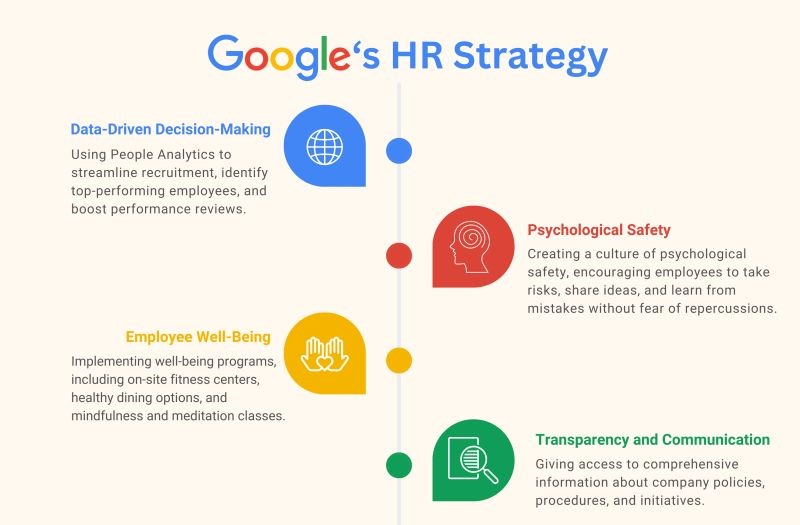
Key initiatives include:
- Comprehensive Talent Acquisition: Google employs rigorous recruitment processes to ensure they hire the best talent. This includes multiple rounds of interviews, skills assessments, and cultural fit evaluations.
- Employee Engagement Programs: Google offers numerous perks and benefits, such as on-site wellness centers, flexible working hours, and continuous learning opportunities. These programs are designed to keep employees motivated and engaged.
- Performance Management: Google uses data-driven performance management systems to track employee performance and provide constructive feedback. This helps employees understand their progress and areas for improvement.
- Innovation and Creativity: Google encourages a culture of innovation by allowing employees to dedicate 20% of their time to work on projects they are passionate about. This not only boosts creativity but also leads to the development of new products and services.
Outcome: Google’s strategic approach to HR has resulted in high employee satisfaction, low turnover rates, and a reputation as one of the best companies to work for.
Example 2: Starbucks’ Focus on Employee Development
Starbucks is known for its strong emphasis on employee development and creating a positive work environment.
Starbucks’ HR strategy centers on continuous learning and development, as well as fostering a supportive company culture.
Key initiatives include:
- Training Programs: Starbucks provides extensive training programs for all employees, from baristas to management. These programs cover customer service skills, product knowledge, and leadership development.
- Career Advancement: The company offers clear career paths and opportunities for advancement, encouraging employees to grow within the organization.
- Employee Benefits: Starbucks offers competitive benefits, including health insurance, tuition assistance, and stock options. These benefits are designed to attract and retain talent.
- Inclusive Culture: Starbucks promotes an inclusive culture where diversity is celebrated, and all employees are encouraged to bring their authentic selves to work.
Outcome: Starbucks’ commitment to employee development and inclusive culture has led to high employee loyalty, strong customer service, and overall business success.
Common challenges in developing an HR strategy
One of the most common challenges is ensuring alignment between HR priorities and broader business objectives. Without a shared understanding of organisational goals, workforce initiatives may struggle to deliver meaningful business impact.
Other challenges include workforce data quality, evolving workforce expectations, changing regulatory requirements, budget constraints, and organisational resistance to change. Addressing these factors requires collaboration, planning, and ongoing review.
Best practices for implementing an HR strategy
Involve key stakeholders
Engaging business leaders, managers, and employees throughout the planning process helps ensure workforce initiatives address real organisational needs and receive broader support.
Know the budget
Understanding available resources helps organisations prioritise initiatives and develop realistic workforce plans that can be implemented successfully.
Remember the basics
Strategic initiatives should complement, not replace, effective HR operations. Organisations should continue to maintain strong foundations in payroll, compliance, employee relations, and workforce administration.
Recognise transactional solutions
Not every workforce challenge requires a long-term strategic intervention. Organisations should distinguish between operational improvements and broader workforce transformation initiatives.
Monitor and adjust the strategy
HR strategies should evolve alongside business priorities. Regular reviews help organisations assess progress, measure outcomes, and make adjustments when workforce needs change.
Case Study: How HDFC ERGO empowered its 11,000+ Last Mile Heroes
HDFC ERGO, faced challenges in managing its growing workforce of over 11,000 professionals across 225 branches, particularly in tier-four and tier-five towns. The HR team sought a technology-driven solution to unify HR practices and provide a seamless employee experience.
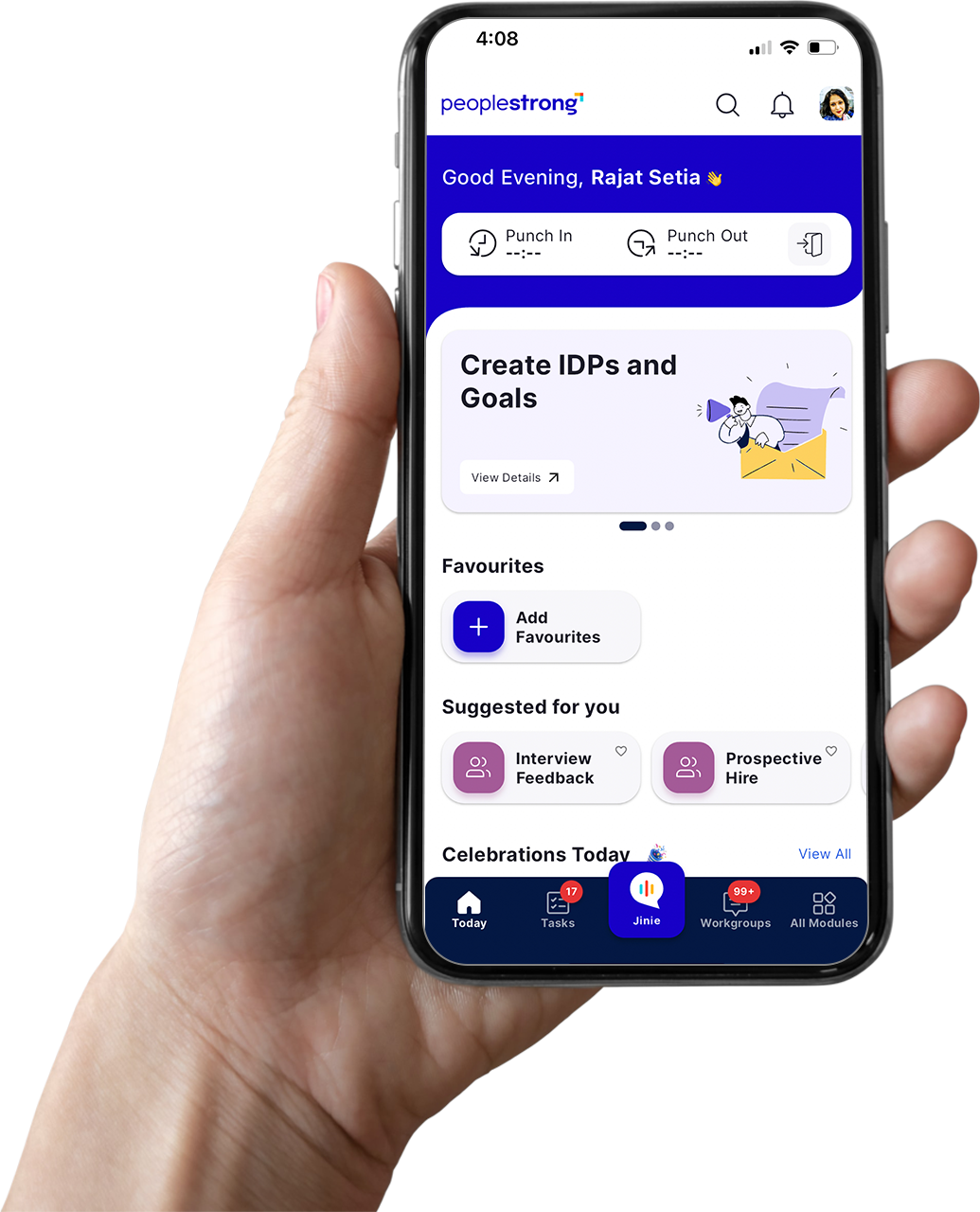
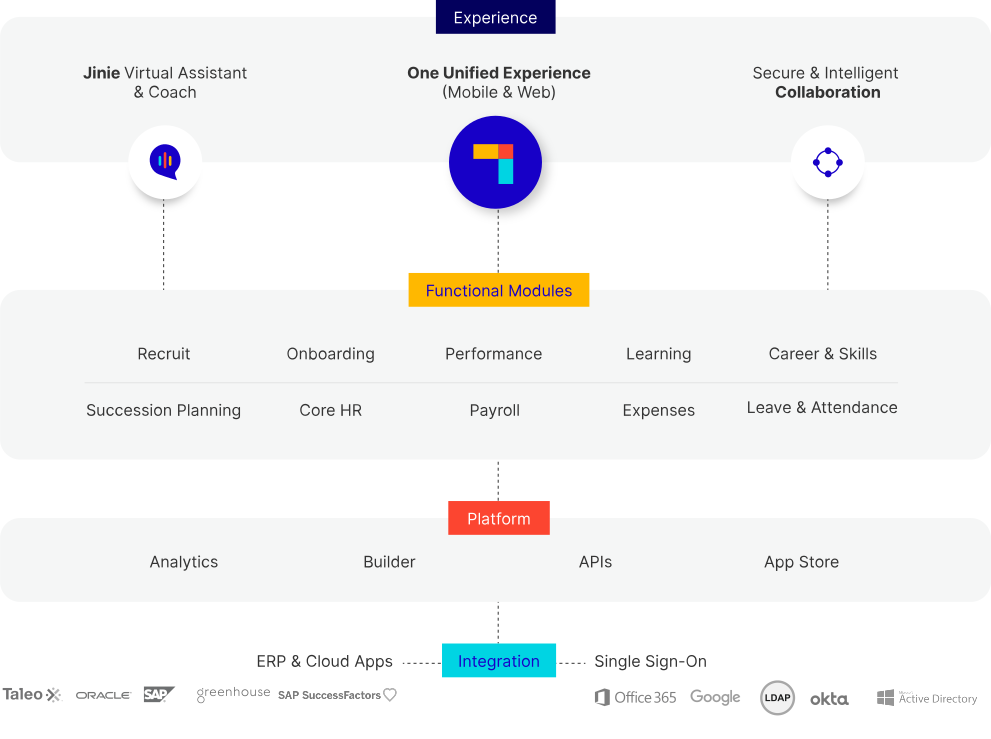
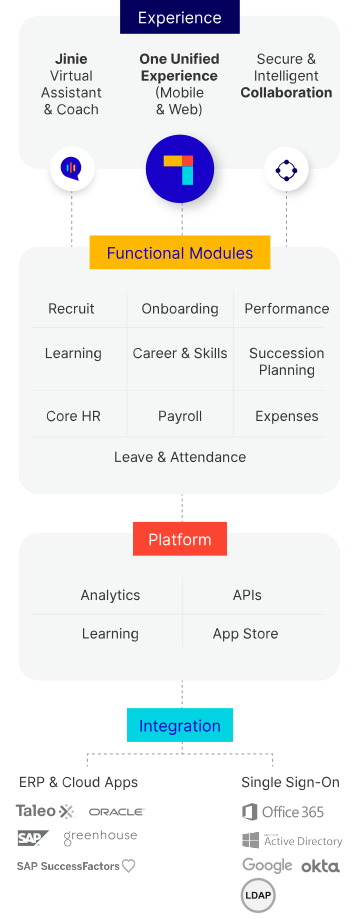
HDFC ERGO partnered with PeopleStrong to develop a robust HR Super App. This app integrated key HR functions such as attendance, leaves, approvals, geo-tagging, recruitment, and performance management. It offered a secure, mobile-first experience with enterprise-grade security and scalable architecture, simplifying operations with single sign-on and easy integration of additional features.
Impact:
- Rapid Implementation: Deployed in just 60 days.
- High Adoption Rate: Achieved 97% adoption within 15 days, boosting employee experience and productivity.
- Enhanced Employee Experience: Created a cohesive and efficient experience for employees across 600+ locations.
- Scalable Solution: Designed to grow with HDFC ERGO’s expanding workforce.
This collaboration effectively addressed the challenges of managing a diverse and expanding workforce, highlighting the importance of leveraging technology to enhance HR practices and drive organizational efficiency.
Conclusion
A strong HR strategy is essential for driving organizational success and fostering a positive work environment. By investing in strategic HR planning, you can ensure that your workforce is aligned with your business objectives, engaged, and equipped to meet future challenges.
While challenges like aligning HR with business objectives and managing change are inevitable, leveraging HR technology can streamline implementation and provide valuable insights.
Now is the time to take action and start developing your HR strategy. Begin by assessing your current HR practices and identifying areas for improvement. If you need further assistance, feel free to contact us for expert guidance and support.
FAQs
What are strategic HR functions?
Strategic HR functions include workforce planning, talent acquisition, learning and development, succession planning, performance management, employee engagement, and workforce analytics. These activities help organisations build and sustain workforce capabilities.
How technology can help your HR strategy?
Technology helps organisations automate routine processes, improve workforce visibility, centralise employee data, and generate insights that support decision-making. Modern HR platforms also support recruitment, learning, performance management, and workforce planning activities.
How is AI transforming HR practices
AI is helping organisations streamline HR processes, improve workforce insights, personalise employee experiences, and support data-driven decision-making. Common applications include recruitment, workforce analytics, employee support, and learning recommendations
What are the three approaches to HR strategy?
The three commonly referenced approaches are the universalist approach, contingency approach, and configurational approach. Each provides a different perspective on how HR practices can support organisational performance and business objectives.
What does a successful HR strategy look like?
A successful HR strategy supports business goals while improving workforce capability, employee engagement, talent retention, and organisational performance. It is measurable, adaptable, and aligned with long-term business priorities.
How can you align an HR strategy with a business strategy?
Alignment begins with understanding organisational goals, workforce requirements, and future growth plans. HR initiatives should be designed to support these priorities through workforce planning, talent development, and performance management.
How can HR strategies address diversity, equity, and inclusion (DEI)?
HR strategies can support DEI through fair recruitment practices, equitable development opportunities, inclusive workplace policies, transparent career pathways, and regular monitoring of workforce outcomes.
What are the main pillars of HR strategy?
The main pillars typically include talent acquisition, workforce planning, learning and development, performance management, employee engagement, succession planning, and rewards and recognition. Together, these areas support organisational and workforce success.