










 About Us
 Brand
Brand
 Career
 Contact Us



 +91-7314623098




A few years ago, picking an HRIS meant comparing attendance trackers and payslip generators. Now the Labour Codes have rewritten how wages, PF, and gratuity get calculated. Your workforce is split across office, remote, and gig arrangements. And your board wants people’s data with the same rigour it expects from a P&L. The system you choose this year has to hold up to all of that, not just replace a filing cabinet.
Below is a working list of the best HRIS software in India for 2026, what each one actually does well, where it struggles, and who it’s really built for. Skip the ten demos you don’t need and shortlist from here instead.
Why Businesses Need HRIS Software for 2026
Three things are landing on Indian HR desks at once this year.
The regulatory side is the most urgent. The four new Labour Codes changed how wages, PF, gratuity, and overtime are calculated; the 50% wage rule alone has forced most companies to rebuild their CTC structures from scratch. States are rolling out their own rules on their own timelines, so payroll systems now need to track compliance that shifts by location. A spreadsheet can’t do that. Most legacy on-prem tools can’t either.
Then there’s scale. India’s HR analytics market crossed roughly $160 million in 2025 and keeps climbing, which tells you how much appetite there now is for HR decisions backed by actual data instead of instinct. Companies hiring across states, bringing on gig and contract talent, or running hybrid teams need software that can handle that complexity without adding three more people to HR just to keep up.
And there’s expectation. People who use consumer apps all day don’t tolerate a clunky HR portal from 2015. They want self-service leave requests, instant payslips, a mobile app that works. An HRIS that can’t deliver turns into friction instead of removing it.
None of this makes the decision a features checklist. It makes it a bet on which platform can absorb regulatory change, grow with the business, and not annoy the people using it every day.
Top 10 HRIS Software in India
| Platform | Best For |
| PeopleStrong | Multinational enterprises requiring extensive compliance features catering to multiple states in India and high-volume payroll processing. |
| Darwinbox | Medium-sized and large businesses searching for a mobile-ready HCM platform featuring smart, customisable workflows |
| Zoho People | Small, medium-sized, and growing companies looking for a scalable and affordable workforce platform featuring a high degree of customisation options |
| Keka | Developing mid-market enterprises aiming to deliver a more employee-centric interface and synchronise payroll in real-time |
| greytHR | Growing and established Indian businesses prioritising straightforward statutory tax and PF compliance |
| ZingHR | Larger Indian and multi-geography enterprises that want AI-driven workforce analytics on top of strong compliance automation. |
| Workday | Multinational companies of considerable size whose HR needs to integrate a single HR management software system to operate globally. |
| Oracle Cloud HCM | Large organisations seeking a comprehensive AI-driven solution to manage and optimise their talent acquisition and workforce management functions |
| SAP SuccessFactors | Global corporations seeking continuous performance management with integrated SAP ERP |
| Bamboo HR | Smaller and medium-sized teams searching for a straightforward HRIS solution with a focus on core HR functions and easier tracking of leaves and onboarding procedures |
PeopleStrong
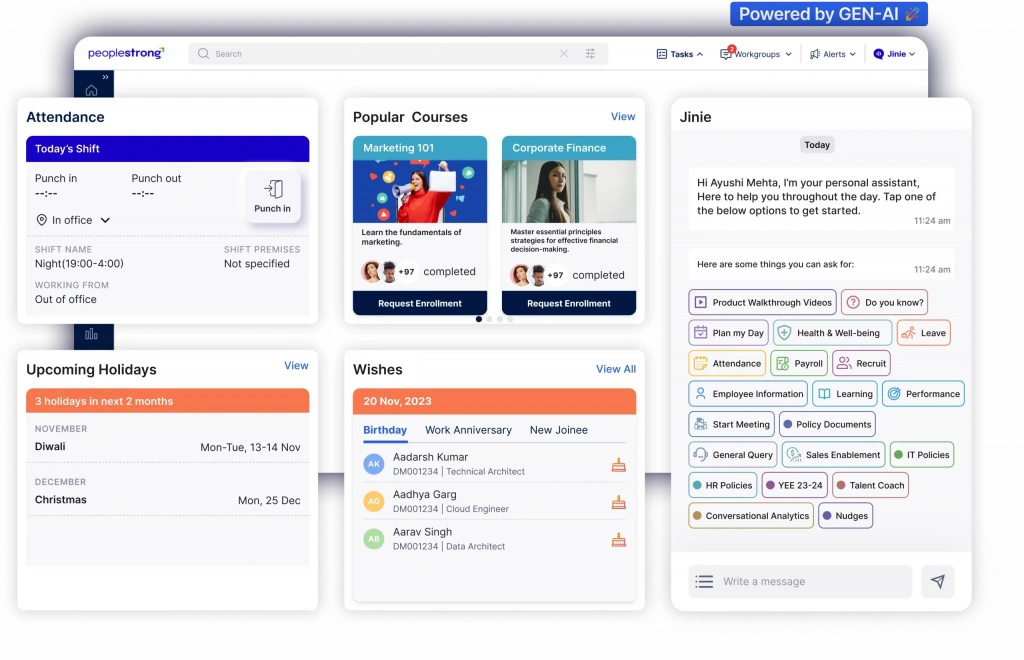
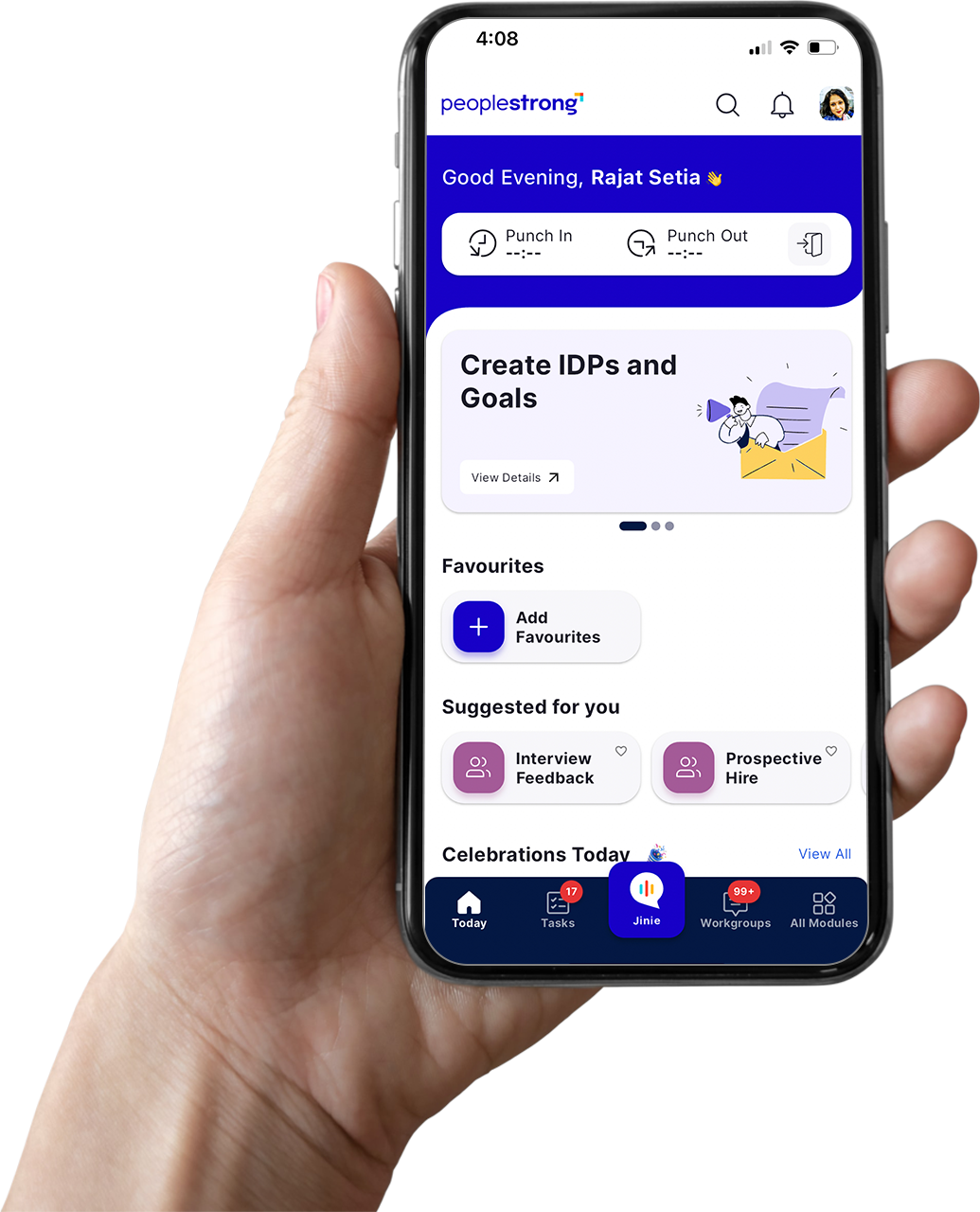
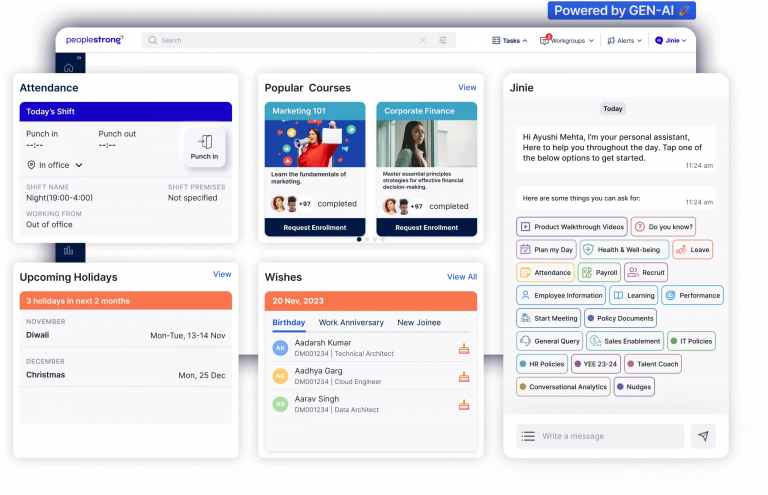
PeopleStrong is an enterprise-grade Human Resource Management platform designed to address the needs of large-scale workforces in India and Asia. The solution is focused on complex payroll processing, statutory compliance, and mobile-first workforce management.
Key features
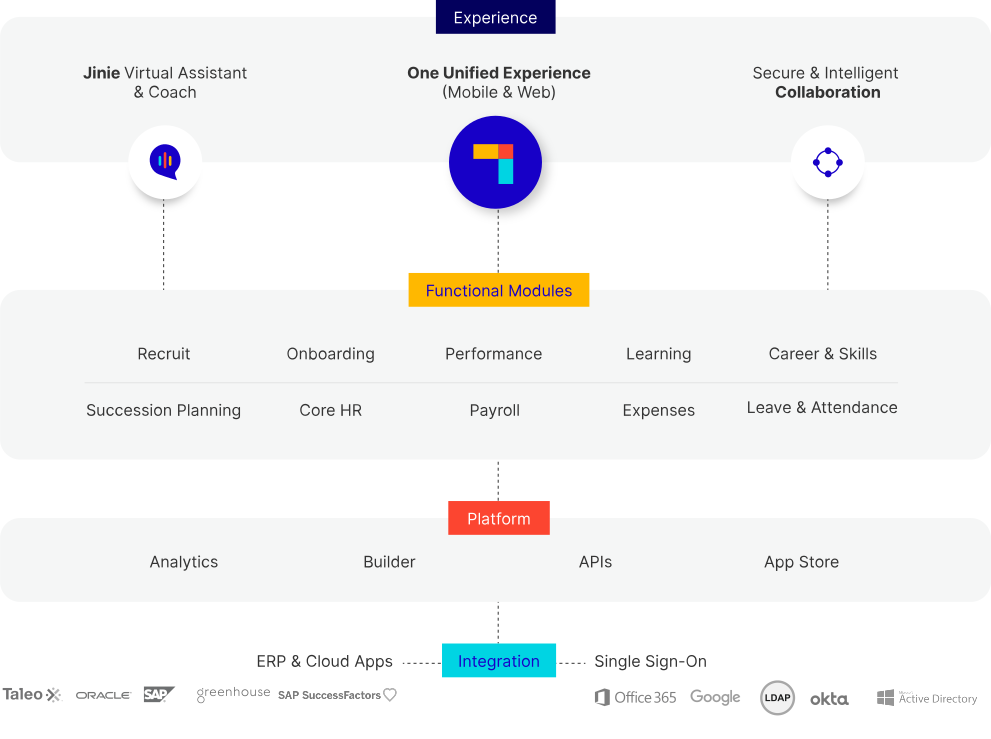
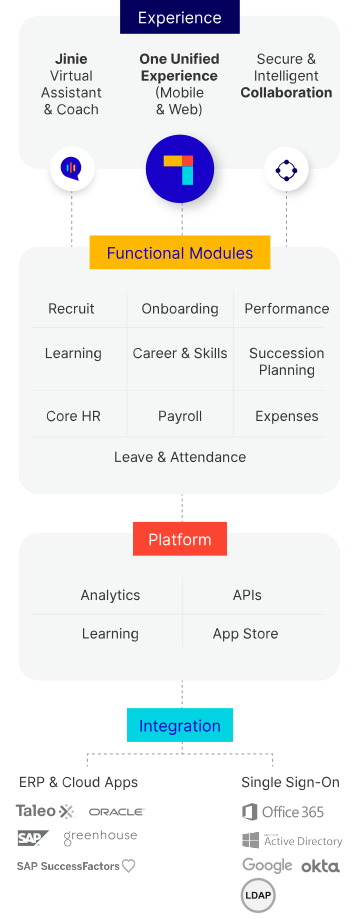
- Unified HCM suite: Supports the complete Employee Life Cycle from recruiting to onboarding to Core HR to payroll, leaves & attendance, performance, learning, careers & skills, succession planning, and compensation, all in one solution.
- Zero-touch payroll and auto-compliance: Manages pro-rata calculation, full and final settlements, and variable payouts automatically, along with continuous statutory compliance for PF, PT, ESI, LWF, TDS, and bonus with automated state-wise filing.
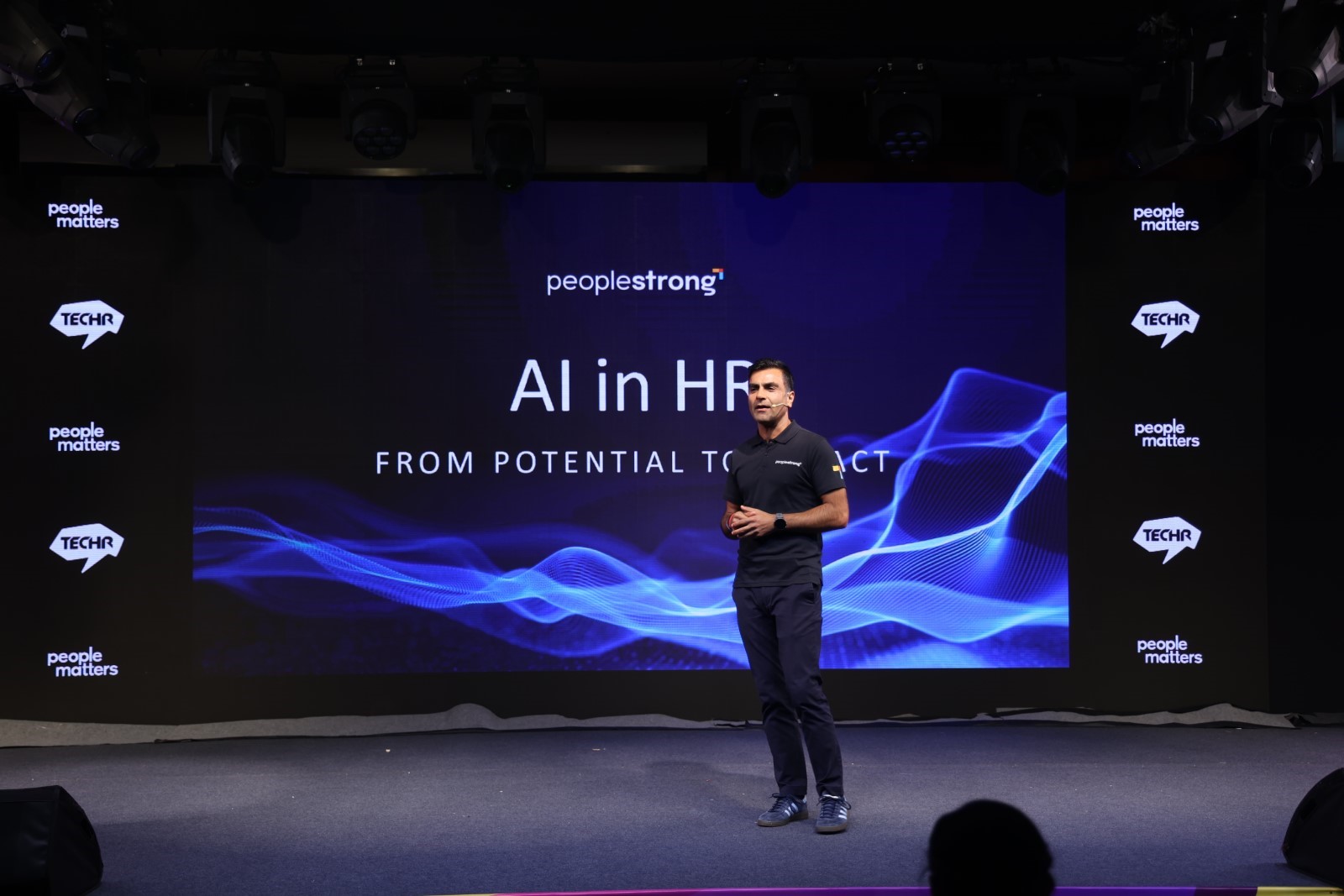
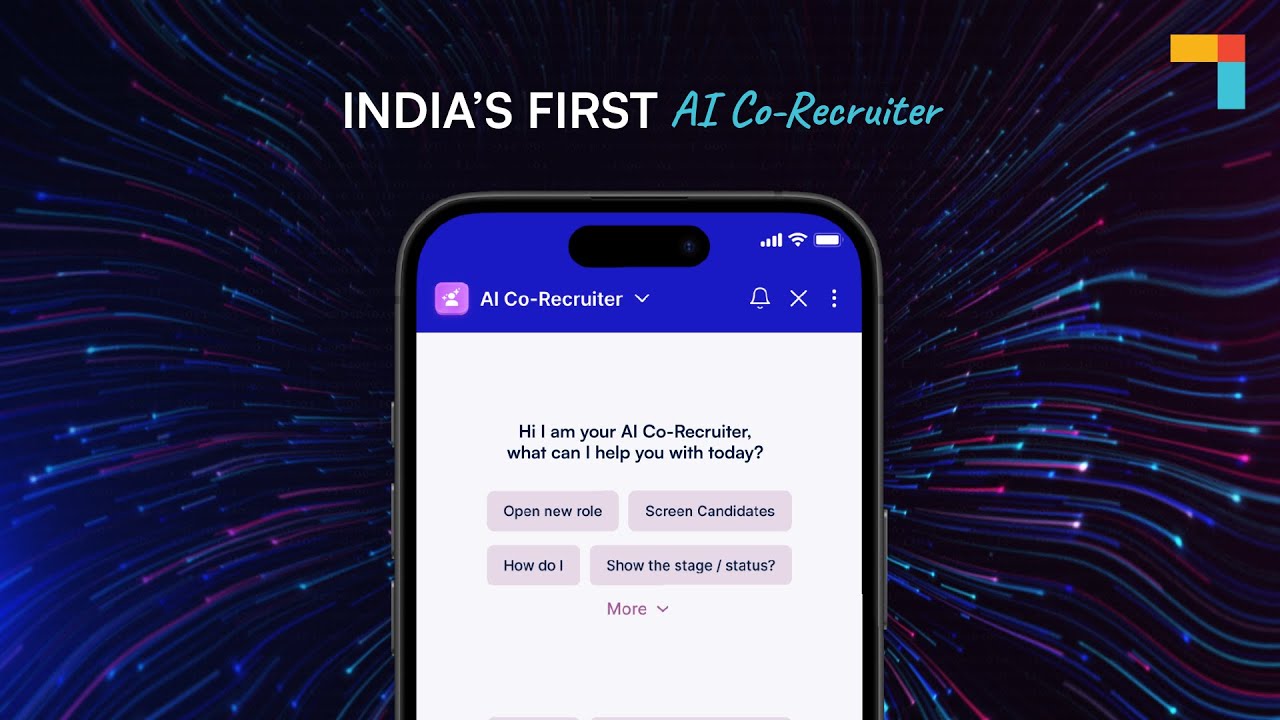
- AI-powered automation: Validation and anomaly detection before payroll processing, along with automating various HR processes, are done via the MAAX AI layer and Jinie agents.
- Multi-country payroll: Payroll operations in India as well as several Asia Pacific & MEA geographical locations are supported by a payroll services Centre of Excellence, with a full payroll outsourcing solution.
- Employee and manager self-service: Payroll slip, Form 16, expense claim, and IT declaration/approval from mobile-first access.
- Workforce Analytics: Customisable dashboards including payroll expenses, attrition rate, productivity, and headcount.
Highlights :Named as one of the top five HCM applications in Asia Pacific by Gartner Peer Insights and is Gartner Customers’ Choice for four consecutive years (2022-2025) for the 1,000+ employees category. Manages the payroll of more than 500 large organisations having more than two million employees within a single system.
Considerations
- Built at enterprise level, meaning businesses with fewer than 500 people will probably be getting more capabilities than they currently need.
- Pan-India coverage, APAC, and MEA is excellent, but it doesn’t cover the 60-country reach that SAP SuccessFactors or Oracle Cloud HCM can.
Best for: Large enterprises and high-growth firms in India, Southeast Asia, and MEA who are looking for an AI-powered solution for managing payroll and the entire employee lifecycle on a single platform rather than having five solutions patched up together.
Darwinbox
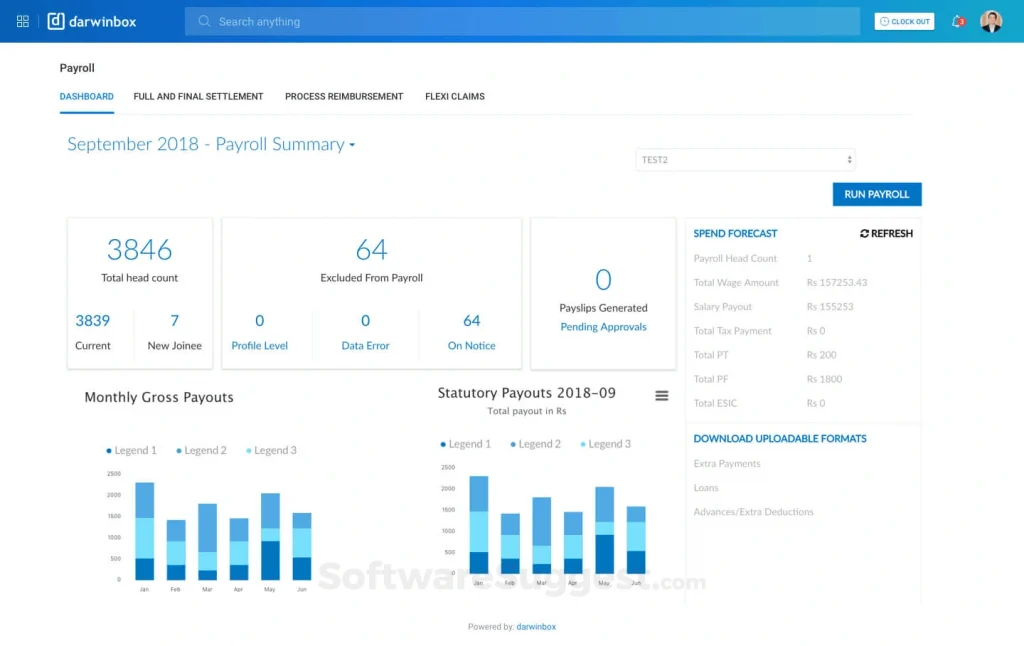
Darwinbox is a cloud-based Human Capital Management (HCM) platform that focuses on managing employee lifecycle workflows in large multi-location enterprises. The tool is suitable for medium and large-scale businesses that seek to digitise their end-to-end HR processes through advanced mobile self-service options.
Key features
- Core HR and workforce management: Employee records, company structure, workforce planning and customised workflows through the system.
- Payroll and compliance: Payroll support in different countries, automation of statutory compliance, and flexible pay grade model.
- Recruitment and ATS: Hiring powered by Artificial Intelligence, custom career sites, and an optimised onboarding method.
- Performance and OKRs: Creation of objectives, 360-degree evaluation, performance management system, and pay modeling.
- Engagement: Feedback from employees via the Pulse Survey App, Employee Social Network, and the Recognition system that works.
- Mobile-first and AI: Face recognition and attendance controlled by Geofencing, Integration with WhatsApp and MS Teams, Darwinbox Sense artificial intelligence workflow automation.
Highlights: Darwinbox helps more than 850+ brands with a combined 2 million+ of their staff from over 100+ different countries.
Considerations
- Pricing is completely on a case-to-case basis, without disclosing pricing, and free demo version not available either.
- Dedicated time is required to create the reporting the way you want especially if your team is small and you don’t have an HRIS administrator.
Best for: Multinational large-scale Companies, especially the ones with around, or a bit more than, 500 employee count.
Zoho People
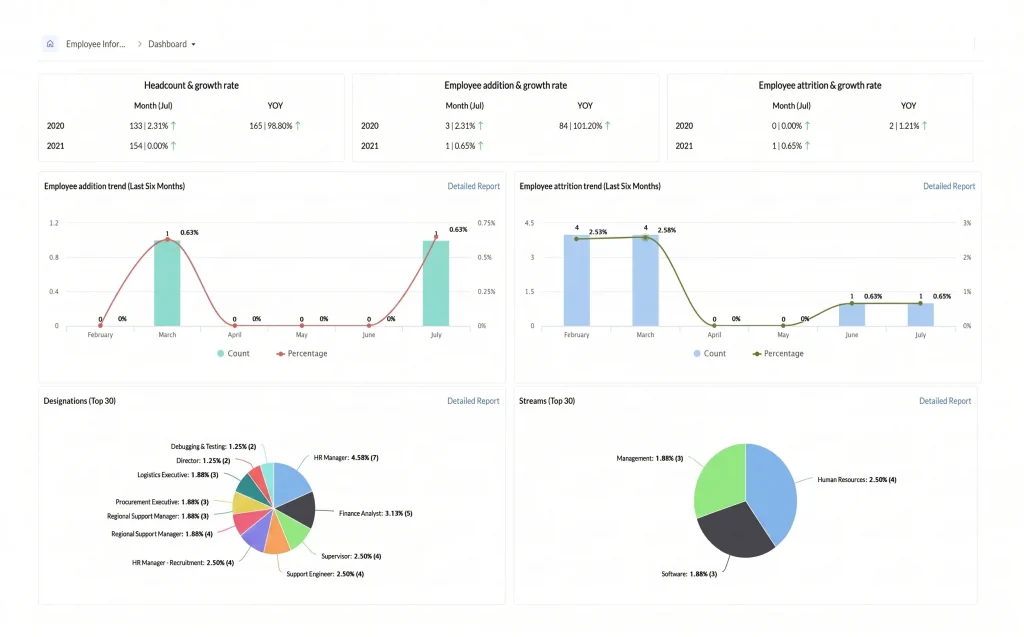
Zoho People is a modular and affordable HR platform that offers extensive employee database management, attendance monitoring, and leave tracking tools for small and medium-sized growing businesses.

Key features
- Employee database and self-service: A central system that includes a portal that employees may themselves update.
- Time and attendance: Creating rosters of working time for employees, recording of working time, and automated work leave applications.
- Recruitment and onboarding: A system to keep track of applicants with checklists of how to onboard the right person.
- Performance management: Setting goals to be reached, evaluating employee performance, 360-degree feedback system.
- Zoho ecosystem integration: Can operate directly with Zoho Books, Zoho Recruit, as well as other applications of the Zoho suite.
- Reporting and analytics: Trends in time attendance, leaves statistics, working team statistics.
Highlights: The pricing plan starts from a tiered employee-per-head rate with minimum below $2/user/month, along with a free trial. A good value option for small teams if they are already working with Zoho tools.
Considerations
- The interface, while very practical, looks outdated, and many users say that getting used to setting up custom workflows takes a lot of time.
- Key features such as detailed performance tracking and attendance are available in higher-priced plans.
- The payroll flexibility to suit the Indian-specific statutory requirements is limited compared with what is available in dedicated Indian payroll platforms
Best for: Start-up companies that need an easily adaptable HRIS system at low cost and do not want complex solutions like the ones required for larger organisations. It is best suited for companies that already use Zoho solutions.
Keka
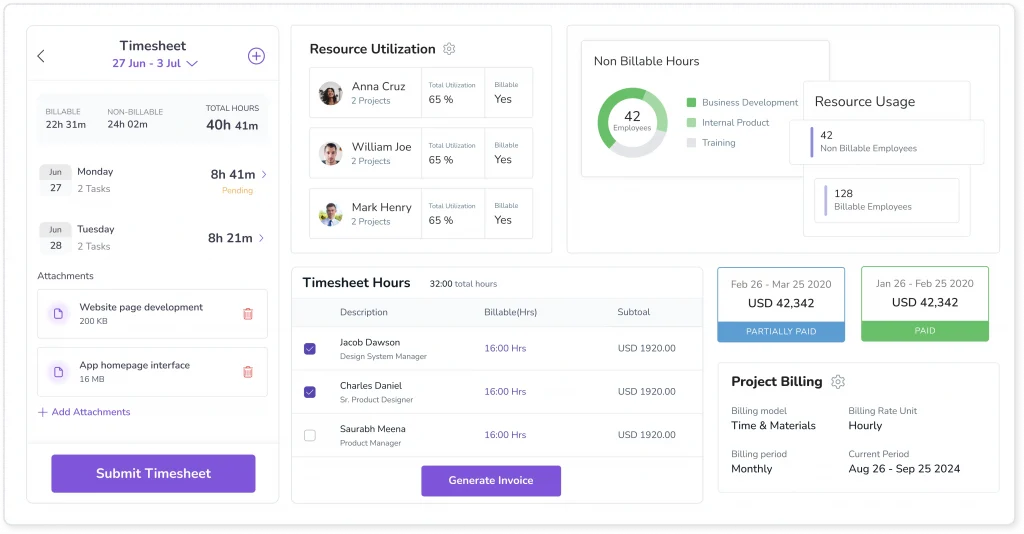
Modern and intuitive HCM and Payroll solution focused on small and medium enterprises with high-growth potential. It fully automates payroll and attendance while also providing time tracking, performance tracking, and employee directory features.
Key features
- Payroll & compliance: Full automation of PF, ESI, TDS, professional tax & Labour Welfare Fund gratuity computations, all tailored very closely to the Indian statutory requirements.
- Time & Attendance: Bio-metric, GPS & self-identification for field & distributed teams.
- Performance Management: OKRs, 360 feedback, and 9-box succession grids.
- Recruitment: applicant tracking, interview scheduling, offer management.
- Expense & Travel Management supported by digital approval workflows.
- Employee self-service portal, mobile app.
Highlights: Designed exclusively for Indian payroll statutory compliance coupled with a user-friendly interface that is frequently praised. The product is often chosen for mid-sized Indian companies.
Considerations
- Multi-country payrolls primarily use outside tools and don’t have native support.
- The LMS and engagement survey modules are exclusive to the most expensive plan.
- The starting cost does not make it a natural choice for very small teams (less than 25).
Best for: Indian small and mid-sized enterprises and companies with employee numbers between approx 50 and 1000 who desire native in-depth statutory compliance but do not want to compromise on the use of modern performance tools.
greytHR
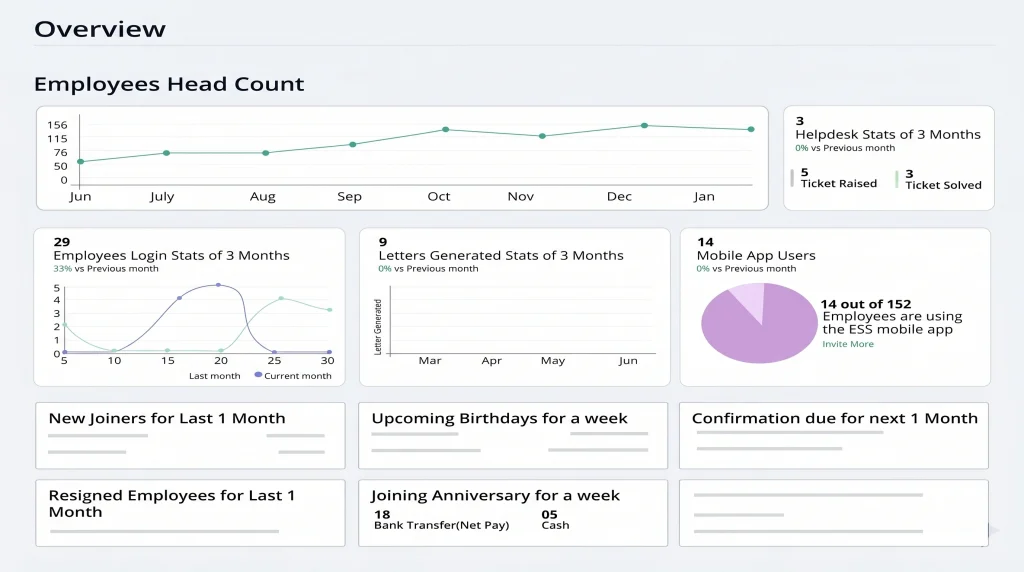
greytHR is a cloud-based payroll and HRMS software popular among mid-market and small businesses in India. It specialises in automated processing of local statutory requirements, including PF, ESI, and TDS, as well as multi-location workforce management solutions.

Key features
- Core HR and onboarding: Employee lifecycle management from hire through exit.
- Payroll and compliance: PF, ESI, professional tax, and TDS processing, with Form 16 and Form 24Q generation, and statutory rules that update automatically.
- Leave and attendance management with configurable policies and mobile check-in.
- Employee self-service portal and mobile app for payslips and leave balances.
- HR helpdesk to centralise and track employee queries.
- Reports and analytics gallery with customisable payroll and attendance reports.
Highlights: Used by more than 30,000 organisations and 3 million people across India, the Middle East, and Singapore. Known for payroll runs that are fast and reliably compliant.
Considerations
- The interface feels dated next to newer platforms, and report or leave-policy customisation is limited.
- The mobile app has fewer capabilities than the desktop version.
Best for SMBs that want dependable, compliance-first payroll and attendance without a steep learning curve.
ZingHR
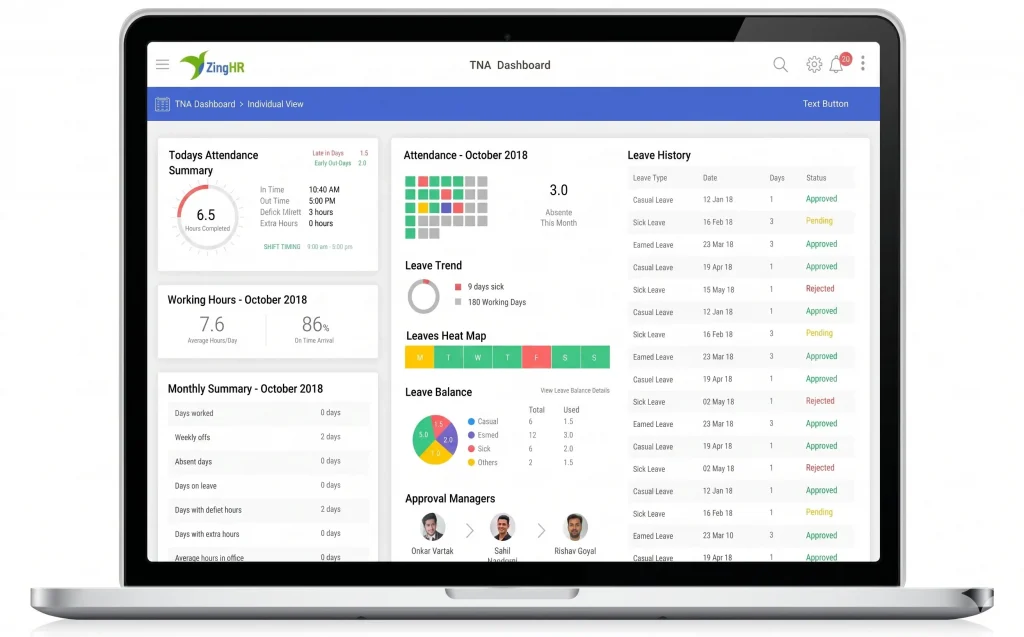
Workflow-driven HCM system specially designed to automate and standardise core processes for remote and field staff.
Key features
- Hire-to-retire HCM: Employee database, onboarding, structured exit management.
- Payroll and compliance: Payroll processing and tax compliance reporting across multiple geographies.
- AI-driven recruitment: Resume matching, candidate ranking, robotic video interviews.
- Performance management and goal tracking with real-time dashboards.
- Workforce analytics: Predictive engagement, attendance, and productivity insights.
- AI chatbot and voice-enabled HR functions for everyday employee queries.
Highlights: A Gartner-recognised, Microsoft-accelerated HCM platform with real depth in AI-led analytics and compliance automation across 30+ countries.
Considerations
- Implementation can stretch out for complex, multi-entity setups.
- Deeper customisation usually needs specialist support during rollout.
Best for: Larger Indian and multi-geography enterprises that want AI-driven workforce analytics on top of strong compliance automation.
Workday
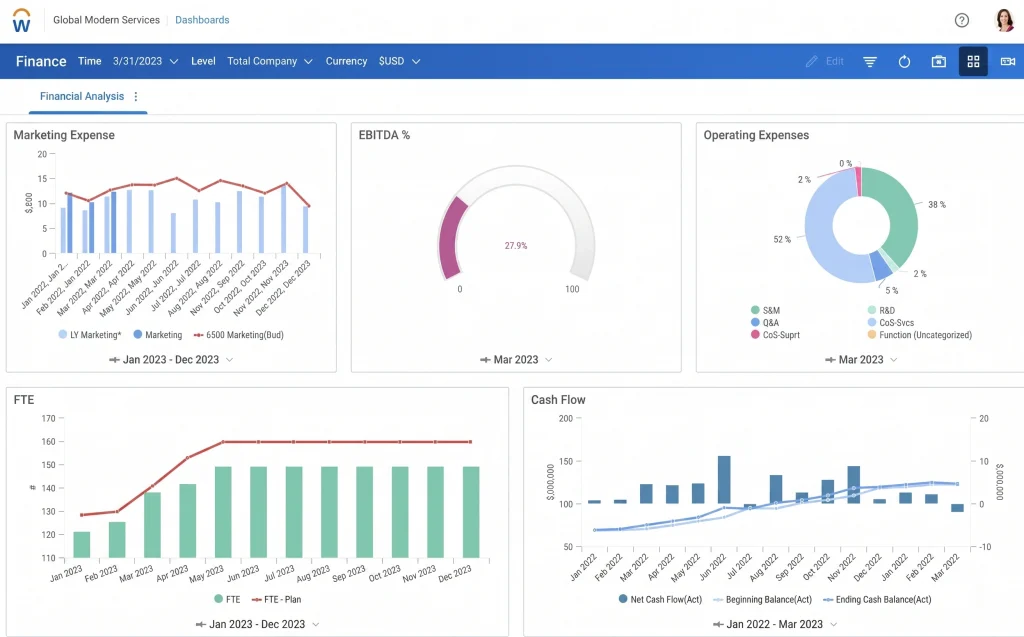
An enterprise-level HR management platform focused on large-scale multinational organisations. It offers a unified suite of solutions from workforce planning, core HR, executive business intelligence, and financial management solutions.
Key features
- Integrated core HCM: One data model for HR, Payroll, Talent, and Finance.
- Talent recruitment: Skills Cloud and talent acquisition.
- Workforce planning and analytics: Illuminate AI for advanced insights into your workforce.
- Global compliance and security: Designed for audit trail and access control within a global environment.
- Payroll support: Native Payroll is available in the USA, Canada, the United Kingdom, France, and Australia. In India and other countries, Payroll is provided via partner or connector integration.

Highlights: It is a long-time and well-rooted HR software provider in major corporations, based entirely on a single employee data model. Multinationals heavily relying on this feature for harmonising their practices throughout different locations and markets in their business operation can benefit greatly from it.
Considerations
- India payroll is not a native functionality so you have to engage either third-party partners or connectors in your statutory processing that would increase the workload and add complexity to your HR process.
- The cost of the software and the time and effort to implement it make this solution more suitable for organisations having a size of 500 employees and above up to 1, 000.
- There are some routine operations in Workday such as taking leave that require more screen clicks and navigation compared to those done in simpler systems.
Best for: Multinational companies of considerable size whose HR needs to integrate a single HR management software system to operate globally.
Oracle Cloud HCM
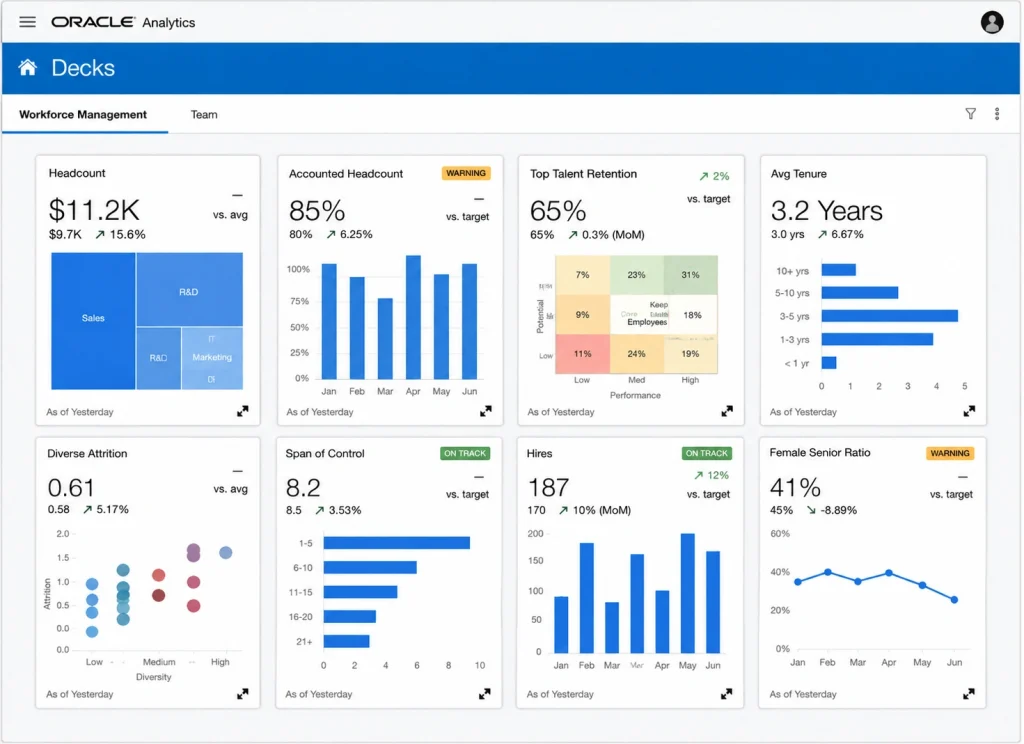
Oracle Cloud HCM is a comprehensive enterprise-level cloud HR management suite that delivers AI-powered insights and full lifecycle management of multinational workforces. It is a unified cloud platform that helps organisations worldwide optimise their people operations.
Key features
- Unified HCM and payroll: Hiring, onboarding, learning, and payroll on a single Fusion Cloud platform.
- Native India payroll: Part of Oracle’s global payroll footprint across 60 countries, built for Indian statutory and tax requirements.
- AI-assisted recruitment: Candidate screening, interview scheduling, automated reminders.
- Workforce management: Scheduling tied directly to payroll to cut down on corrections.
- Real-time analytics: Dashboards with over 1,000 embedded KPIs.
- Oracle ME: An employee experience layer for personalised journeys and communication.
Highlights: Native Indian version of payroll with tight Fusion Cloud integration into oracle’s wider ERP suite, ideal for large-scale running on Oracle.
Considerations
- The best return on investment occurs when it is combined with an Oracle ERP or Fusion system; standalone deployment is not common.
- The process of implementing the solution is enterprise-scale, which means higher costs and complex implementation.
- Fewer companies will possibly find it difficult to manage the system compared to what the smaller ones require.
Best for: Big businesses, especially those already using Oracle ERP systems and who need integration of HR, payroll, and financial data into one single system.
SAP SuccessFactors
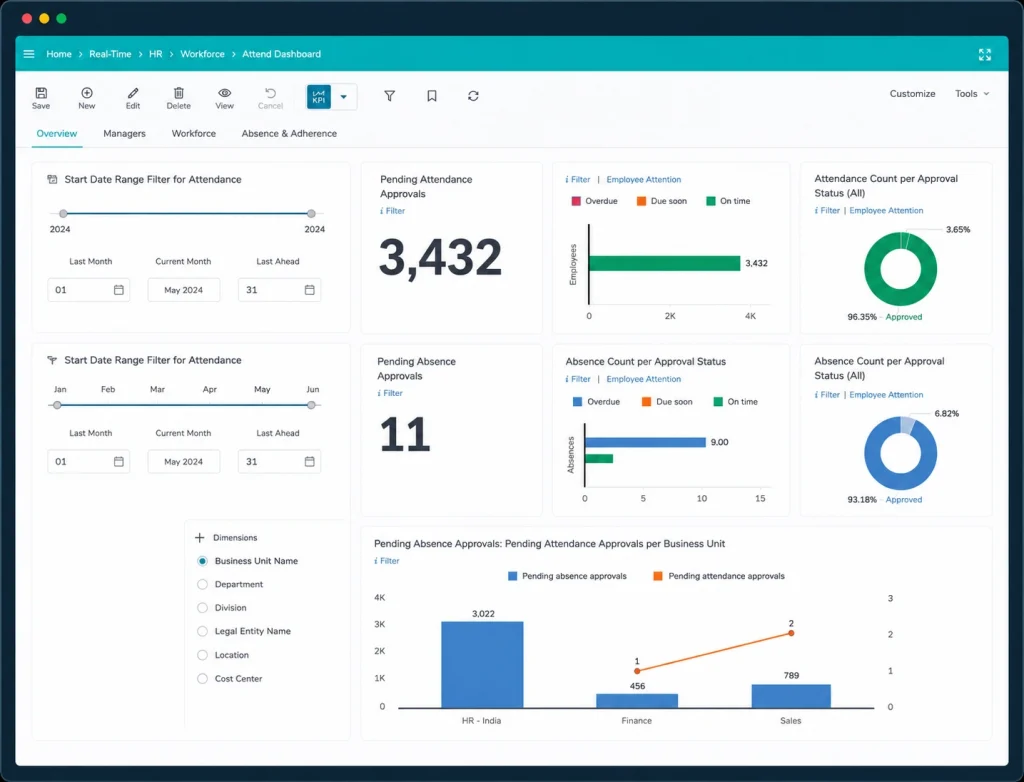
SAP SuccessFactors is a cloud-based HCM suite aimed at helping organisations plan, manage, and analyze their workforce requirements.
Key features
- Employee Central: The platform allows employees to carry out day-to-day functions such as keeping HR records, managing organisational changes and configuring new workflows
- Employee Central Payroll: It works across more than 60 countries with the same system, which means you don’t have to go through country-specific payroll processes. The payroll process is fully configurable; you can make changes to it as needed to meet your payroll processes. Retroactive payroll runs and off-cycle pays are allowed
- AI-powered Payroll Control Centre: This tool not only detects anomalies but also leads you through the resolution process and provides pay explanations generated by Joule AI
- Talent management: It covers performance management, succession planning, career development, and learning management
- Recruiting: Candidates with the right set of qualifications can be reached by the company very quickly. Moreover, candidate communication can be automated by the system through a sequence of pre-defined emails.
- Onboarding: It helps the company smoothly integrate a new employee and prepare him/her for the job at the same time
- Workforce analytics and People Intelligence: Can be used to give senior leaders insights into the workforce.
Highlights: SAP payroll solution is available in 100+ countries thanks to country-based product managers and is completely integrated into the SAP ERP.
Considerations
- Implementation requires the company to actually make major configuration decisions and be heavily involved by the IT team.
- Total ownership cost grows quickly beyond licensing costs.
Best for: Big, often multinational, companies that are already using the SAP system and want to be able to do the payroll and compliance aspects from a global perspective.
Bamboo HR
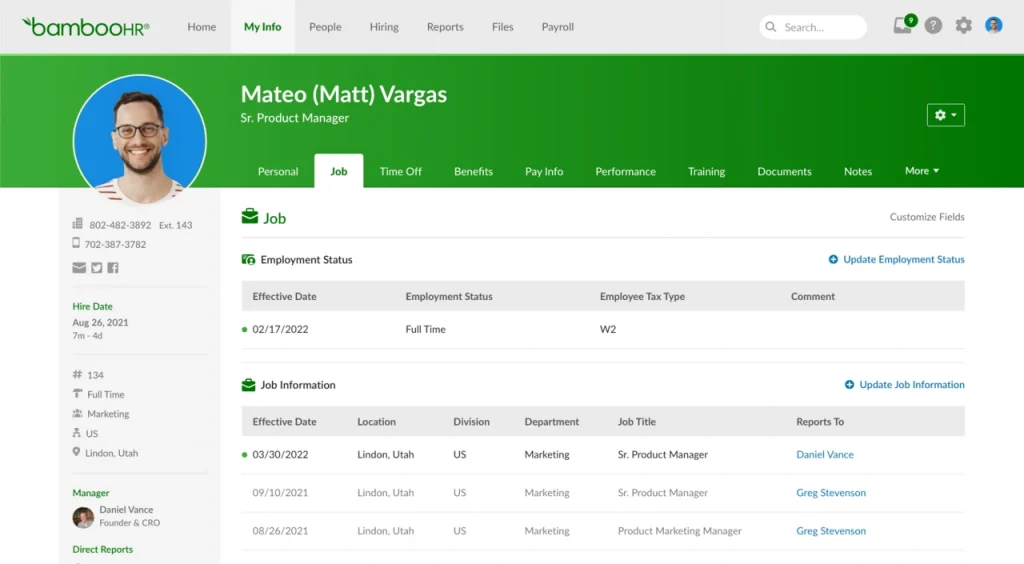
BambooHR is a simple and robust HR software that can be used by smaller and mid-sized companies. It houses all the information regarding your employees and helps you recruit, train, and manage your team without much paperwork.
Key features
- Human resources core record-keeping: Centralised employee database along with document management.
- Onboarding: New hire packet and digital signatures.
- Time and attendance: Time management plus Shift Scheduling launched in 2026.
- Performance management: Short check-ins and goal setting rather than annual performance reviews.
- Recruitment: Embedded applicant tracking system.
- Payroll: Payroll is available as an add-on and more than 150 third-party integrations.
Highlights: One of the cleanest and easiest-to-navigate interfaces among all the players, very good adoption by employees and a transparent pricing model.
Considerations
- Payroll is a paid add-on and US-only; Indian statutory processing (PF, ESI, TDS) isn’t natively supported, so Indian teams will need a separate payroll tool alongside it.
- Depth for complex, enterprise-scale HCM needs falls short of the larger suites on this list.
Best for: Small to mid-sized teams, roughly 20 to 500 employees, with US-based payroll needs that value ease of use over deep India-specific compliance.
How to Choose the Right HRIS Software in India 2026
Start with compliance, not features. Given how much the Labour Codes have changed wage, PF, and gratuity calculations, the first question for any shortlist should be whether the platform handles Indian statutory compliance natively, or whether it depends on a third-party connector. That one question alone rules out a few otherwise-attractive global platforms for companies whose workforce sits mostly in India.
Match the platform to your actual size. A ten-person startup evaluating Workday or SAP SuccessFactors is solving a problem it doesn’t have; those platforms assume a dedicated HRIS admin and a multi-year implementation budget. On the flip side, a 2,000-person multinational trying to run global payroll on a tool built for 50-person teams will hit a wall fast.
Check how pricing actually scales, not just what the headline number says. Per-employee pricing looks simple until a growing team hits a higher tier and discovers the features it actually needs: attendance tracking, performance reviews, and real reporting.
Weigh implementation time against how urgent this is. If payroll has to comply with new state-level Labour Code rules within a quarter, a platform that takes six months to configure isn’t a real option, no matter how capable it looks on paper.
And talk to actual users, not just the sales team. Review sites like G2 and Capterra surface the friction a demo never will: a clunky mobile app, slow reports, features that look great in a pitch and annoy people in daily use.
Conclusion
There’s no single best HRIS system in India for every business. There’s a best fit for your size, your compliance load, and how fast you need to move. Keka and greytHR tend to win on statutory depth and speed to value for smaller Indian-rooted companies. PeopleStrong sits a tier up, with the same depth of Indian compliance but built for enterprise scale, with payroll reaching across Asia Pacific and MEA too. Darwinbox and ZingHR land in a similar enterprise bracket, built for scale but still grounded in Indian and Asia-Pacific compliance. Zoho People and BambooHR are solid, affordable choices for smaller teams, as long as you go in clear-eyed about their payroll limits. And Workday, Oracle Cloud HCM, and SAP SuccessFactors earn their place for true global multinationals that need one workforce data model spanning dozens of countries, not just one region.
Wherever you land, run the shortlist through the same test: can it keep up with how fast Indian labour compliance is moving right now, and will it still hold up at twice your current headcount?
Frequently Asked Questions
What is HRIS software and how does it help an Indian business?
An HRIS centralises employee data, automates routine work like leave and attendance, and in most modern platforms, handles payroll and statutory compliance too. For an Indian business, that means replacing manual registers and spreadsheets with one auditable system that keeps pace with PF, ESI, and gratuity rules as they change.
Can HRIS software handle payroll too?
Most platforms built for the Indian market, PeopleStrong, Keka, greytHR among them, handle payroll natively, with PF, ESI, TDS, and gratuity built in. Global platforms vary more: Oracle Cloud HCM and SAP SuccessFactors now offer India-specific payroll localisation, while Workday and BambooHR lean on third-party partners or add-ons for Indian statutory processing.
Is cloud HRIS software secure and compliant?
Reputable vendors carry independent certifications like ISO 27001 and SOC 2, along with role-based access and encrypted storage. Security posture still varies vendor to vendor, so ask any platform on your shortlist for its current certifications and data residency practices before signing anything.
How is an HRIS different from HRMS or HCM?
In practice, the three terms overlap and vendors mostly use them interchangeably. Loosely: HRIS covers core employee data and admin, HRMS adds operational layers like payroll and attendance, and HCM stacks on strategic tools like talent management and workforce analytics. Most platforms here, PeopleStrong and Darwinbox included, now function across all three at once.
What features should I look for in the best HRIS systems?
At minimum: native Indian statutory compliance, reliable attendance and leave tracking, employee self-service, and a mobile app people will actually use. Past that, go by your own gap, recruitment tools if hiring is the bottleneck, performance and OKR features if you’re scaling management layers, multi-country payroll if you’re expanding beyond India.
Can HRIS software support multi-location or multi-country teams?
Yes, though the depth varies a lot. PeopleStrong, Darwinbox, ZingHR, Oracle Cloud HCM, SAP SuccessFactors, and Workday are all built for multi-location and multi-country compliance. PeopleStrong runs payroll across India, Asia Pacific, and MEA on one platform, for instance. India-first tools like Keka and greytHR handle multi-state Indian compliance well, but thin out fast once you go beyond India.
Do HRIS platforms include AI features?
More and more, yes. Darwinbox has Darwinbox Sense for workflow automation, PeopleStrong runs MAAX and its Jinie agents for pre-payroll checks and self-service, ZingHR uses AI for recruitment screening and predictive analytics, and SAP SuccessFactors has Joule for AI-generated pay explanations. How reliable these features actually are still varies a fair bit between vendors, so ask to see them live rather than trusting the feature list.
Is cloud-based HRIS software secure?
Generally, yes, and often more so than on-prem systems, since vendors patch and update compliance rules centrally instead of leaving each customer to do it manually. But actual security still comes down to the specific vendor’s certifications, access controls, and data handling, worth confirming directly rather than assuming.