










 About Us
 Brand
 Career
 Contact Us



 +91-7314623098


Choosing HR software stops feeling simple the moment your system starts adding work instead of taking it away. Payroll needs manual checks. Approvals go in circles. Different teams end up using different employee records. At that point, the issue is fit. Your system no longer matches how your business runs.
If you are comparing ZingHR alternatives in India, you are likely choosing between very different routes: an enterprise suite, a mid-sized business platform, a global system, or a payroll-led option. This guide is for HR leaders, HR operations teams, payroll owners, and IT stakeholders in Indian businesses who need to compare those options with India-specific needs such as statutory payroll, attendance, hiring, and performance management in view.
TLDR
- The right ZingHR alternative in India depends on your company size, payroll complexity, and whether you want one system across HR, payroll, hiring, and performance.
- PeopleStrong is a strong fit for larger Indian businesses that want enterprise depth across the full employee lifecycle without moving to a global suite.
- Mid-sized companies often consider Keka, HROne, greytHR, and Zoho People when ease of use and faster setup matter more than deeper enterprise controls.
- Workday, SAP SuccessFactors, and Oracle Fusion Cloud HCM fit businesses with broader global-suite requirements, while Ramco HCM suits payroll-heavy operations.
What is this comparison of ZingHR alternatives in India?
This article compares nine ZingHR alternatives in India across three broad groups: enterprise-wide suites, options for growing mid-sized companies, and platforms that fit payroll-heavy or global-suite requirements. The focus is practical: what each product is generally known for, where it tends to fit best, and what kind of buyer should shortlist it.
For most Indian businesses, the decision is less about feature checklists on their own and more about fit across four connected needs:
- Core employee records and workflows
- Payroll and statutory processing
- Hiring and onboarding
- Performance and broader people processes
That is why an alternatives article like this needs to look beyond one module. A tool can work well in one area and still create friction if your business needs one system of record across HR, payroll, and people processes.
When companies start looking for ZingHR alternatives in India
Most buying processes do not begin because a company suddenly wants a new system. They begin because the business has changed.
A team that was once in one location now works across multiple states. Payroll is no longer a monthly task owned by one small team. It is tied to attendance, leave, reimbursements, and contractor or frontline workflows. Hiring has sped up. Performance cycles need more structure. Leaders want better reporting, not spreadsheets stitched together at quarter-end.
In India, those pressure points often show up in familiar ways:
- Manual effort around payroll checks and reconciliations
- Gaps between attendance data and payroll output
- Separate tools for recruitment, employee records, and performance
- Limited reporting for HR operations, finance, or leadership reviews
- Workflow friction as employee count, locations, or policy variations increase
This is the point where many buyers stop asking, “What features are missing?” and start asking, “What type of system will still work for us two years from now?” That is the better buying question.
Which type of ZingHR alternative in India fits your business?
Before you compare vendors, decide which category you are actually buying from. That narrows the shortlist faster than reading long feature lists.
1. Enterprise-wide suites for scale and breadth
These systems are usually the best fit if you want one platform across employee records, payroll, leave, attendance, hiring, performance, and related processes. They suit larger Indian businesses, especially those with 1,000+ employees, multiple entities or locations, and a need for stronger controls, integrations, and governance.
This is where PeopleStrong usually comes into the picture, alongside global suites and a few regional enterprise options.
2. Mid-sized business tools for ease and speed
These products tend to appeal to growing businesses that want cleaner HR operations, better employee self-service, and faster deployment without the overhead of a larger enterprise rollout. They can be a good fit if your needs are clear, your workflows are not highly layered, and you want to modernise quickly.
Keka, HROne, greytHR, and Zoho People are often considered in this category.
3. Global suites for complex multinational requirements
Some businesses need broader global process standardisation, large-scale integration estates, or alignment with an existing enterprise software stack. In those cases, buyers sometimes move towards Workday, SAP SuccessFactors, or Oracle Fusion Cloud HCM.
The trade-off is usually more implementation effort and governance overhead.
4. Payroll-heavy systems for operational depth
If your biggest challenge is payroll complexity tied closely to time, attendance, rostering, or large operational workforces, a payroll-led platform may be the better shortlist. In India, that often matters in manufacturing, aviation, logistics, or other schedule-driven environments.
Ramco HCM is commonly considered here.
Best ZingHR alternatives in India for enterprise-wide HR, payroll, and talent management
For larger Indian businesses, the main question is whether you want a system you can grow into without fragmenting your processes again a year later. If your evaluation includes employee records, payroll, workforce management, talent acquisition, performance, and analytics, enterprise depth matters more than a lightweight first impression.
1. PeopleStrong
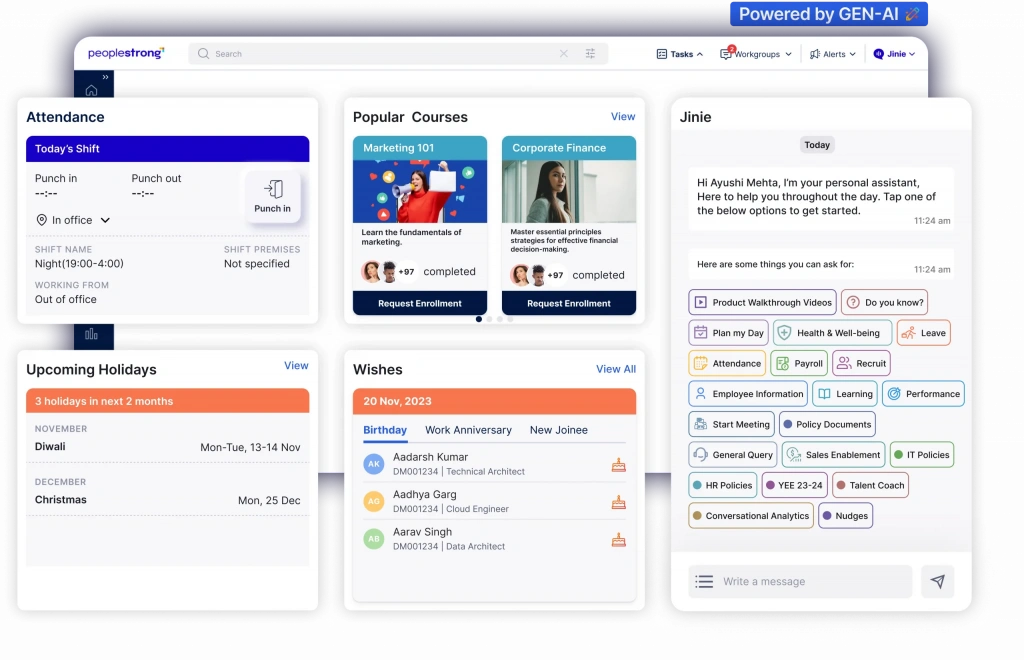
PeopleStrong is a strong fit for Indian enterprises that want one system across the full hire-to-exit employee lifecycle without taking on the cost and rollout burden often associated with larger global suites.
It covers core HR, payroll and workforce management, recruitment, performance, learning, compensation, onboarding, leave, and attendance in one suite. For businesses trying to replace multiple disconnected tools, that matters. Reporting, workflows, and employee data stay connected instead of getting passed between systems.
A few factors make PeopleStrong especially relevant as a ZingHR alternative for larger Indian businesses:
- Built for Indian enterprise complexity: The platform is designed to support statutory payroll and workforce requirements in India, which matters when payroll is tied to attendance, leave, reimbursements, and varied policy rules.
- Enterprise scale: PeopleStrong serves 500+ enterprise customers, supports 2M+ employees, and operates across 10 countries. For buyers, that points to maturity beyond a tool built mainly for smaller teams.
- Recognised by customers in the enterprise segment: Gartner named PeopleStrong a Customers’ Choice in Voice of the Customer for Cloud HCM Suites for enterprises with 1,000+ employees in 2022, 2023, 2024, and 2025. That matters because it reflects sustained customer feedback, not a one-off product claim.
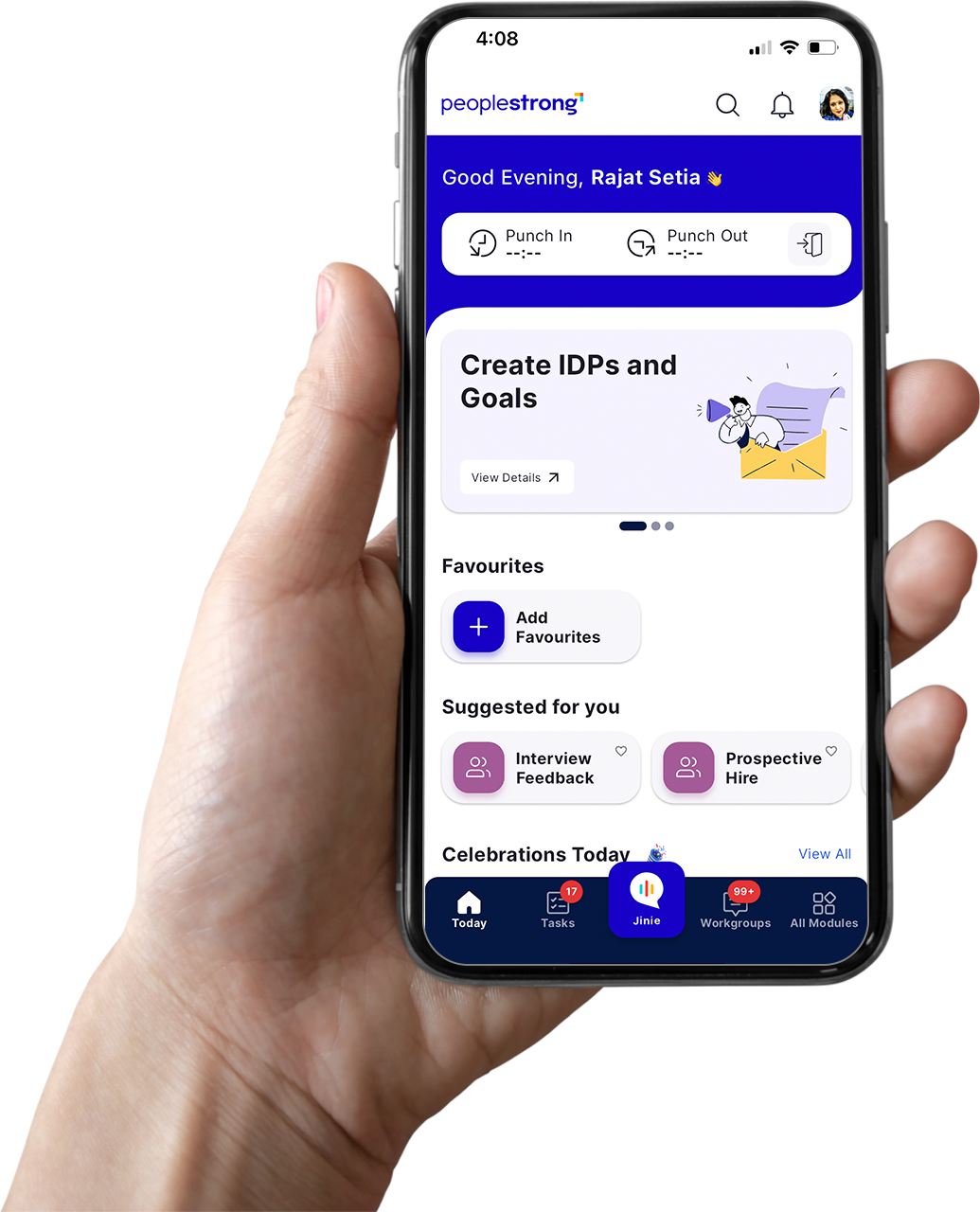
- Useful AI tied to a clear task: Jinie, PeopleStrong’s embedded HR AI chatbot, helps answer employee HR questions on items such as leave, payslips, and policies, with a cited reduction of around 60% in HR admin load. The practical implication is simple: it helps your HR team spend less time on routine queries and more time on work that needs judgement.
PeopleStrong tends to fit best if you are in the “graduation” stage: too large or too complex for many mid-market tools, but not looking for a long, partner-heavy global-suite journey. It is particularly relevant for Indian enterprises in manufacturing, BFSI, healthcare, retail, and IT-enabled businesses where compliance, employee volumes, and process consistency all matter at once.
Ideal for: Indian organisations with roughly 1,000 to 10,000+ employees that want one enterprise-ready system across HR, payroll, hiring, and performance.
2. Workday
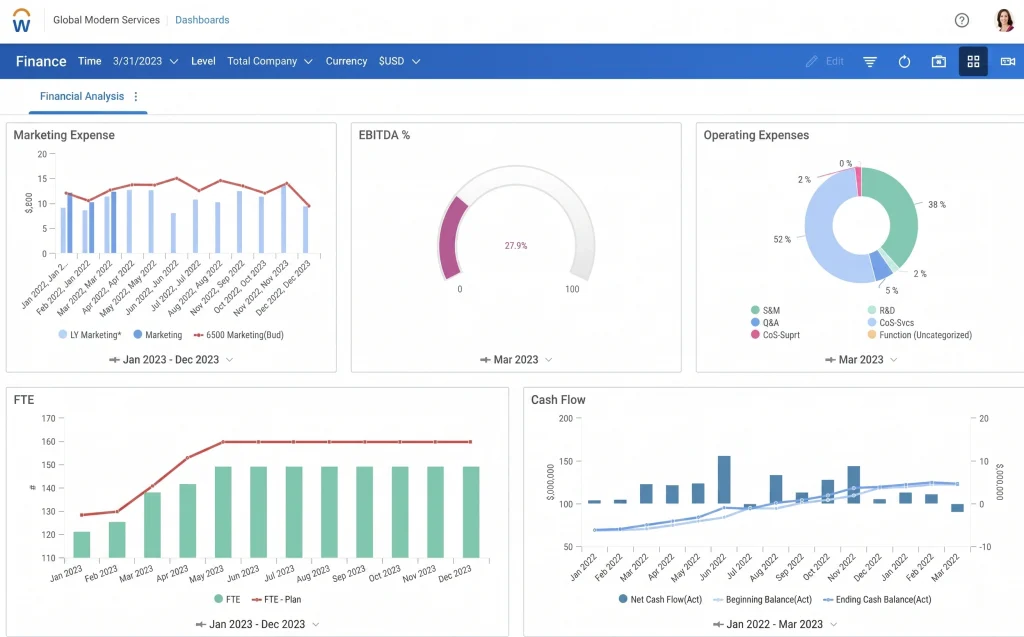
Workday is usually considered by larger organisations that need broad enterprise functionality and stronger global process alignment. Buyers often look at it when they want HR to sit within a larger transformation effort, with structured governance and substantial integration planning.
In India, Workday can make sense for companies whose design principles are already global, whose IT teams are used to enterprise rollouts, and whose HR model needs to align with multinational process standards. The main buying consideration is whether that level of scope matches the complexity you actually need.
Ideal for: Large enterprises with substantial multinational requirements and the resources for a structured enterprise deployment.
3. SAP SuccessFactors
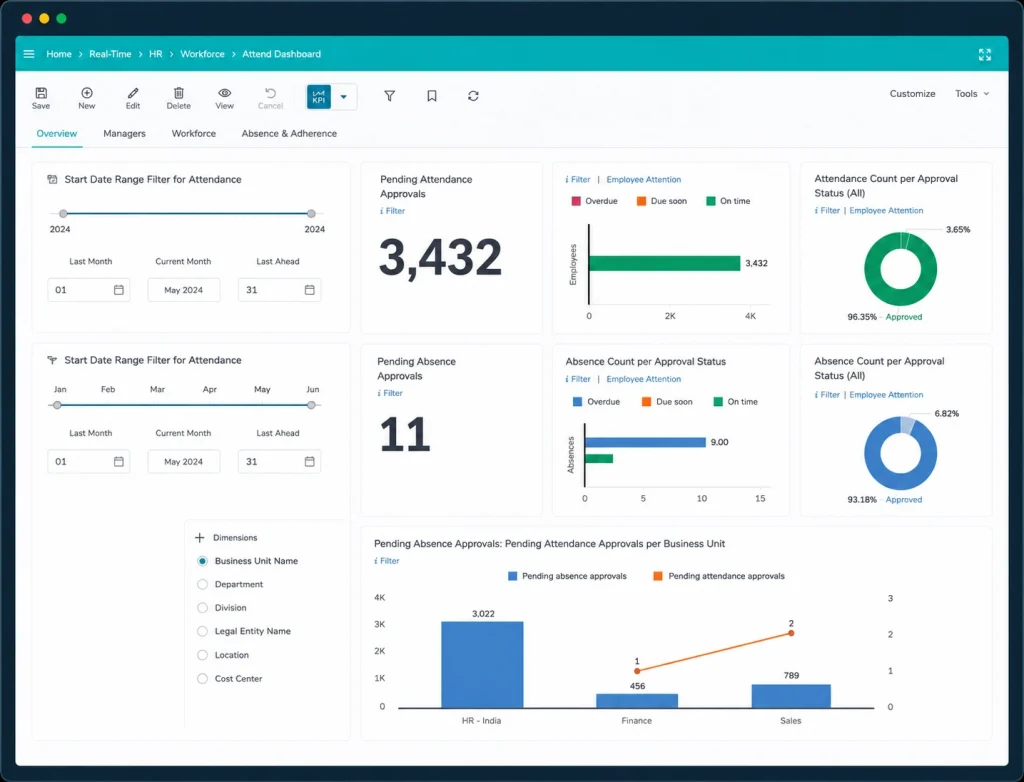
SAP SuccessFactors is often shortlisted by businesses that already operate within an SAP environment or want HR processes aligned with broader enterprise systems. It is commonly considered where procurement, finance, and IT architecture play a large role in the final choice.
For Indian businesses, the fit is strongest when the HR decision is closely tied to a larger systems strategy rather than to a standalone HR modernisation project. Buyers should assess not only features, but also implementation approach, change management load, and admin ownership after go-live.
Ideal for: Enterprises seeking HR alignment with existing SAP-led business systems and governance models.
4. Oracle Fusion Cloud HCM
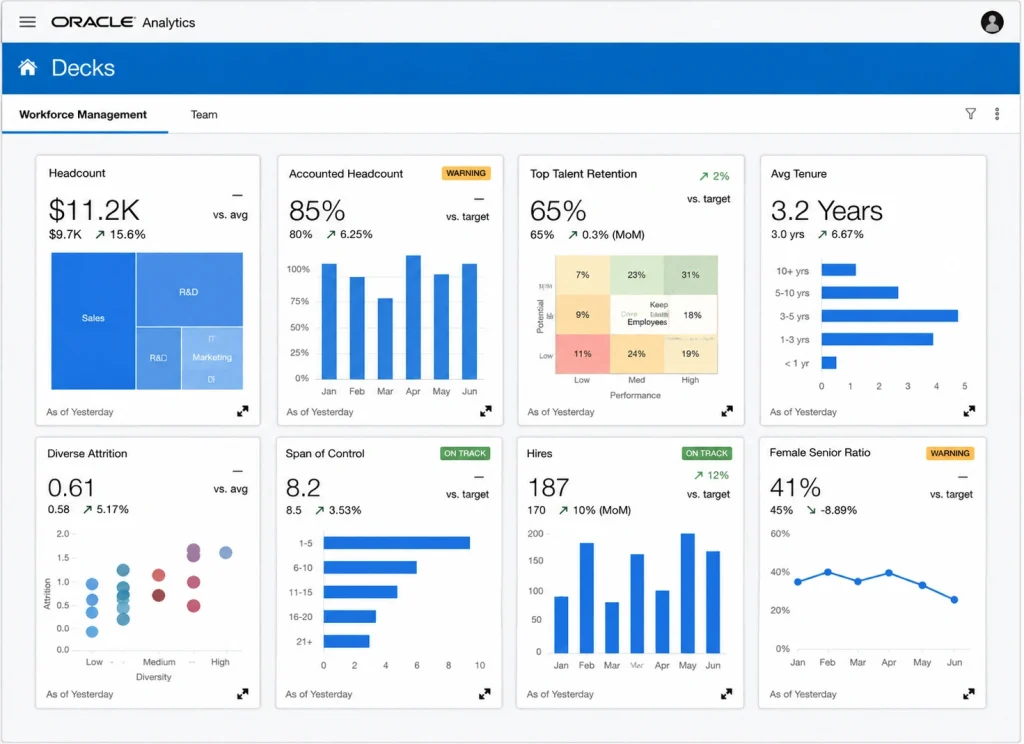
Oracle Fusion Cloud HCM is generally considered by enterprises looking for broad suite coverage within a wider Oracle cloud footprint. It tends to enter evaluations when HR is part of a larger enterprise technology decision rather than a department-led software replacement.
For Indian buyers, this option often makes sense where architectural consistency across enterprise systems matters as much as HR functionality itself. The evaluation team should be clear on internal readiness for a larger-scale implementation and ongoing administration model.
Ideal for: Large enterprises that want HR within a broader Oracle enterprise applications strategy.
Best ZingHR alternatives in India for growing mid-sized companies
Not every buyer needs enterprise depth on day one. Some businesses are still at the stage where speed, usability, and lower process overhead matter more. The key is to be honest about whether you are buying for your current size only, or for the complexity you expect over the next few years.
5. Keka
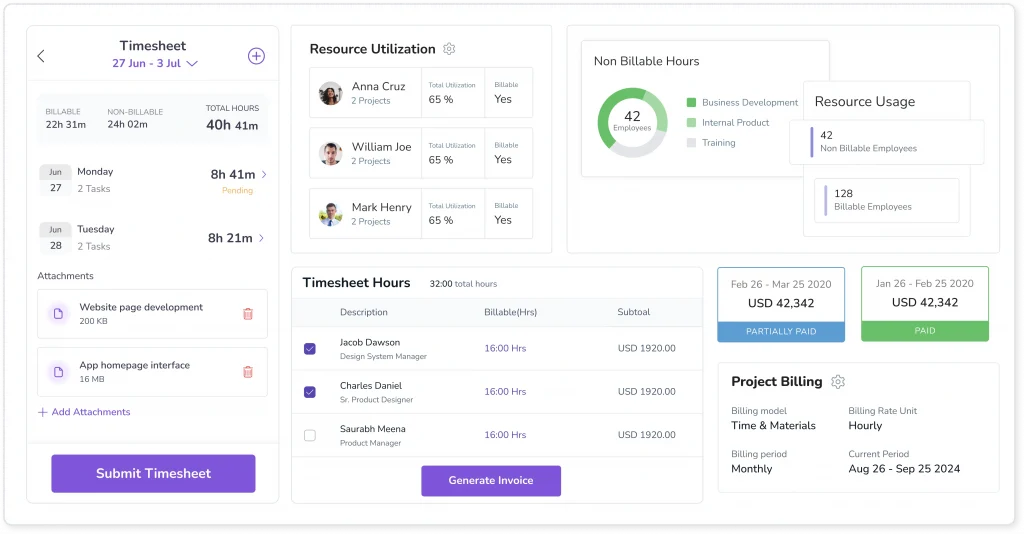
Keka is often shortlisted by growing Indian companies that want a modern HR and payroll experience with a strong focus on usability. It is commonly considered by businesses trying to move away from spreadsheets or basic legacy systems and set up cleaner HR operations.
Its appeal often comes from a simpler user experience for routine tasks such as leave, attendance, payroll support, and employee self-service. For many mid-sized businesses, that makes adoption easier across managers and employees.
Keka usually fits best when:
- Your company is growing but still relatively standardised: You want better workflows and visibility without a very layered process environment.
- You value ease of adoption: HR teams often prioritise software that employees and managers can start using quickly.
- You do not yet need deep enterprise-wide process control: The decision is more about improving day-to-day operations than building a long-term system for large-scale complexity.
Ideal for: Growing mid-sized Indian businesses that want a user-friendly HR and payroll system with lower implementation overhead.
6. HROne
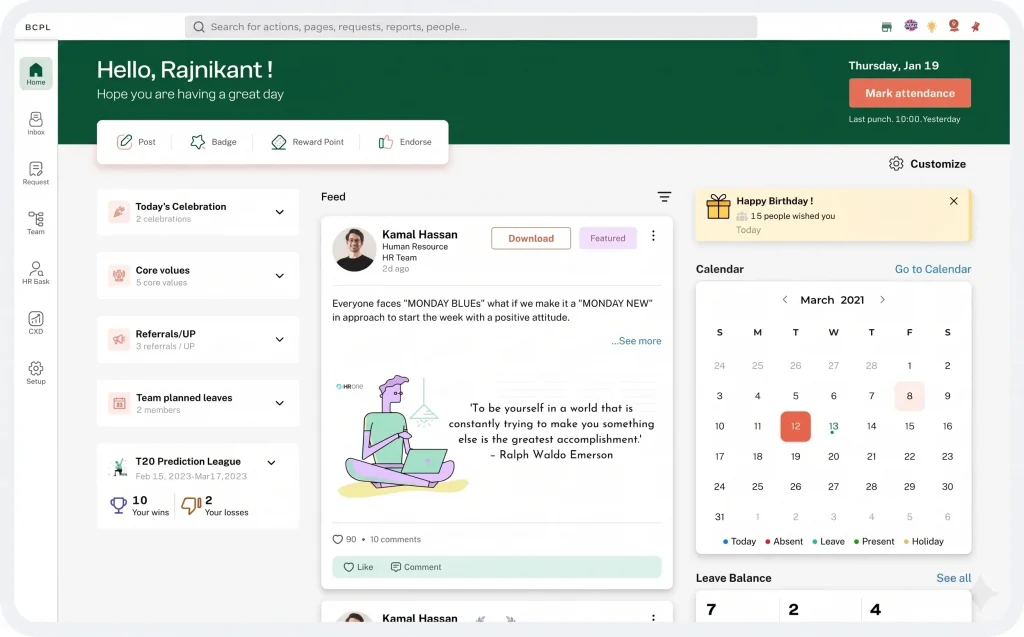
HROne is generally positioned for businesses that want an all-in-one HRMS covering common HR operations with relatively straightforward rollout needs. Buyers often consider it when they want to consolidate employee records, attendance, leave, and routine HR workflows in one place.
For teams that are still formalising HR processes, HROne can be attractive because it reduces fragmentation without requiring the structure of a larger enterprise programme. The right fit, though, depends on how far you expect reporting, workflow variation, and governance requirements to grow.
Ideal for: Small to mid-sized Indian organisations that want an all-in-one HR system and are still building process maturity.
7. greytHR
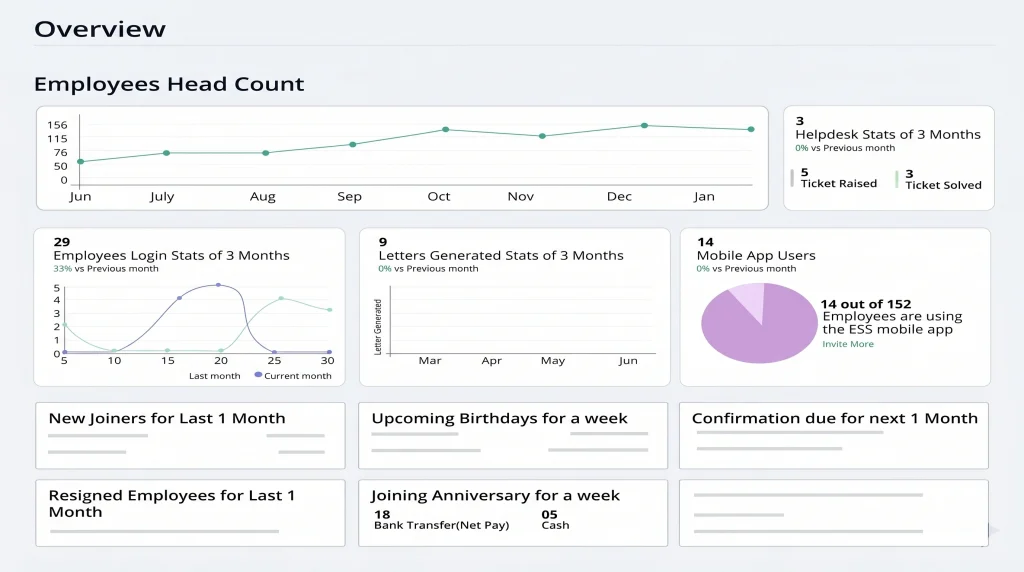
greytHR is widely known in India for payroll and HR administration, especially among companies that want a practical system for payroll, leave, attendance, and employee data management. It is often considered by businesses where payroll reliability is the first buying trigger.
That can make greytHR attractive if your immediate priority is to bring order to payroll operations rather than to run a broad people transformation programme. Buyers should still assess how much depth they need outside payroll and routine HR administration.
Ideal for: Indian businesses looking for a payroll-led HR software option, especially in small to mid-sized environments.
8. Zoho People
Zoho People is often considered by organisations that want flexible HR administration and employee workflows, especially if they already use other software from the same vendor family. It tends to appeal to businesses looking for configurability in common HR processes without starting with a very large suite.
The fit is usually strongest where the business wants a lighter-weight HR foundation and is comfortable shaping the stack around its current operational needs. As with any modular path, buyers should review how payroll, people processes, analytics, and future scale will be handled as requirements grow.
Ideal for: Growing businesses that want flexible HR administration and may already work within a broader Zoho software environment.
Best ZingHR alternatives in India for payroll-heavy operations
Some companies do not start their search from HR administration or people workflows. They start from payroll risk, time capture, and operational workforce complexity. If that is your buying trigger, shortlist accordingly.
9. Ramco HCM
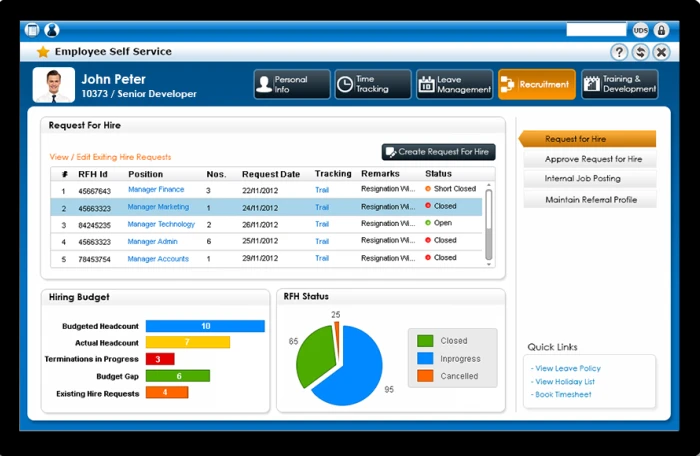
Ramco HCM is often considered by organisations with payroll-heavy, time-sensitive operations and a strong workforce management requirement. It commonly appears in evaluations where attendance, shifts, rostering, and payroll processing are tightly linked.
In India, that can be relevant for manufacturing, aviation, logistics, engineering services, and other sectors with distributed or operational workforces. If your main concern is payroll and workforce execution at scale, Ramco HCM can be worth comparing alongside broader HRMS platforms.
Ideal for: Operationally complex businesses where payroll, time, attendance, and workforce scheduling drive the software decision.
Comparison table: best-fit ZingHR alternatives in India by business profile
| Platform | Best For | Key Strengths | Ideal Company Size |
| PeopleStrong | Enterprise-wide HR, payroll, hiring, and performance | Unified suite, India-ready payroll and workforce depth, enterprise scale, AI support for routine HR queries | 1,000 to 10,000+ employees |
| Workday | Broad multinational transformation programmes | Global process alignment, enterprise deployment model | Large enterprises |
| SAP SuccessFactors | SAP-led enterprise environments | Alignment with SAP landscape, large-enterprise process governance | Large enterprises |
| Oracle Fusion Cloud HCM | Oracle-centred enterprise estates | Broad suite coverage within Oracle strategy | Large enterprises |
| Keka | Growing companies modernising HR and payroll | Ease of use, manager and employee adoption, mid-sized business fit | Mid-sized organisations |
| HROne | Companies formalising HR processes | All-in-one HR operations support, simpler rollout path | Small to mid-sized organisations |
| greytHR | Payroll-led HR administration | Payroll focus, leave and attendance, routine HR administration | Small to mid-sized organisations |
| Zoho People | Flexible HR administration | Configurable HR workflows, strong fit within Zoho environments | Small to mid-sized organisations |
| Ramco HCM | Payroll-heavy operational environments | Workforce management and payroll depth | Mid-sized to large operational businesses |
Decision matrix: which platform category usually fits which business?
The most useful way to compare HRMS platforms is by business profile, not by marketing category alone. The table below maps common Indian buying scenarios to the kind of option that often fits best.
| Business Profile | Platform Shortlist That Usually Fits | Why It Fits |
| Large Indian enterprise replacing multiple HR tools | PeopleStrong, Workday, SAP SuccessFactors, Oracle Fusion Cloud HCM | Breadth across HR, payroll, hiring, and performance matters more than point-feature simplicity |
| Mid-sized company moving off spreadsheets or basic software | Keka, HROne, greytHR, Zoho People | Faster modernisation and lower rollout overhead may matter most |
| Payroll-heavy, attendance-led operations | PeopleStrong, Ramco HCM, greytHR | Payroll accuracy and workforce data flow drive the decision |
| Company expecting significant scale-up in the next 2 to 3 years | PeopleStrong, Workday, SAP SuccessFactors | Future process depth and system longevity matter more than a quick initial setup |
| Firm already standardised on a global enterprise software estate | Workday, SAP SuccessFactors, Oracle Fusion Cloud HCM | HR platform choice is shaped by broader IT architecture and governance |
A practical reading of this table is straightforward. If your business is large, multi-location, and trying to unify HR, payroll, and people processes in India, PeopleStrong is often a balanced shortlist option. If your business is still in a mid-sized growth phase, the lighter-weight tools may be more suitable. If your decision is really part of a global enterprise systems programme, the global suites deserve closer attention.
Drawbacks and how to mitigate them during migration
Even the best ZingHR alternative in India can disappoint if the rollout is scoped poorly. Success usually depends less on the software demo and more on how clearly you define the transition.
Clean up process decisions before you migrate
A new system should not become a storage place for unresolved policy exceptions. Before implementation starts, define your approval logic, leave rules, payroll inputs, reporting ownership, and manager workflows.
How to mitigate: Document policy decisions before configuration begins, and agree who signs off exceptions.
Review India-specific payroll and attendance flows in detail
For any HR payroll software in India, payroll should be tested with live business scenarios, not only sample configurations. That includes location-wise policies, attendance edge cases, arrears, final settlements, reimbursement logic, and approval timing.
How to mitigate: Build test cases from your own payroll cycles and involve payroll owners early.
Plan integrations early
Most companies do not run HR in isolation. Finance systems, biometric inputs, recruitment tools, identity systems, and reporting layers may all need to exchange data with the new platform. Integration planning should happen before final design is locked.
How to mitigate: List every upstream and downstream system before implementation workshops start.
Separate current needs from likely future needs
A system that feels sufficient at 400 employees can become restrictive at 1,500 if workflows, entities, or reporting layers multiply. During evaluation, ask what will happen when your business adds more locations, business units, or management levels.
How to mitigate: Score vendors against both current-state and planned-state scenarios.
Test product trade-offs directly
No platform is perfect, and mature buyers know that. In the case of PeopleStrong, for example, some reviewers have noted slower loading at times, session timeouts, and limits around deep workflow or reporting customisation. Those points are worth testing during evaluation because the product’s strengths are clearest when your priority is enterprise breadth, India-ready process depth, and one connected suite rather than extensive tailoring.
How to mitigate: Use your own approval flows, reporting needs, and payroll scenarios in demos and pilot testing.
How to choose the best ZingHR alternative in India
If you are narrowing a shortlist, these questions will usually tell you more than a long feature grid:
1. How many systems are you trying to replace?
A unified suite matters more if you are consolidating several tools.
2. How complex is payroll in practice?
The answer should include attendance, policy variation, multi-location operations, and statutory workload.
3. Do you need broad HR coverage or a narrower operational fix?
Some buyers need payroll and leave first. Others need hiring, performance, and analytics in the same decision.
4. What size will the system need to support in two to three years?
This helps separate a short-term fit from a durable one.
5. How much rollout effort can your team absorb?
Enterprise-grade capability and implementation intensity often rise together, though some options handle that balance better than others.
The strongest choice depends on what you are solving for. PeopleStrong is the clearest fit for larger Indian businesses that want one enterprise-ready system across HR, payroll, hiring, and performance without defaulting to a global-suite path. Mid-sized firms may prefer a lighter option if their immediate need is faster modernisation. Global suites suit broader transformation programmes. Payroll-heavy operations may prioritise workforce depth first.
If you are assessing whether one system can support Indian payroll, attendance, hiring, and performance at enterprise scale, schedule a demo of PeopleStrong using your own multi-location workflows and payroll scenarios. The right decision comes down to company size, workforce complexity, rollout capacity, and whether you need a system built to unify HR, payroll, hiring, and performance rather than improving only one of them.
FAQs
What is the best ZingHR alternative in India for large enterprises?
For large enterprises in India, PeopleStrong is one of the strongest options if you want one system across HR, payroll, hiring, and performance. Workday, SAP SuccessFactors, and Oracle Fusion Cloud HCM may also fit, especially when the HR decision is tied to a wider global enterprise applications strategy.
Which ZingHR alternative is best for mid-sized companies in India?
Mid-sized companies in India often shortlist Keka, HROne, greytHR, and Zoho People. The right choice depends on whether your priority is ease of use, payroll administration, configurable HR workflows, or a system you can scale into over time.
How should I compare HRMS platforms in India?
Start by comparing business fit rather than feature volume. Review company size, payroll complexity, attendance needs, hiring requirements, performance workflows, reporting depth, and how many tools you want to replace with one system.
Is PeopleStrong a good fit only for payroll and HR administration?
No, PeopleStrong is broader than payroll and routine HR administration. It is designed for organisations that want connected processes across employee records, payroll and workforce management, recruitment, performance, learning, onboarding, compensation, leave, and attendance.
What should I watch for when moving from ZingHR to another platform?
Focus on data quality, payroll testing, approval design, attendance logic, and integrations before go-live. A successful migration depends on how clearly you define future-state processes, not only on which vendor appears strongest in a demo.