











 About Us
 Brand
Brand
 Career
 Contact Us



 +91-7314623098






Performance management is an important part of any business. In fact, according to a recent report, 95% of companies have a performance management process in place and those that don’t plan to implement it soon.
Yet, only about 20% of companies consider their process effective in achieving the desired goals, such as providing high-quality feedback and improving individual performance.
Clearly, there is a need to make the performance management process more effective across the board.
In this guide, we’ll give you tips and the information you need to design your performance management process effectively. Read on to learn more.

Suggested Read:
The Ultimate Guide to Performance Management for HR Leaders
What Is the Performance Management Process?
Performance management is an ongoing process that involves identifying employee performance goals, tracking and assessing their performance on these goals, and rewarding them.
Every organization should have a systematic performance management process to enable employees’ learning and growth.
Having a process in place helps align employee performance goals with the overarching business goals and encourages employee skill development.
Why is the Performance Management Process Cycle Important?
At its core, a performance management cycle exists to translate individual work into business outcomes. Without the process, employees are left to guess what “good” means, and managers rely on instinct and memory during their evaluations.
In organisations where performance management operates as a cycle, not as an annual event, the real impact of performance management shows up. Goals remain relevant even as organisational priorities change halfway through the year. Problems in performance arise earlier, when there’s still time to fix the problem, not at year-end, when the employee’s decision to leave has been made.
The cost of skipping this discipline doesn’t disappear. It resurfaces as attrition among your strongest performers, as engagement scores that erode quarter over quarter, and as managers blindsided by resignations they had no structured way to anticipate.
Key Steps in the Performance Management Process
The employee performance management process has four key steps, though you can break these down into smaller steps if you like.
Let’s discuss these to understand how the process works.
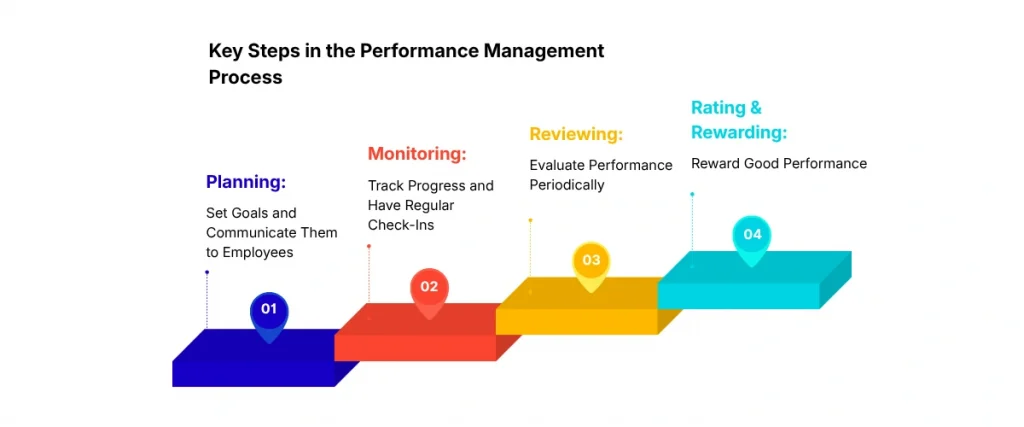
Step 1. Planning: Set Goals and Communicate Them to Employees
Most performance management failures originate here, even though the consequences don’t surface until months later. Goals that are vague or disconnected from business priorities undermine everything that follows.
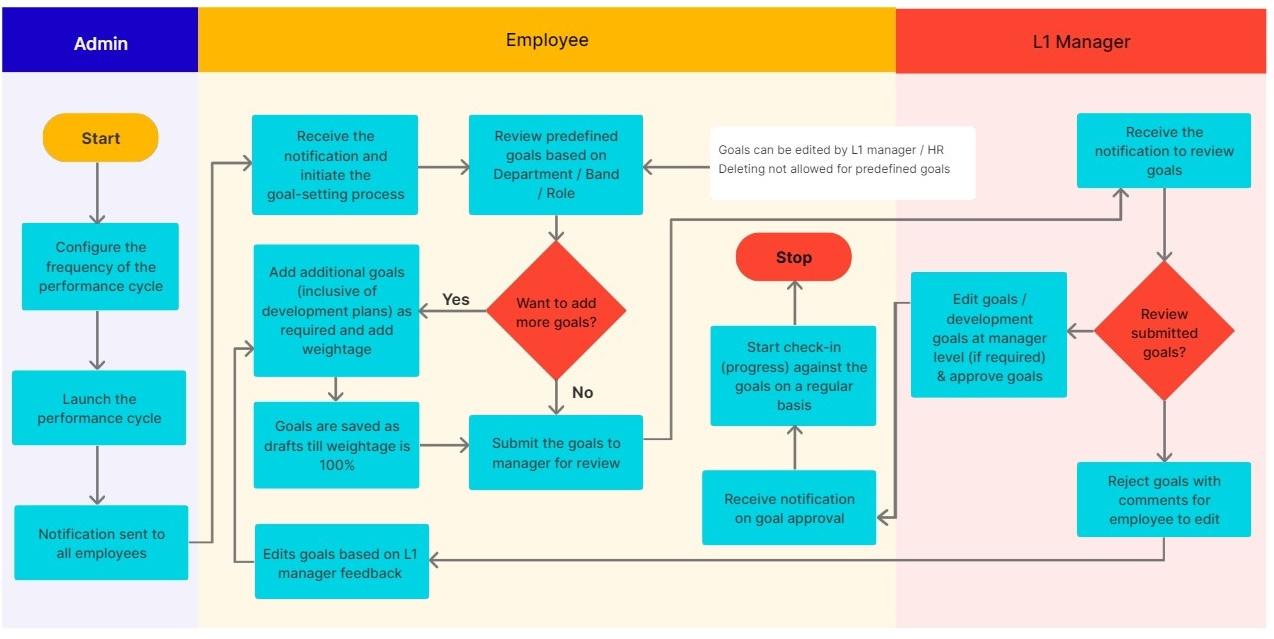
Organisational Goal Setting
Leadership needs to define company priorities with enough specificity that they can cascade down to individual roles. “Grow revenue” gives a frontline manager nothing to act on. “Increase enterprise renewals by 15% by Q3.”
Employee Goal Setting
Individual goals should map directly to those organisational targets, not exist as a disconnected list. This is also where goals should be shaped collaboratively between manager and employee, not issued as a finished directive.
Creating a Development Plan
Assigning a stretch goal without addressing the skill gap behind it sets an employee up to underperform through no fault of their own. If someone is expected to lead client presentations this year but has never received coaching on it, that gap needs to be identified and resourced at the planning stage, not discovered during the review.
Job Description Review
Job descriptions drift out of date quickly. A role hired as “data analyst” two years ago may now carry data science responsibilities without the title or scope ever being updated. Reviewing the job description at the start of each cycle keeps evaluation grounded in actual responsibilities, not a stale posting.
Step 2. Monitoring: Track Progress and Have Regular Check-Ins
This is the stage most enterprise programs underinvest in, and it’s the one with the greatest impact on outcomes. An annual review with no monitoring in between is a lagging indicator applied to a problem that needed a leading one.
Conducting Effective Check-Ins
An effective check-in should not be a status update. A check-in should focus on progress on specific goals, current blockers to progress, and what support the employee needs to help them get back on track. Rather than an annual or quarterly update, a disciplined 15-minute check-in every 2 weeks provides much more value.
Providing Resources and Support
Monitoring is valuable only to the extent that it creates action and support for the employee. If a check-in reveals that an employee has been stuck for months due to a lack of required resources or approvals, it becomes your job to remove those roadblocks immediately.
Identifying and Addressing Potential Problems
Regular check-ins help identify and address potential problems before they become serious performance issues. A manager who meets weekly with their team catches a decline in output within weeks. A manager relying solely on an annual review discovers it months later, once the pattern is established and considerably harder to reverse.
Step 3. Reviewing: Evaluate Performance Periodically
A formal review should never introduce new information. If monitoring has been consistent, the review functions as a structured summary of conversations that have already taken place, not a reveal.
Performance Assessments
The strongest assessments combine quantitative measures (targets met, delivery timelines, quality benchmarks) with qualitative input from peers, direct reports, and the employee’s own self-assessment. Relying on a single manager’s recollection of an entire year invites bias into a process that’s meant to be objective.
Feedback Sessions
Feedback confined to a formal review, disconnected from the moment it applies to, tends to be received defensively. The most effective feedback references specific, recent instances rather than broad characterisations like “needs to communicate better”.
Discussing Future Development
Every review should close by looking forward. What capabilities does this employee want to build next? What role are they working toward? What is the organisation prepared to invest to help them get there?
Step 4. Rating & Rewarding: Reward Good Performance
This stage determines whether employees trust the system or quietly disengage from it. People are watching closely to see whether strong performance consistently translates into recognition or whether outcomes feel disconnected from effort.
Methods of Rewarding Employees
Reward extends well beyond compensation. Promotions, high-visibility assignments, public recognition, expanded autonomy, and investment in learning all signal that performance is being noticed. The right combination depends on what the individual values, not a uniform policy applied without distinction.
Best Practices for Meaningful Rewards
Timing carries as much weight as the reward itself. A bonus delivered eight months after the achievement it recognises has already lost most of its impact. Rewards should clearly name the behaviour that earned them, reinforcing exactly what to repeat.
Benefits of an Efficient Performance Management Process
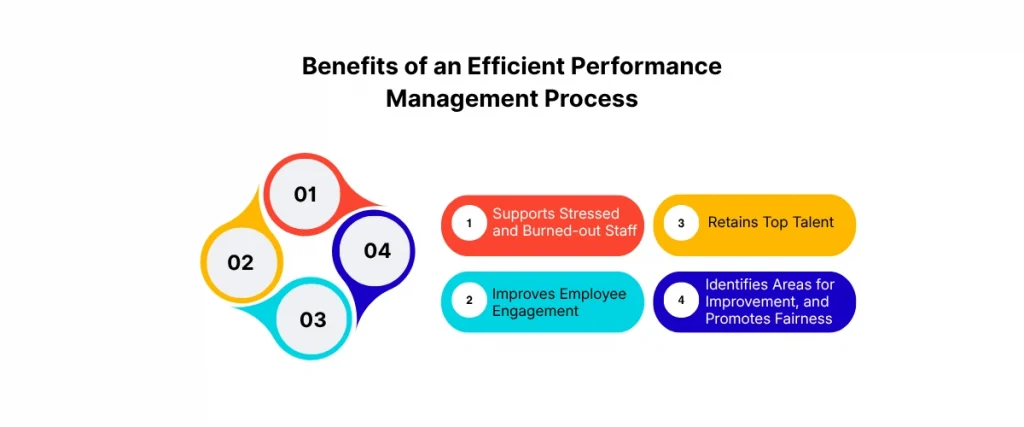
Supports Stressed and Burnt-Out Staff
Regular check-ins provide managers with an easy-to-do tool to detect an unmanageable workload before it causes an employee to leave the job.
Improves Employee Engagement
Workers who know how their efforts relate to organisational goals and get regular feedback about their achievements differ from those who lack such information.
Retains Top Talent
Good performers will not stay in an organisation where there is no recognition of good work. A performance management process that recognises best performers creates a solid ground for keeping them.
Identifies Areas for Improvement and Promotes Fairness
An unbiased and criterion-based evaluation process prevents managers’ bias or recency effect and provides HR with a uniform standard of performance evaluation.
Tips to Improve Your Performance Management Process
In this section, we’ll take you through some simple tactics to improve your performance management process. Let’s get started.
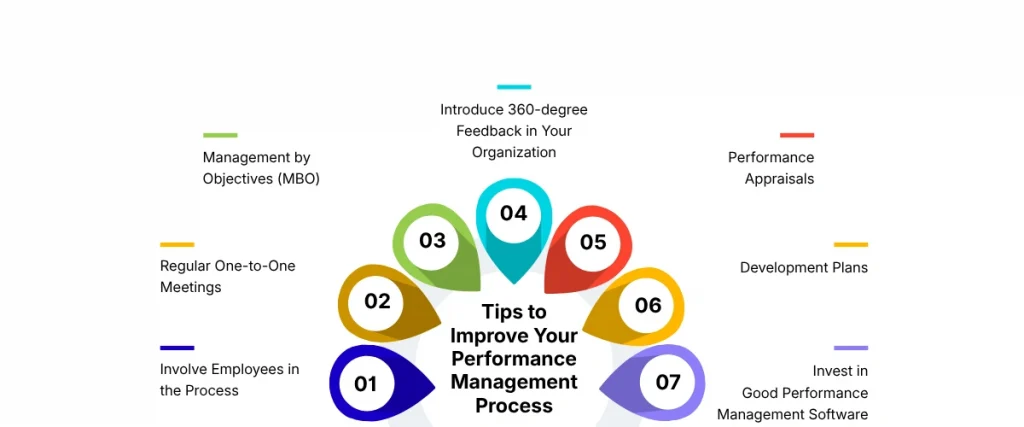
1. Involve Employees in the Process
One of the most crucial best practices you should follow is to involve employees in your performance management process. Don’t make it one-sided and force unrealistic performance targets on employees, as that will have an adverse effect.
Instead, ask them what their career goals are and what learning and growth targets they want to set for themselves. Not everyone would be interested in a vertical promotion, for instance. Some people may want a horizontal move to a different role that better matches their skills.
When you understand their career goals, you can set performance goals that align with their interests and ambitions, which makes the process more effective. When employees are on the same page as you, they’re likely to work harder toward achieving their goals.
2. Regular One-to-One Meetings
Weekly or biweekly one-on-ones, protected from being displaced by more urgent priorities, remain the single highest-leverage habit a manager can maintain.
3. Management by Objectives (MBO)
MBO ties individual objectives directly to organisational goals and evaluates performance against specific, mutually agreed targets rather than subjective impressions.
4. Introduce 360-degree Feedback in Your Organization
360-degree feedback is the practice of seeking an employee’s feedback not just from their reporting managers but from everyone they work with. This includes their managers, colleagues, and subordinates.
This gives a more holistic overview of a person’s performance and is more in-depth than lateral feedback.
Moreover, it gives employees a chance to review their managers, making performance review a two-way process. The result: increased transparency and trust within the organization.
It is especially important to use this when reviewing the performance of those in positions of power. By seeking feedback from their team you ensure that they’re held accountable if they follow any unethical management practices.
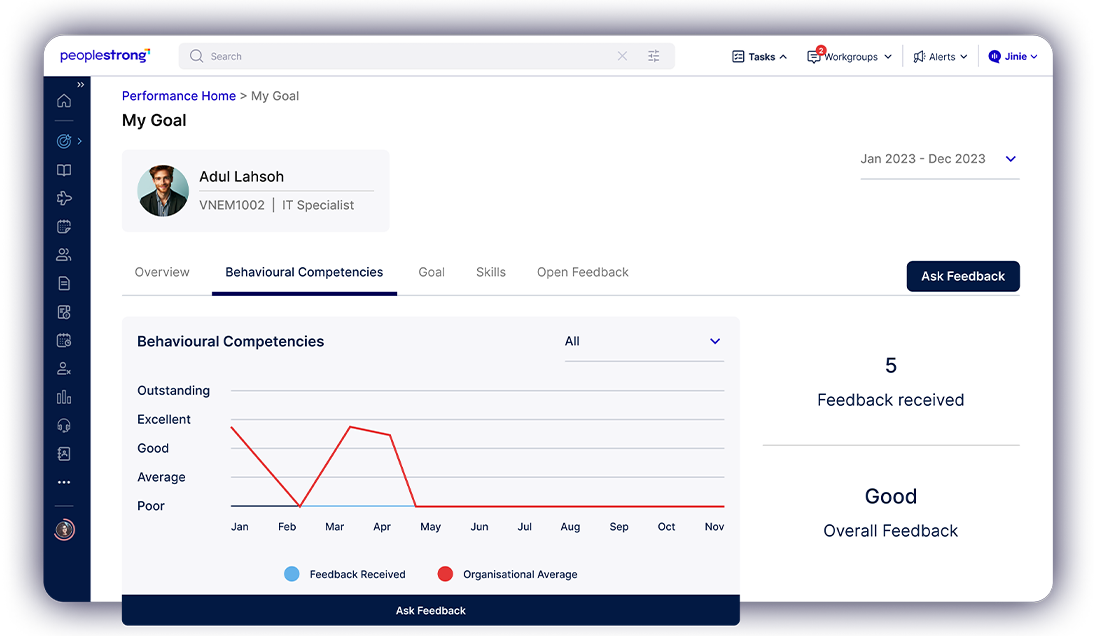
By asking specific questions, you can assess an employee’s performance on various parameters, such as leadership skills or behavioral competencies.
PeopleStrong’s performance management solution allows you to create detailed questionnaires and collect 360-degree feedback. Here’s a sample.
5. Performance Appraisals
A formal appraisal should function as a documented summary of ongoing conversations, not introduce information the employee is encountering for the first time.
6. Development Plans
Every employee, regardless of rating, should leave the cycle with a defined answer to what they are building next.
7. Invest in Good Performance Management Software
Lastly, use modern performance management platforms to streamline and improve your performance management process.
Performance management software solutions like PeopleStrong help you with all steps of the process, from goal setting to performance evaluation.
Here are some things it can help you with:
- Configure various performance management frameworks, such as OKRs and MBO, to use the one that best suits your organizational needs
- Create individual and team goals and easily share them with the concerned people on any device
- Choose from 360-degree and one-on-one performance review processes and implement them without hassle
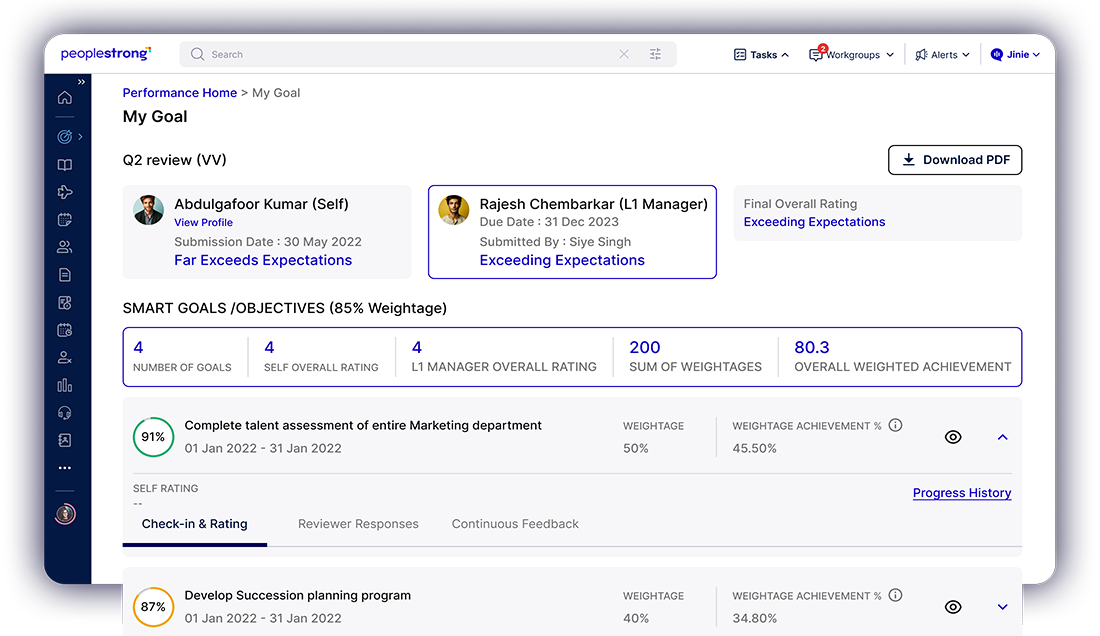
- Keep track of reviews and ratings for each employee and maintain transparent records
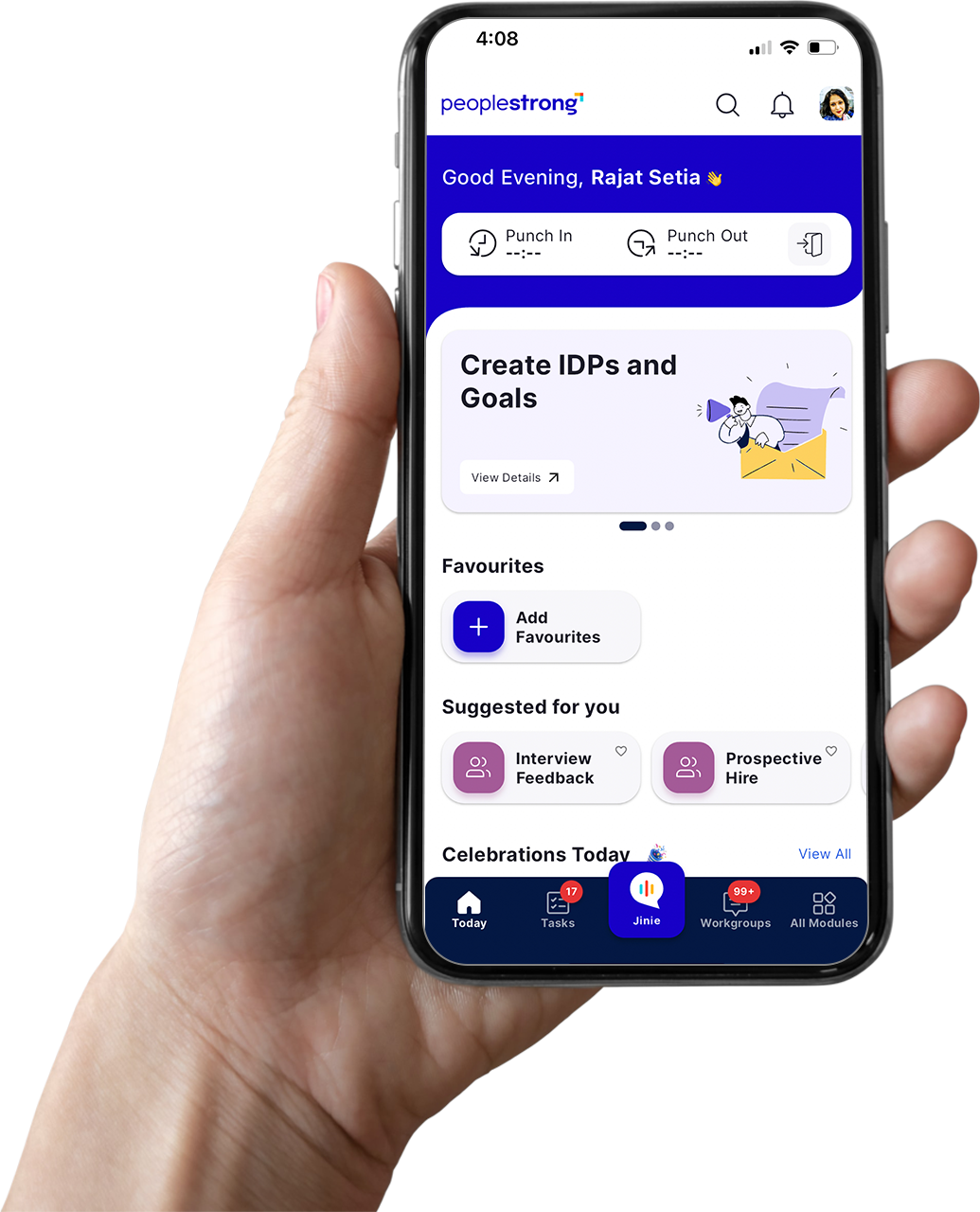
Here’s a glance at PeopleStrong’s dashboard, where you can track employee performance ratings:
Need more proof?
Consider this case study detailing how Cholamandalam, an Indian finance company, utilized PeopleStrong to streamline its performance management process.
With the help of PeopleStrong’s Performance module, it was able to complete performance reviews for over 10k employees in just 30 days. Moreover, 87% of employees and managers agreed with the ratings computed by the system.
Best Practices to Adopt During the Performance Management Process
Establish Clear and Measurable Objectives
If goals are ambiguous or poorly defined, the assessments will turn out fuzzy too. Each goal should be paired with a concrete benchmark, so you can see how it was achieved, not just claim it was.
Maintain Regular Communication
Performance conversations should not be treated like a once-in-a-while ritual, limited to just two moments per year. Set a pace and defend it, even when other priorities start pushing harder.
Provide Constructive and Balanced Feedback
Pure criticism alone, or only praise, typically does not create any real improvement in performance. A mix works better; acknowledge accomplishments while also pointing to where improvement is needed.
Ensure Fair Evaluation Processes
The criteria used to assess people should be aligned across teams so that the same level of achievement corresponds to the same rating, regardless of department boundaries.
Encourage Employee Self-Assessment
Self-evaluation often brings a fresh perspective, like overlooked strengths or more precise gaps in skills. People, in general, can be even more critical about themselves than a manager would expect.
Provide Development Opportunities and Follow Through
A development plan that gets created, and then not revisited, is worse than having no plan at all. It becomes more like a quiet facade of accountability. Check it each time you meet, discuss, or revisit performance.
Common Performance Management Process Mistakes to Avoid
| Pitfall / Mistake | Operational Consequence | Corrective Leadership Action |
| Annual Event Trapping | Treats performance management as a once-a-year event rather than a continuous process. | Transition to quarterly milestone alignment and mandatory bi-weekly 1-on-1s. |
| Strategic Disconnect | Sets individual goals disconnected from actual business priorities. | Require clear line-of-sight cascading from executive OKRs/KPIs to individual roles. |
| Recency Bias Evaluation | Allows managers to evaluate from memory instead of documented check-ins. | Require continuous logging of check-in notes, project metrics, and feedback. |
| Feedback Rationing | Reserves all feedback for the formal review, with nothing communicated in between. | Build a culture of continuous real-time praise and real-time course correction. |
| Inconsistent Standards | Applies inconsistent evaluation standards across different teams or managers. | Implement cross-calibration sessions and centralised HR standards across functions. |
| Orphaned Ratings | Delivers a rating without a corresponding development conversation or forward plan. | Tie every performance score directly to an active, resourced development plan. |
| Rewarding Visibility | Rewards tenure or executive visibility over measurable, high-value contribution. | Base recognition programs strictly on objective, audited impact metrics. |
| Spreadsheet Overhead | Relies on disconnected spreadsheets that obscure performance trends at scale. | Deploy enterprise HR software with automated analytics and goal-tracking features. |
Ready to Take Employee Performance to the Next Level?
Having a well-defined performance management process is crucial to your business success as it helps you effectively improve employee performance and skills.
Use this guide to create a transparent, fair process that motivates employees to perform better.
Don’t forget to invest in a good performance management software solution to manage the entire process with ease. PeopleStrong offers a robust suite of features to make employee performance management a breeze. Try it today!

FAQ‘s About Performance Management Process
Why is performance management important?
Upskilling employees and training them to take on more responsibilities and perform better is a key goal for any organization. Performance management allows you to better structure your employee training initiatives by providing clear goals and rewards.
It also aligns individual and team performance goals with the business goals, ensuring everyone is growing in the right direction.
Lastly, having a structured performance management process tells employees that you care about their career growth and skill development. This motivates them to perform better and reap the rewards that come with great performance.
What are the 4 Ps of performance management?
The four Ps of performance management are:
- Priorities: Set clear goals for performance management and prioritize the most important ones instead of trying to achieve too much.
- People: To make the goal-setting process more efficient, include the employees in it and ask for their goals and preferences.
- Processes: Set a well-defined and structured performance management process to ensure everyone is on the same page.
- Practices: To get the best results, follow good performance management practices, such as transparency and fairness.
What is the purpose of a performance management process?
To align individual performance with business objectives, we need to provide a feedback loop and establish a basis for developmental decision-making and rewards.
What is performance management process documentation?
It is the documentation of goals and feedback throughout the performance cycle for review and appraisal purposes, ensuring fair and justified human resource decisions.
Whose role is performance management?
It is a shared responsibility. HR designs and governs the process, while managers execute it directly with their teams through goal-setting and regular check-ins.
What is the difference between performance management and a performance appraisal?
Performance management is the ongoing, complete cycle of planning, monitoring, reviewing and rewarding. A formal milestone in that cycle is a performance appraisal.
What software can support the performance management process?
The software used to administer the performance management process generally includes several integrated tools, for example, goal-setting, mobile check-ins, 360 feedback and analytics modules, replacing several standalone solutions. Examples are PeopleStrong, etc.
What is an example of performance management?
Take a sales department, for example. They set quarterly revenue targets and then meet every two weeks to discuss the numbers and problem constraints. There’s a formal six-month and annual appraisal, and compensation decisions are based on the performance shown.
Unlock the full potential of your performance management process with PeopleStrong's revolutionary solutions. Our team of experts is dedicated to helping you create a culture of continuous feedback and development, ensuring your organization stays ahead of the competition. Contact us today and discover how PeopleStrong can transform your performance management process into a more efficient, effective, and rewarding experience.
Contact Us Now