











 About Us
 Brand
Brand
 Career
 Contact Us



 +91-7314623098






Managing HR compliance is vital for employers, ensuring adherence to labor laws and regulations. It’s not just a legal obligation but a foundation for business success.

A recent study found that 50% of business owners find maintaining regulatory compliance extremely challenging, with non-compliance leading to fines, litigation, and reputational damage.
HR compliance also fosters a safe, fair, and equitable workplace, enhancing employee satisfaction and promoting diversity. From hiring practices to termination procedures, every aspect of business must comply with the law. Ignoring these regulations can result in severe penalties and reputational damage.
Understanding HR compliance principles helps employers protect their businesses from legal risks, enhance their reputation, and boost employee satisfaction. Compliance is an ongoing process that requires regular updates and training to keep up with the evolving legal landscape.
What is HR Compliance?
HR compliance ensures that a company adheres to the laws and regulations governing labor practices. This means setting up policies and procedures that align with federal, state, and local laws to create a fair and legal workplace.
Compliance covers everything from hiring practices and wage laws to safety regulations and anti-discrimination policies. For example, businesses must follow the Fair Labor Standards Act (FLSA), which regulates minimum wage, overtime pay, and recordkeeping requirements.
Maintaining HR compliance protects the organization from legal penalties and helps build a positive reputation as a fair and ethical employer. It requires constant attention and updating to stay current with the ever-changing laws and regulations that apply to different aspects of the workplace.
Types of HR Compliance
There are several types of compliance within HR. Let’s explore four key areas:
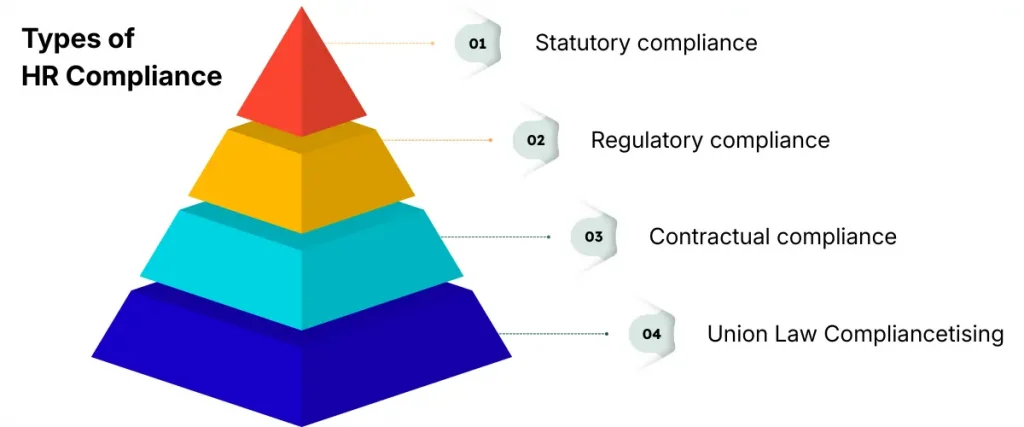
- Statutory Compliance: This involves adhering to government legislation related to employment and the workplace. For example, your company must follow laws regarding minimum wage, working age requirements, and anti-discrimination practices.
- Regulatory Compliance: While similar to statutory compliance, regulatory compliance focuses on adhering to the rules of specific regulatory bodies. These agencies can be classified into three categories: independent regulatory commissions like the Federal Trade Commission (FTC), executive agencies such as the Environmental Protection Agency (EPA), and government corporations like the Centers for Disease Control and Prevention (CDC).
- Contractual Compliance: This type of compliance involves following the regulations and terms outlined in contracts your organization is bound by. These can be agreements between your company and partner organizations or contracts with your employees.
- Union Law Compliance: For companies employing union workers, it’s essential to comply with the rules set by these unions. For instance, the Screen Actors Guild represents over 100,000 performers and technicians, and your company must adhere to the guidelines established by such unions.
Why HR Compliance is Important
Ensuring HR compliance is not just about avoiding legal trouble; it’s about building a foundation for a thriving and sustainable business. Here are the key reasons why HR compliance is crucial for your organization:
1. Legal Protection
HR compliance is essential for legal protection. Adhering to labor laws and regulations shields businesses from lawsuits, fines, and other legal repercussions. For instance, failing to comply with wage and hour laws can result in costly penalties and back pay. Ensuring compliance helps mitigate these risks, safeguarding the company’s financial health.
2. Reputation Management
A company’s reputation hinges on how it treats its employees and adheres to legal standards. Companies known for their compliance are seen as ethical and trustworthy, which can enhance their reputation in the market. This positive image can attract top talent and foster customer loyalty.
3. Employee Satisfaction
Compliance with labor laws ensures fair treatment of employees, which directly impacts their satisfaction and morale. When employees know their rights are protected, they feel valued and secure. This sense of security leads to higher productivity, loyalty, and retention rates.
4. Create a Positive Work Environment
A compliant workplace is a positive one, where employees feel safe and respected. Adhering to health and safety regulations, anti-discrimination laws, and fair labor practices creates an environment where employees can thrive. This not only boosts morale but also enhances overall organizational performance.
HR Compliance Checklist
A comprehensive HR compliance checklist ensures that all aspects of the business align with relevant laws and regulations. Here are the key areas to focus on:
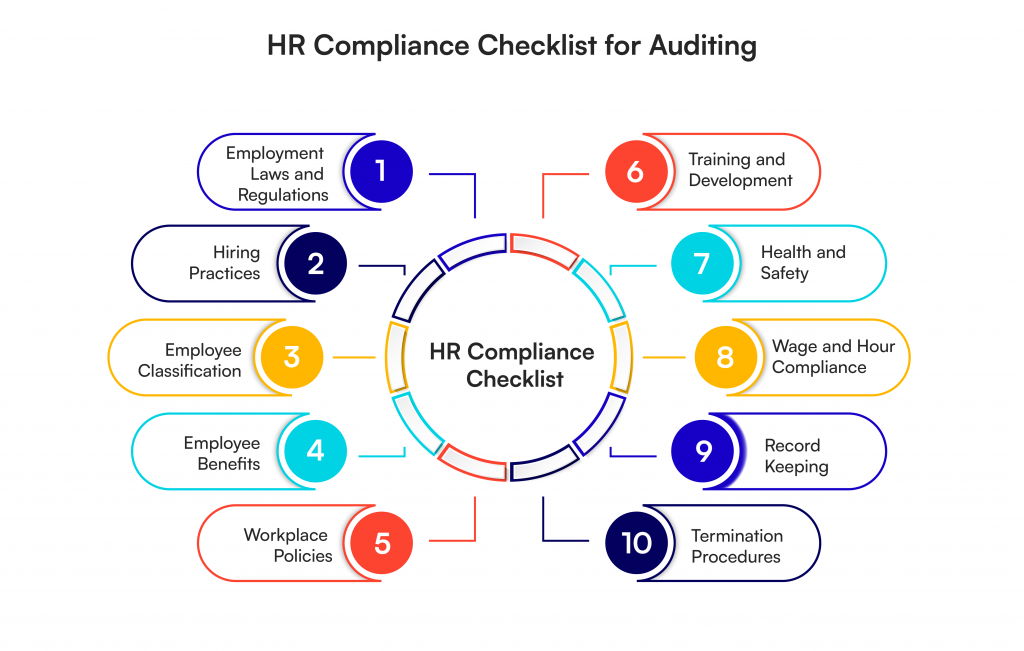
1. Employment Laws and Regulations
Adherence to federal, state, and local labor laws is fundamental for HR compliance. Key laws include:
- Fair Labor Standards Act (FLSA): Regulates minimum wage, overtime pay, and child labor.
- Family and Medical Leave Act (FMLA): Provides eligible employees with unpaid, job-protected leave for certain family and medical reasons.
- Occupational Safety and Health Act (OSHA): Ensures workplace safety and health standards.
- Title VII of the Civil Rights Act: Prohibits employment discrimination based on race, color, religion, sex, or national origin.
- Americans with Disabilities Act (ADA): Prohibits discrimination based on disability and requires reasonable accommodations.
2. Hiring Practices
Implementing non-discriminatory hiring practices is crucial. Ensure job listings and interview questions do not reveal or imply biases based on protected characteristics. Comply with laws such as:
- Equal Employment Opportunity Act (EEOA): Prohibits discrimination against job applicants based on race, color, religion, sex, national origin, age, disability, or genetic information.
- Ban the Box Laws: Restrict employers from asking about criminal history on job applications before a certain stage of the hiring process .
3. Employee Classification
Properly classify employees as exempt or non-exempt under the FLSA to ensure compliance with wage and hour laws. Misclassification can lead to significant legal and financial consequences:
- Exempt Employees: Not entitled to overtime pay; typically salaried employees meeting certain criteria.
- Non-Exempt Employees: Entitled to overtime pay; often hourly workers or those not meeting exemption criteria .
4. Wage and Hour Compliance
Ensure compliance with minimum wage laws, overtime pay, and accurate timekeeping. Regular audits of payroll processes help prevent errors:
- Minimum Wage: Comply with federal, state, and local minimum wage laws, which may vary.
- Overtime Pay: Ensure non-exempt employees receive overtime pay for hours worked beyond the standard 40-hour workweek.
- Recordkeeping: Maintain accurate records of hours worked and wages paid .
5. Employee Benefits
Providing mandatory benefits and ensuring they comply with federal and state laws is essential:
- Affordable Care Act (ACA): Requires employers with 50 or more full-time employees to offer minimum essential health care coverage.
- Employee Retirement Income Security Act (ERISA): Sets minimum standards for retirement and health benefit plans.
- Family and Medical Leave Act (FMLA): Mandates unpaid, job-protected leave for eligible employees .
6. Workplace Policies
Develop and enforce comprehensive workplace policies that comply with relevant laws and regulations. These policies should cover a wide range of issues to ensure a fair and safe working environment. Key areas to address include:
- Anti-Discrimination and Harassment: Implement policies that prohibit discrimination and harassment based on race, color, religion, sex, national origin, age, disability, or genetic information. Clearly define unacceptable behaviors and outline procedures for reporting and handling complaints.
- Dress Codes and Appearance: Establish guidelines for appropriate workplace attire and personal appearance. These policies should be reasonable and non-discriminatory, respecting cultural and religious practices.
- Work Hours and Breaks: Set clear expectations for work hours, breaks, and meal periods. Ensure compliance with federal and state laws regarding overtime pay and mandatory breaks. For example, the FLSA requires that employees be paid for breaks lasting 20 minutes or less.
- Remote Work Policies: With the rise of remote work, establish policies that address expectations for remote employees, including communication protocols, work hours, and data security.
7. Training and Development
Regular training is crucial for ensuring compliance and maintaining a knowledgeable workforce. Key areas for training include:
- Compliance Training: Provide training on relevant laws and regulations, including anti-discrimination, harassment prevention, and safety protocols. In California, employers with five or more employees must provide anti-harassment training to all employees.
- Safety Training: Conduct regular safety training sessions to ensure employees understand workplace hazards and safety procedures. This helps prevent accidents and ensures compliance with OSHA regulations.
- Policy Training: Educate employees about company policies and procedures, including code of conduct, disciplinary actions, and reporting mechanisms. This helps ensure that employees understand their rights and responsibilities.
- Skills Development: Offer ongoing professional development opportunities to help employees enhance their skills and stay updated with industry best practices. This not only boosts compliance but also improves overall job performance.
8. Health and Safety
Maintaining a safe working environment is a top priority for compliance and employee well-being. Steps to ensure health and safety include:
- OSHA Compliance: Adhere to OSHA standards by conducting regular safety audits, implementing safety protocols, and providing necessary protective equipment. Employers must also maintain accurate records of workplace injuries and illnesses.
- Emergency Preparedness: Develop and communicate emergency response plans for various scenarios, such as fires, natural disasters, and workplace violence. Conduct regular drills to ensure employees are prepared for emergencies.
- Health Programs: Implement health and wellness programs to promote employee well-being. This can include offering health screenings, mental health support, and ergonomic assessments to prevent workplace injuries.
- COVID-19 Compliance: Ensure adherence to guidelines for COVID-19 prevention, including social distancing, sanitation, and health monitoring. This helps protect employees and prevent outbreaks in the workplace.
9. Record Keeping
Accurate and secure record keeping is essential for compliance and legal protection. Key practices include:
- Employment Records: Maintain detailed records of employee information, including job applications, performance reviews, disciplinary actions, and termination documents. Ensure these records are kept confidential and stored securely.
- Payroll Records: Keep accurate records of wages, hours worked, overtime, and deductions. This is crucial for complying with wage and hour laws and resolving any payroll disputes.
- Benefits Records: Document employee benefits, including health insurance, retirement plans, and leave entitlements. Ensure records are up-to-date and comply with regulations such as the ACA and ERISA.
- Compliance Documentation: Maintain records of compliance activities, such as safety audits, training sessions, and policy updates. Proper documentation is essential for audits and demonstrating compliance to regulatory agencies.
10. Termination Procedures
Following legal guidelines for employee termination helps avoid wrongful termination lawsuits and ensures a smooth transition for departing employees. Key steps include:
- Notice Periods: Provide the required notice period as specified by law or employment contracts. This gives employees time to prepare for their departure and helps maintain goodwill.
- Severance Pay: Offer severance pay if applicable, based on company policy or legal requirements. Clearly communicate the terms of severance to the departing employee.
- Final Paychecks: Ensure that final paychecks are processed accurately and on time. This includes payment for any unused vacation days, bonuses, and other owed compensation.
- Exit Interviews: Conduct exit interviews to gather feedback from departing employees. This can provide valuable insights for improving workplace practices and addressing any underlying issues.
- Documentation: Document the termination process thoroughly, including the reasons for termination and any communications with the employee. Proper documentation helps protect the company in case of legal disputes.
Benefits of Using an HR Compliance Checklist
Memorising each and every labour law and filing deadline will be tough and complex. Using a well-designed compliance checklist gives your business a stroke of simplicity in keeping your working environment lawful.
- Prevents You From Costly Mistakes: Just one simple error can land you in an expensive lawsuit or fine. An HR compliance checklist will make sure that you won’t overlook anything like tax, insurance, policy changes, etc., which can turn into expensive legal problems.
- Protects Your Employees from Panic: There’s no need for all of your employees to immediately rush around organising their files before an official audit; there are only consistent procedures to follow, which organise all your records automatically and let you easily access anything you need.
- Guarantees Equality for Everyone: When everyone goes through the same process, starting from hiring, to performance evaluations, to termination, then each employee is treated equally, which promotes a better workplace atmosphere and protects you from surprise discrimination claims.
- Giving Leadership Real Peace of Mind: CEOs and business owners have far less trouble sleeping when they know that a guard system is protecting corporate liability. Through a reliable checklist, the management sees very clearly that the company is legally healthy and that the business is operating lawfully.
HR Compliance Best Practices
Ensuring HR compliance requires more than just understanding the laws and regulations. It involves proactive measures to keep your organization compliant, minimize risks, and foster a positive work environment. Here are some best practices to achieve effective HR compliance:
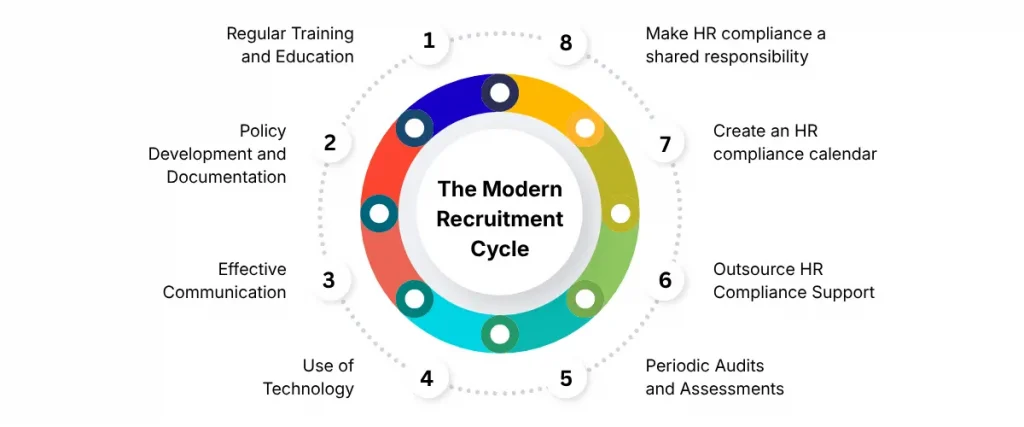
1. Regular Training and Education
Continuous training and education are vital for maintaining compliance. Employees and managers should be regularly updated on the latest laws and company policies.
Training programs should cover areas such as anti-discrimination, harassment prevention, workplace safety, and legal updates. This not only helps in compliance but also ensures that employees understand their rights and responsibilities.
2. Policy Development and Documentation
Develop clear and comprehensive policies that align with legal requirements and best practices. These policies should be documented and easily accessible to all employees.
Regularly review and update policies to reflect any changes in laws or company practices. Ensure that all employees are aware of these policies and know how to report violations.
3. Effective Communication
Effective communication is essential for a compliant workplace. Keep employees informed about company policies, legal requirements, and any changes that may affect them.
Use various communication and collaboration channels such as emails, meetings, and intranet portals to ensure that the information reaches everyone. Encourage open dialogue and provide a safe environment for employees to voice concerns and report issues.
4. Use of Technology
Leverage technology to streamline HR processes and ensure compliance. HR management systems (HRMS) can automate tasks such as payroll processing, record-keeping, and benefits administration.
These systems can also provide alerts for compliance deadlines and generate reports for audits. Using technology reduces the risk of human error and ensures that compliance tasks are handled efficiently.
5. Periodic Audits and Assessments
Conduct regular audits and assessments to ensure compliance with laws and company policies. These audits can help identify potential issues before they become major problems.
Review processes such as payroll, employee classifications, and record-keeping to ensure they meet legal standards. Address any discrepancies promptly and update practices as needed to maintain compliance.
6. Outsource HR Compliance Support
Consider outsourcing HR compliance tasks to experts. HR compliance service providers can offer specialized knowledge and resources to help manage complex compliance requirements.
Outsourcing can be particularly beneficial for small and medium-sized businesses that may not have the in-house expertise to handle all compliance issues. This allows your organization to focus on core business activities while ensuring compliance.
7. Create an HR compliance calendar
The filing of tax returns, labour forms, and licensing is continuous throughout the year. So instead of trying to remember everything at once, having a dedicated HR compliance calendar can help your team stay more on top of it. It maps out these high-stakes dates, and then sends reminders a few weeks before the deadlines actually show up.
8. Make HR compliance a shared responsibility
Compliance is not solely dependent on your HR team. It is crucial to have line managers, department heads, and supervisors go through a certain amount of training so that they are capable of recognising issues early, managing daily grievances properly, and adhering to workplace safety regulations at the operational level.
Common HR compliance issues
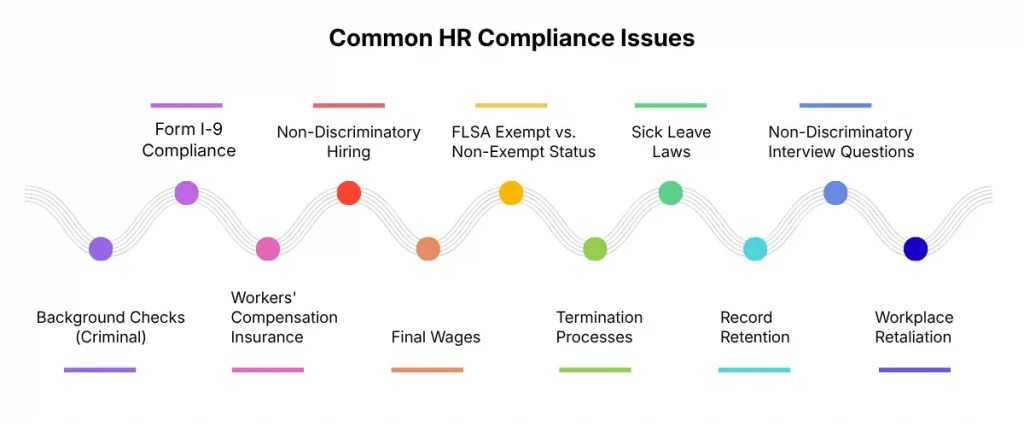
Form I-9 Compliance
Every enterprise should confirm that employees are eligible to work in their country of operations. All new employees must fill out the Form I-9 within the required time frame with relevant information. Failure to do so can lead to severe legal issues for employers.
Non-Discriminatory Hiring
Hiring processes should be based solely on the qualifications of the candidates. Any form of unfair treatment of applicants on grounds of age, sex, religion, or race could expose an organisation to claims of discrimination.
FLSA Exempt vs. Non-Exempt Status
Some of the most frequent HR compliance issues are related to FLSA classification. Employers have to consider not only the individual’s title but also the nature of the duties performed and the pay structure to decide if they qualify for overtime pay under the Fair Labor Standards Act.
Sick Leave Laws
Sick leave rules vary wildly depending on your city and state. Some locations require paid sick time off based on hours worked, and failing to track these allocations correctly can lead to heavy state penalties.
Non-Discriminatory Interview Questions
During interviews, asking about an applicant’s marital status, plans to have children, religion, or age is illegal. Interview panels must stick strictly to questions about the actual job to keep the process completely fair.
Background Checks (Criminal)
Running background checks requires a strict process. You must get clear, written permission from the candidate before pulling records, and you cannot automatically disqualify someone based on past issues without looking at how relevant it is to the job.
Workers’ Compensation Insurance
All businesses that employ people should have their own workers’ compensation insurance. If the business does not have the correct insurance cover, the owner will face exorbitant medical expenses and even business closures.
Final Wages
When an employee leaves, you cannot wait until the next regular monthly payday to clear their dues. Many states have incredibly strict timelines requiring you to hand over their final paycheck within 24 to 72 hours, especially in cases of firing or layoffs.
Termination Processes
Firing any employee without any concrete evidence can be risky and costly for an employer. Documentation of previous disciplinary warnings, performance issue, and violations of company policies should exist to avoid any wrongful termination claims.
Record Retention
Businesses just cannot simply discard the documents of their ex-employees. Government rules call for keeping tax materials, payroll logs, and safety incident reports stored safely for multiple years after an employee exits.
Workplace Retaliation
If someone reports a safety issue, submits a harassment claim, or even points out a payroll mistake, you can not punish them. For instance, demoting them, cutting their salary, or changing their shift after that complaint has been made counts as illegal retaliation.
Conclusion
HR compliance is essential for creating a lawful, safe, and productive workplace. By following labor laws and regulations, companies can avoid legal risks, enhance their reputation, and boost employee satisfaction. A robust HR compliance program addresses every aspect of employment, from hiring to termination.
Employers should prioritize regular training, clear policy development, effective communication, and leveraging technology. Regular audits and considering outsourcing for specialized support can further ensure compliance.
Committing to HR compliance not only protects businesses from legal and financial risks but also fosters a positive work environment that supports growth and success. Stay proactive and informed to uphold legal and ethical standards.
FAQs
What are common HR compliance issues businesses face?
Common HR compliance issues include misclassification of employees, non-compliance with wage and hour laws, inadequate record-keeping, failure to follow anti-discrimination laws, and lack of proper training on workplace policies and safety protocols.
How can businesses avoid HR compliance issues?
Businesses can avoid HR compliance issues by staying updated on relevant laws and regulations, conducting regular training for employees, implementing clear and comprehensive workplace policies, and performing periodic audits to identify and address potential compliance gaps.
What are the basic HR compliance requirements for employers?
Basic HR compliance requirements for employers include adhering to federal, state, and local labor laws, ensuring fair hiring practices, correctly classifying employees, complying with wage and hour regulations, providing mandatory benefits, and maintaining accurate records of employment and payroll.
How can employers ensure they meet HR compliance requirements?
Employers can ensure they meet HR compliance requirements by developing clear policies, conducting regular training sessions, leveraging technology for record-keeping and process automation, performing periodic audits, and staying informed about changes in labor laws and regulations.
What is legal compliance in HR?
Legal compliance in HR means ensuring that your organisation complies with all the local, state, and federal regulations in place. It encompasses everything from paying minimum wages and proper tax calculation to workplace safety and equal opportunity in recruitment. In effect, legal HR compliance simply entails operating according to regulations to stay out of trouble.
How often should companies conduct HR compliance audits?
A full audit of the Human Resource compliance process must be conducted at least once a year. This will ensure that issues such as messy documentations, payroll errors, and obsolete policies are detected prior to becoming serious problems or being highlighted by government regulators.
How can technology help with HR compliance?
Modern HR software reduces human errors by automating repetitive chores. It logs clock-ins precisely to compute overtime, refreshes tax ranges automatically when rules shift, keeps digital employee documents stored safely, and it even pings you early when a license or a certificate is about to expire.
What role do employees play in maintaining HR compliance?
Employees maintain HR compliance by adhering to safety regulations, accurately clocking in their hours, and taking required workplace courses. Employees have a huge impact in reporting violations to their employer through internal reporting processes in order for them to rectify the issues immediately.