










 About Us
 Brand
 Career
 Contact Us


 +91-7314623098


What is the employee life cycle?
The employee lifecycle is a methodical human resources framework that outlines the different phases an employee goes through from the moment he or she visits the company’s website as a job seeker to the end of employment. The process starts with the applicant’s first experience with the employer brand and goes through recruitment, hiring and training, ongoing development and retention until the applicant is finally off-boarded and becomes an advocate for the company even after leaving. Implementing a system of managing the employee lifecycle promotes a structured and positive employee experience across every touchpoint in life.
Why Is the Employee Lifecycle Important?
Optimising the employee journey is critical for nurturing a successful and agile personnel pool. Proper management of this journey leads to improved quality of hiring, reduced costs related to employee turnover, and a considerable increase in employees’ interest in working in the company. By fulfilling the needs of employees at all stages of their journey, organisations can maximise their productivity, improve retention rates, remain compliant with various regulations, and create a strong internal culture that will attract the best employees.
What are the stages of the Employee Lifecycle?
- Attract: Creating an employer brand and engaging prospective candidates through recruitment marketing campaigns even before a need for a job opening becomes visible.
- Recruitment Process: Searching, interviewing, and selecting candidates effectively while ensuring an organised process for applicants.
- Onboarding process: Ensuring that new hires integrate into the organization through a proper onboarding process, system provisioning, training programs, and social integration.
- Development Phase: Ensuring development in terms of skills, career advancement, and performance management of employees.
- Retention stage: Ensuring a long-term commitment of the employees by creating a competitive remuneration system, maintaining an excellent workplace culture, having a recognition program, and creating the conditions for a good work-life balance.
- Separation stage: Managing offboarding in an efficient way, including the conduction of exit interviews, transfer of knowledge, calculation of final settlements, and ensuring good relations with the alumni.
- Humanize Text
How Does the Employee Lifecycle Work in HR?
The employee lifecycle plays a very important role in today’s human resource management. It becomes the primary operational tool for workforce planning and integration of HR software. The HR department follows certain indicators in each phase of the employee lifecycle: time to hire, rates of keeping staff in 90 days after recruitment, employees’ net promoter score (eNPS), and voluntary turnover. Using integrated HRMS systems, HR specialists eliminate administrative processes during each stage of the employee lifecycle.
How to optimise the employee lifecycle
To optimise the employee lifecycle, the process begins with efficient employer branding that stresses the culture of the organisation and growth opportunities to attract top talent. Digital onboarding via a pre-boarding portal allows new employees to go through training and documentation even before their first day at work. Following that, learning process with the help of developmental training, mentoring and continuous review makes sure that the employees of the firm are productive. For workplace alignment, it is important to give consistent feedback by conducting pulse surveys and stay interviews to identify any potential issues. Lastly, off-boarding, particularly exit interviews,, can help us understand ways in which HR strategy can be improved.
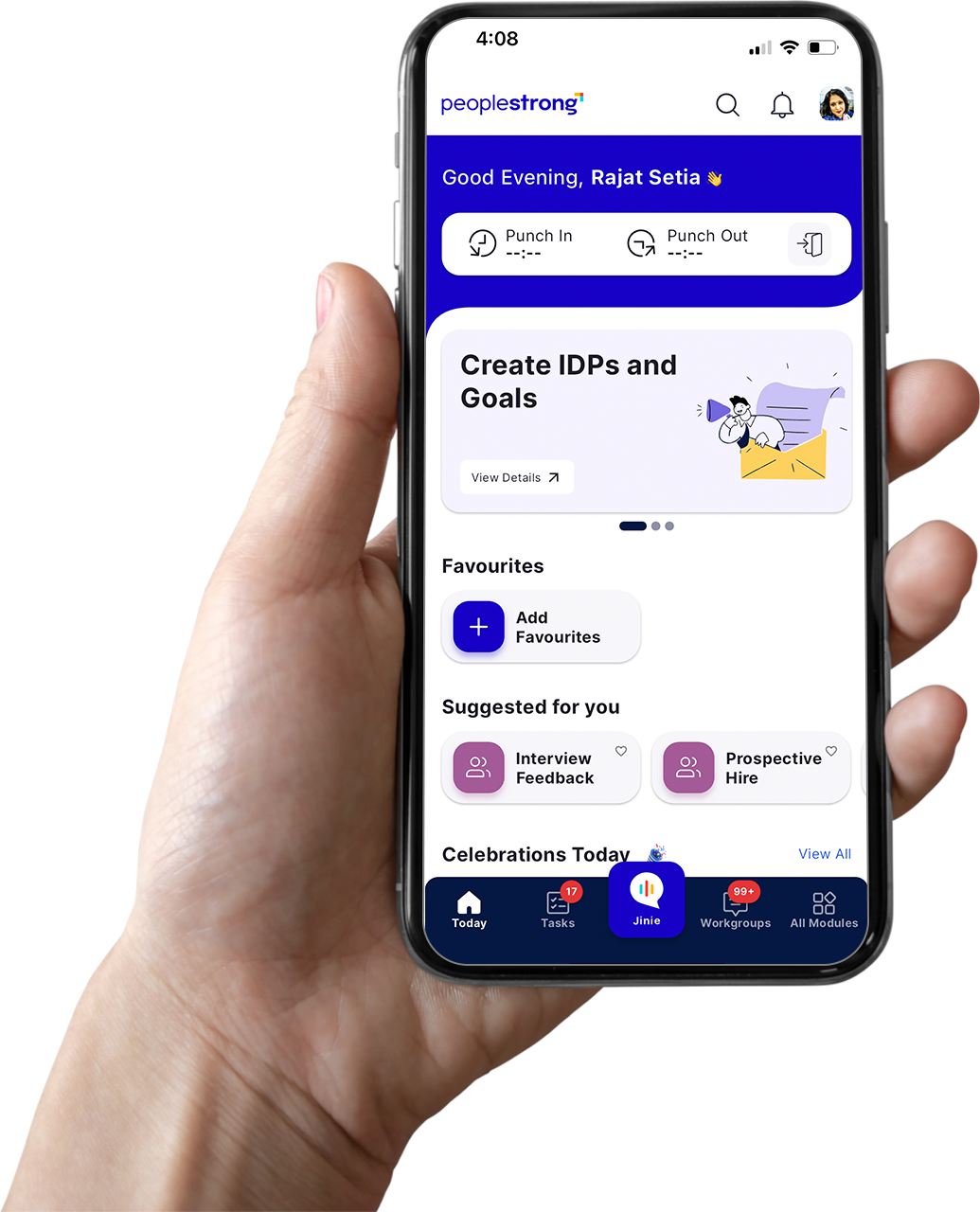
Manage every stage of the employee lifecycle, from onboarding and development to retention and offboarding, with PeopleStrong HRMS Software.