










 About Us
 Brand
Brand
 Career
 Contact Us


 +91-7314623098




Why do so many organizations still struggle to build a diverse workplace?
A McKinsey study shows that companies in the top quartile for ethnic and gender diversity are more likely to outperform financially. Many industries are trying to achieve that and have a great plan in their minds, but it falters at the execution stage.
That’s where AI can help you.
AI removes blind spots that humans may miss. It helps teams achieve diversity outcomes across hiring, development, retention, and advancement.
This article examines how AI supports diversity, where traditional approaches fail, and how HR teams can leverage AI to achieve desired outcomes.
Limitations of Traditional Diversity Approaches
Most organizations are unable to create diversity because their systems weren’t designed for making fair decisions.
Let’s look at the common roadblocks.
Unconscious Bias in Manual Screening
When the screening process is manual, even the best-trained and most experienced recruiters tend to become biased by names, education, and career gaps. This is not intentional; it creeps in when an HR person has hundreds of applications to go through. And that bias affects decisions.
Inconsistent Evaluation Criteria
One hiring manager prioritizes “culture fit.” Another values something else. A third focuses on tenure. Without a standardized evaluation, candidates with ideal skills may miss out.
Lack of Actionable Data
Many HR teams track workforce diversity through static dashboards. They include metrics like headcount by gender or ethnicity. But finding answers to deep questions becomes important. You need to ask questions like:
- Where are we losing diverse candidates?
- Who isn’t getting promoted, and why?
- Which teams have higher attrition risk?
Poor Scalability of Personalized Experiences
There are various activities that HR organizes, such as mentorship, learning paths, and engagement initiatives. But they are difficult to scale when an organization has large teams or distributed workforces. In such cases, AI automation services can help simplify repetitive HR tasks and improve the scalability of employee engagement efforts.
Overemphasis on Hiring, Not Growth
Hiring diverse talent is only step one. Retention, fair performance evaluations, and leadership progression also matter. And traditional methods do not pay much attention to those parameters as well.
How AI Supports HR in Advancing Workplace Diversity
We have seen the limitations of the traditional system. Now, let’s see the shift facilitated by AI in HR.
Intelligent Resume Screening That Looks Beyond Names and Education
Let us suppose that HR starts screening candidates without seeing names, photos, or universities. They look at only the skills, experience, and potential of the candidates.
This would remove bias and help make effective decisions. And that’s what AI-powered screening tools do. They analyze resumes based on role-specific requirements, alignment of experience with the role, and skill relevance. Unlike traditional systems, they reduce the influence of a candidate’s socioeconomic background. These insights can also be clearly communicated to hiring teams with the help of an AI presentation maker.
What are the overall results achieved with this? You get a more diverse talent to choose from.
Removing Bias from the Hiring Pipeline
Almost all of us assume that bias comes from resume screening. And that’s where we make mistakes. It comes way before that, often in job descriptions.
AI tools now flag gender-coded language like women preferred, only for men, and so on. It also flags exclusionary requirements and unnecessary credential inflation. Words like “rockstar,” “aggressive,” or “dominant” can discourage qualified candidates from applying, especially women and minorities. According to Teksands, gender-neutral job descriptions attract up to 42% more applicants.
Before interviews even begin, many hiring teams struggle with a problem of inconsistency. One candidate is asked deep, role-specific questions. Another gets surface-level questions. Some interviews focus on skills, others are based on just gut feelings. This creates uneven evaluation and makes room for bias.
In such a situation, an AI recruiter is preferable as a solution to conduct structured screening interviews. These systems ask the same questions to all candidates. This assists in determining who responded with clarity and who responded with vague answers. The system analyzes responses according to pre-defined standards, such as problem-solving, communication, and domain knowledge.
AI systems do not depend on the confidence level of the person responding to the questions or the degree to which they fit the criteria of the profile. All candidates are assessed on what they say and how they think. This creates a platform for equal opportunities for all candidates. The candidates who may be equally capable but less polished or less represented in traditional hiring pipelines will get recognition with AI.
Making Performance Management More Equitable
Performance reviews are one of the most overlooked sources of bias.
Studies show that 22% women and minority employees receive more personality-based feedback, such as“helpful” and “supportive.” And others receive growth-oriented feedback, like “strategic” and “innovative”. Over time, this affects promotions and leadership visibility.
This is where fair performance & promotion evaluation becomes critical. AI-powered systems help HR teams to track employee productivity, performance patterns, and contribution levels objectively. Instead of relying on subjective opinions, managers can use real data to support promotion and development decisions. This ensures that high-performing employees from all backgrounds receive equal opportunities.
This way, managers receive structured insights for all candidates. It supports better decisions by highlighting patterns that humans may miss.
Personalized Learning & Development Pathways
There are many employees who possess high potential, but they never grow because they were not provided the right development opportunities.
AI-powered learning platforms provide personalized growth plans based on skills, aspirations, and gaps. It gives the best results because you no longer stick to generic training calendars for all employees. All employees receive recommendations for sessions, mentorship programs, and opportunities aligned with their goals.
Tracking Diversity Metrics That Actually Drive Change
The way you interpret the data is what brings the change.
AI analytics move beyond static dashboards to reveal patterns, such as:
- Which teams consistently lose diverse talent?
- Where does promotion velocity differ by demographic group?
- How do performance ratings vary across managers?
It helps visualize diversity data related to hiring, performance, learning, and retention. Similarly, it connects DEI initiatives directly to business outcomes. This allows HR to demonstrate ROI, not just compliance.
Predictive Analytics for Retention and Advancement
Why wait for attrition interviews to identify problems?
AI models predict retention risks. They analyze engagement signals, workload patterns, and performance metrics to see which employees are not happy and may leave. This is critical for diverse employees who may disengage with an organization before leaving.
Identifying a problem early helps you take quick action. You can take measures like coaching, role changes, and providing development support. This will ensure that you get the right talent to keep moving forward instead of them leaving your organization.
Scaling Inclusive Employee Experiences
Inclusion is built through the daily experiences of employees.
AI enables HR teams to deliver personalized resources and support whenever they want:
- Customized onboarding journeys
- Role-specific learning suggestions
- Wellbeing check-ins based on workload signals
AI ensures everyone is given equal opportunities, no matter the size of the company.
To make inclusive resources even more accessible, HR teams can integrate tools like a QR code generator into employee touchpoints. QR codes can be added to onboarding kits, workplace posters, internal newsletters, training materials, or event banners to give instant access to diversity policies, anonymous feedback forms, mentorship programs, or learning modules. This removes access barriers and ensures that every employee—regardless of location—can easily engage with DEI initiatives. When combined with AI-driven personalization, QR-enabled access helps scale inclusion efforts efficiently across the organization.
Real-Life Examples: What Leading Organizations Are Doing
1. T-Mobile: AI for Inclusive Job Language and Better Candidate Attraction
T-Mobile is a telecommunications company in the U.S.
How they used AI for diversity:
T-Mobile implemented AI tools to optimize job postings and recruiting messages. This ensured that the messages were inclusive and welcoming to diverse applicants. This reduced language bias that could signal “fit” for only specific groups. And ultimately, a more diverse set of candidates applied and engaged with their job posting.
2. Thirdlove: AI Tools Driving Inclusive Candidate Selection
Thirdlove is a consumer apparel brand known for focusing on diversity and inclusion in workplace culture.
How they implement AI for diversity:
Thirdlove uses AI-driven solutions in their selection process. This is done to ensure that hiring decisions are taken with the proper objective and unbiased data. Their approach focuses on the skillset and capabilities a candidate has. As a result, the selection becomes fair.
Limitations, Risks & How to Address Them
AI is powerful but not perfect.
1. Algorithmic Bias
If you use biased data to train AI systems, then the predictions that are made using the data will not be accurate. Always make it a point to perform audits, use diverse training data, and be transparent.
2. Over-Reliance on Technology
AI should not replace human judgment. Final decision-making should be done by humans.
3. Privacy Concerns
Diversity data is sensitive. Organizations must prioritize data security, consent, and compliance with industry regulations.
4. Diversity Theater
Deploying AI tools without consistent implementation and a genuine leadership commitment leads to surface-level change.
Build a Diverse Workplace With AI
Diversity improves when hiring systems are fair, consistent, and scalable.
AI can help HR teams reduce bias, make proper decisions, and achieve diversity goals for their organization. When AI and humans work together, they can hire great people for you.
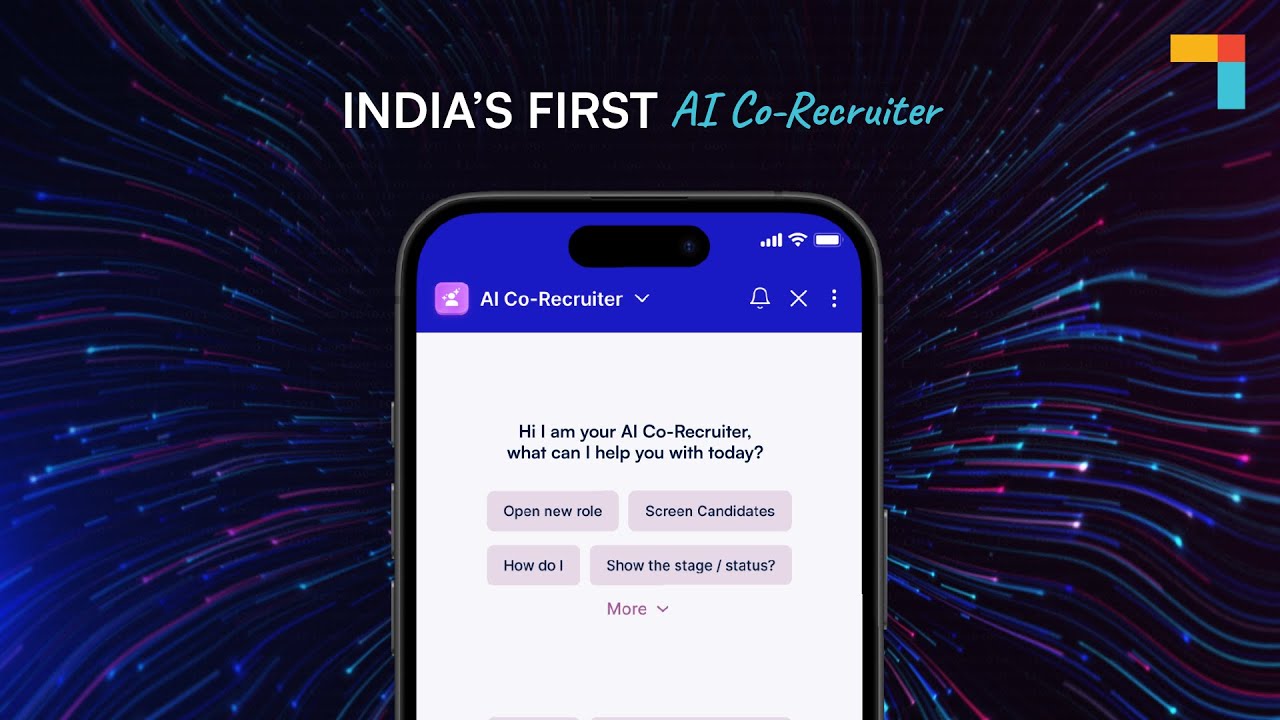
If you’re looking to implement a full-stack hiring assistant, PeopleStrong’s AI Co-Recruiter can help you build a more inclusive hiring process.
Real change starts with better systems.