












 About Us
 Brand
Brand
 Career
 Contact Us



 +91-7314623098


What is API Integration?
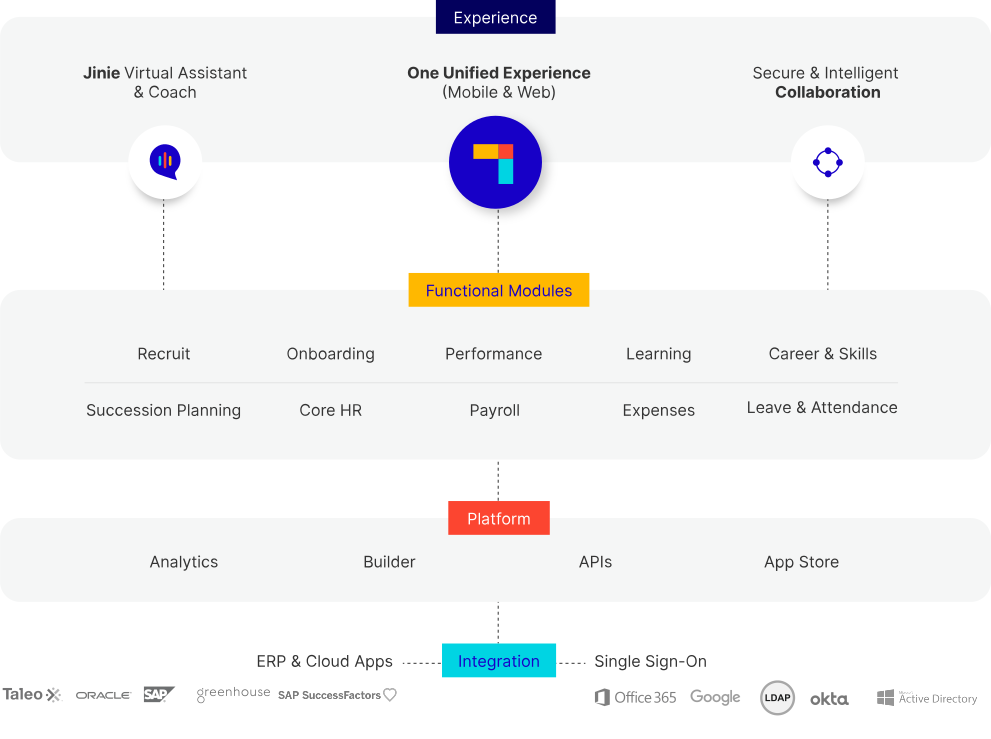
API Integration is the process of connecting two or more software applications through their Application Programming Interfaces (APIs) to enable seamless data exchange and automated workflows. APIs act as bridges that allow systems to communicate and share information in real time without manual intervention. API integration eliminates data silos, reduces human errors, and improves efficiency by synchronizing operations across platforms such as HRMS, payroll, CRM, or ERP systems.
Key Features:
- Purpose: Enables automated, secure, and standardized communication between different software systems.
- Functionality: APIs transmit requests and responses — for example, retrieving employee data from HRMS into a payroll system.
- Types:
- REST APIs (most common, use HTTP protocols)
- SOAP APIs (XML-based, used in legacy systems)
- GraphQL APIs (used for flexible data querying)
Benefits:
- Real-time data synchronization
- Reduced manual data entry and duplication
- Enhanced system scalability and interoperability
- Improved accuracy in reporting and analytics
- Security: Involves authentication methods like API keys, OAuth tokens, and encryption to protect sensitive data..
Example
A payroll software integrates with a company’s HRMS via an API to automatically fetch updated employee details — such as new hires, resignations, and salary revisions — every day. This eliminates the need for manual uploads, ensuring accurate payroll processing.
Why API Integration Matters?
It promotes automation, accuracy, and connectivity, forming the backbone of modern digital ecosystems and business process efficiency.