










 About Us
 Brand
Brand
 Career
 Contact Us


 +91-7314623098







Generic HR playbooks honestly don’t cut it anymore. Today’s employees expect personalization, support, and answers without even asking. That’s where AI in employee experience is gaining real ground.

According to Gartner, 38% of HR leaders are already piloting or implementing generative AI.
But the real value isn’t in flashy tools. It’s in how AI quietly listens and reacts; picking up subtle cues, surfacing friction, and triggering action when it matters.
When built right, AI doesn’t just automate HR tasks. It becomes the layer that listens, learns, and nudges behind the scenes. It helps managers understand team sentiment before it dips. It adjusts onboarding in real-time. It flags burnout risk early.
Slowly, this has the power to change how we as people experience work and that’s the shift all companies are looking for AI to bring. Let’s get into how AI is reshaping the employee experience across the world:
From Mass Programs to Micro-Moments, AI is Everywhere
The shift is already happening. AI tools are threading themselves into everyday touchpoints—quietly making employee experience more responsive, more relevant, and less manual.
1. One-Size-Fits-All No Longer Fits Anyone
Most engagement initiatives still follow a playbook that assumes everyone needs the same thing, at the same time, in the same way. But real people don’t work like that.
Employees have different motivations, pressures, and moments that matter, and expecting one approach to resonate with all of them is where most HR programs fall short.
This is where AI shifts the equation. It allows teams to stop guessing and start listening. Tools like PeopleStrong’s AI-led sentiment analysis help decode what’s happening beneath the surface. Not just once a year, but in real-time.
If a product team shows signs of strain ahead of a major release, the system can flag it and managers can be nudged to check in; enabling small issues to be caught before they become team-wide problems.
Pro Tip: Train your AI on your culture, not just generic datasets. Many companies use off-the-rack sentiment models. Take it a step further—feed your AI historical employee comments, internal comms tone, and performance data to help it understand how your people talk, complain, and engage. Better signals, better outcomes.
2. Listening That Turns Into Action
Only 21% of global employees are engaged at work, and 40% report feeling stressed daily, according to Gallup’s 2025 Global Workplace report. That’s not a motivation problem—it’s a systems one. Too many companies are still gathering feedback without doing anything with it.
This is where AI steps in to break the loop. With tools like PeopleStrong’s HR analytics, organizations can translate feedback into decisions fast.
Take performance reviews, for instance. If sentiment analysis picks up recurring frustration across departments, the system doesn’t just log it. It flags it, routes it to the right owner, and can even suggest structural changes.
Here’s how it works in practice:
- Set thresholds for sentiment dips. When AI detects a drop in team morale, based on tone, feedback frequency, or topic trends, it automatically raises a flag to HR or relevant team leads. No one needs to dig for it.
- Turn nudges into workflows. A flagged issue can trigger automated check-ins: short pulse surveys, manager prompts, or even scheduling 1:1s—right when they’re needed.
- Tie feedback to specific fixes. Map common complaints (e.g., “performance reviews feel one-sided”) to potential actions, such as policy reviews, updated training, or changes in cadence. Then track which actions lead to improved sentiment.
When employees see their voice leading to change, trust goes up. And trust is the first step to turning disengaged teams into productive ones. The data already makes the case—now it’s on companies to follow through.
3. Adaptive Onboarding Based On Role, Location, And Background
The same onboarding experience won’t work for a fresh grad in marketing and a senior data analyst in another timezone. With AI, companies can now create onboarding paths that adjust based on who the person is, their work location as well as nature of their role.
Platforms like PeopleStrong’s onboarding software personalize the flow, from the pace of content delivery to the kind of interactions a new hire is nudged into.
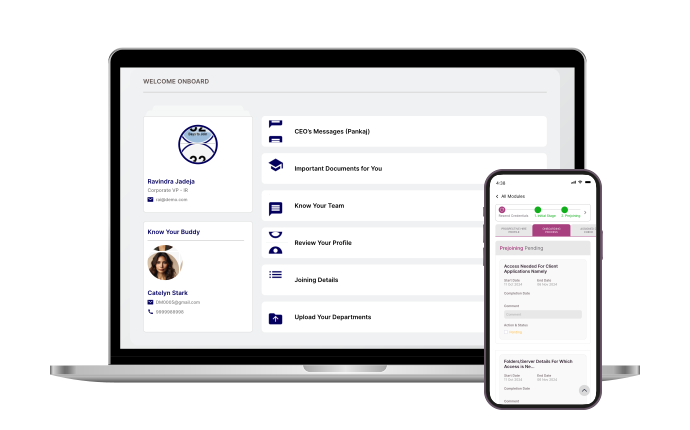
A remote employee might get spaced learning modules with AI-generated reminders to connect with peers working on adjacent projects. An on-site hire could be routed through deeper hands-on workflows and fast-tracked shadowing sessions.
While companies like Cipla have used AI to personalize marketing and streamline R&D, many HR teams are only now beginning to explore similar logic for employee onboarding—using behavioral data, role context, and performance history to match hires with relevant content and people.
4. Smarter Learning Paths With Actual Outcomes
Did you know: According to LinkedIn’s 2025 report, 91% of L&D pros agree that continuous learning is more important than ever for career success. Yet only 36% of companies qualify as career development champions, which means most are still leaving impact on the table.
Most L&D platforms still act like libraries—tons of content, little context. The problem is that people don’t need more learning options. They need the right ones, at the right time.
AI is shifting that. Instead of dumping everyone into the same leadership course or compliance training, tools like PeopleStrong’s learning management system tailor learning journeys based on role, current performance, and even preferred formats.

📌 Here’s how it plays out:
- A technically sound manager with poor delegation habits gets nudged toward short-form coaching content
- An underperforming sales rep is pushed into pitch simulations, not theory-heavy presentations
- A new joiner sees only the workflows, tools, and playbooks relevant to their exact job scope
For instance, Unilever built an AI-powered internal talent marketplace called FLEX Experiences, designed to match employees with learning and development opportunities tailored to their roles and aspirations.
Instead of pushing everyone toward generic training programs, the system surfaces project work, stretch assignments, and learning modules that reflect actual skill gaps and future goals. AI can also help employees paraphrase complex training content into simpler, role-specific takeaways, making learning easier to apply in the flow of work. Employees can grow in real time, developing new capabilities while contributing meaningfully to live business needs.
5. Help Before Employees Have To Ask
Most HR systems react. AI lets them anticipate.
88% of organizations list employee retention as a top concern, and career development is their No. 1 retention strategy. But none of that works if people only get support after they ask.
When stress builds or life changes hit, the last thing people want to do is hunt through policies or fill out yet another form. AI is changing that—stepping in before someone even types the first question.
For example, if burnout signals show up in sentiment data or behavior patterns (like late-night logins or drop-offs in check-in response), the system can proactively suggest a day off or surface mental health resources.
For instance, Walmart’s MyAssistant AI goes beyond onboarding. Employees use it to manage training, get policy info, and summarize key docs. It removes friction from everyday needs, so people get the help they need before having to escalate.
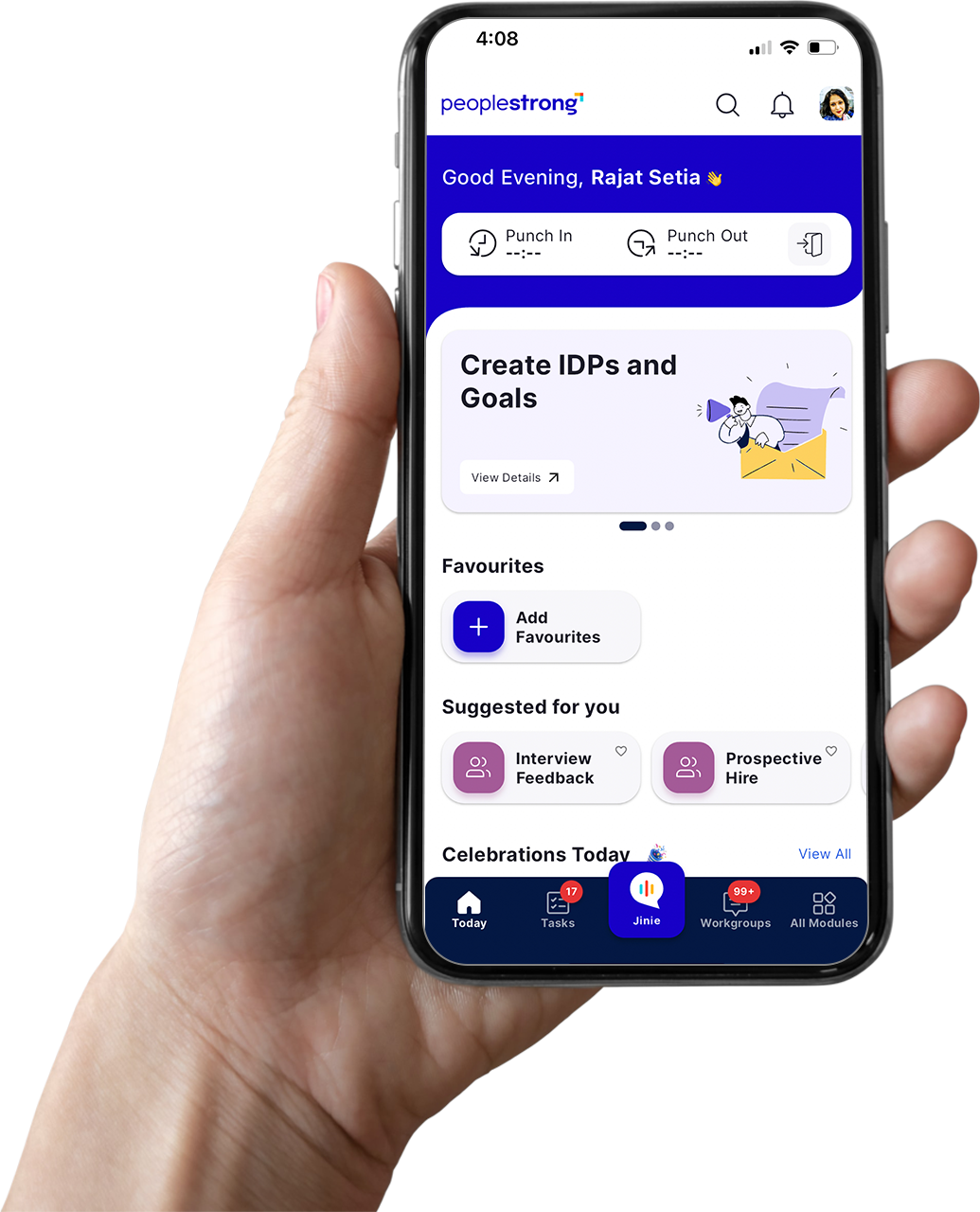
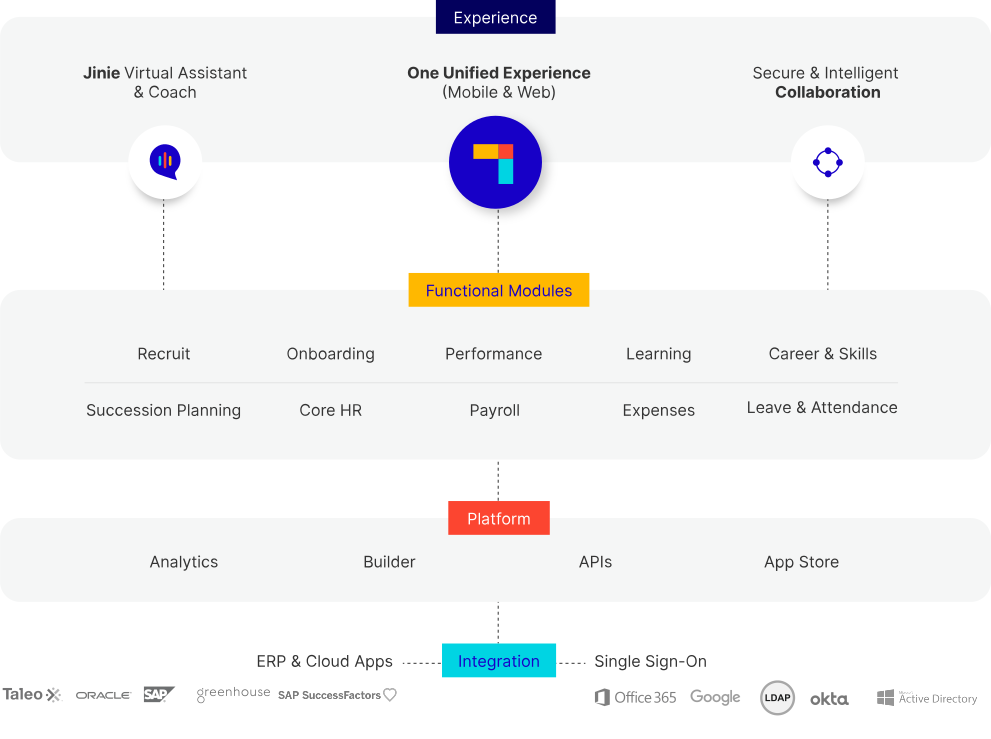
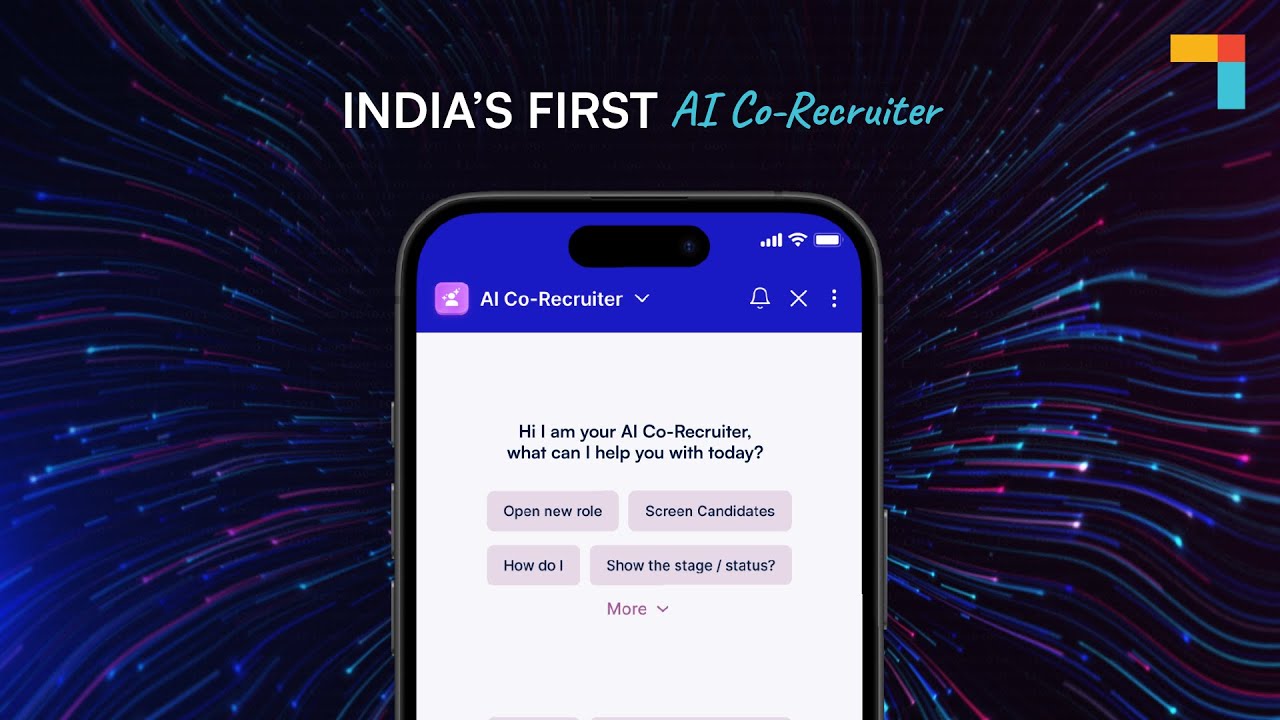
Tools like Jinie by PeopleStrong are pushing this even further. It acts less like a chatbot, more like an always-on assistant—automating leave queries, surfacing personalized nudges, and recommending relevant benefits based on employee context.
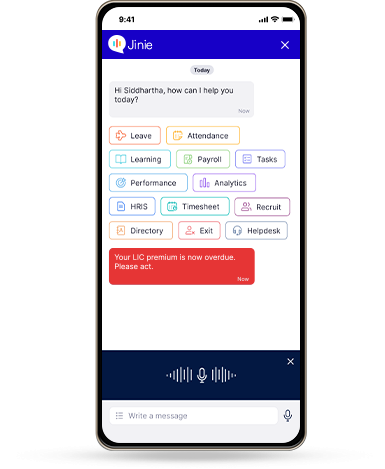
📌 Here’s how it shows up in practice:
- AI picks up early signs of burnout and prompts the employee to schedule time off
- If you’re returning from parental leave, the system suggests reboarding modules and wellness support, without needing a ticket
- If you have a promotion coming up, Jinie nudges the employee to complete relevant OKRs and auto-recommends skill boosters
Pro Tip: Tag burnout signals to real actions, not HR articles. When AI flags burnout risk, don’t send people a “how to manage stress” link. Trigger smart defaults—suggest a no-meeting block, offer calendar sync for a planned PTO, or surface their unused leave balance with a 1-click apply. Tools like Jinie already support this logic.
6. Intelligent Workflow Design
According to the Workplace Learning Report 2025,, “lack of time” is the #1 blocker to career development for managers, employees, and talent teams alike.
Intelligent workflow design gives that time back.
Most workflows are held together by habit, not logic. By analyzing calendar data, collaboration patterns, and system usage, AI can flag where productivity’s getting drained—think recurring meetings with low engagement, people buried under pings, or tasks bouncing between functions with no ownership.
Platforms like PeopleStrong’s Gen AI suite are starting to plug into daily operations to recommend smarter work designs. Instead of just measuring attendance or hours worked, the system identifies over-collaboration risks, highlights meeting inefficiencies, and proposes task redistributions, all tailored to how people work.
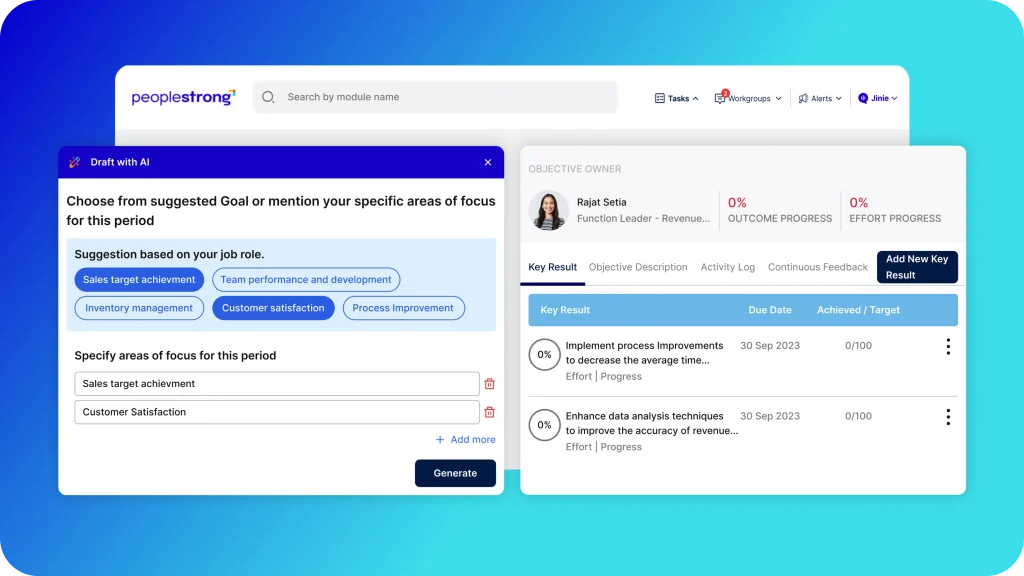
📌 Here’s how it helps:
- AI detects a manager spending 10+ hours a week in duplicate status calls → recommends consolidation or async updates
- Workflow maps show a junior employee involved in every project touchpoint → flags for delegation risks
- Recommends trimming recurring meetings with <40% active participation across multiple weeks
7. Making Managers Better, Quietly
The best managers coach, but not all of them know when or how to start.
That’s where AI comes in. Instead of waiting for annual feedback or lagging performance reviews, AI tools can quietly flag early signals: a drop in engagement scores, missed check-ins, or changes in team sentiment.
Without shaming or micromanaging, the system nudges managers with timely suggestions—“Schedule a 1:1 with [Employee Name] this week,” or “Here’s a quick read on managing remote motivation.”
Pro Tip: Stop chasing dashboards—embed nudges where people work. Instead of hoping managers open yet another portal to view engagement trends, push micro-insights into tools they already use (Slack, Teams, Gmail). “Hey, 1:1s with your team dropped this month—want to schedule one now?”
8. Team-Level Dynamics, Not Just Individual Data
HR dashboards often miss the forest for the trees.
AI can now zoom out, looking not just at individuals, but at the health of the team as a unit.
Are meetings turning into one-way updates?
Is one person driving all the collaboration while others stay silent?
Have sentiment signals dropped after a reorg?
These are subtle but powerful signs that psychological safety might be eroding.
Netflix, for example, actively tracks team-level health signals and encourages regular recalibration. By analyzing cross-functional interactions and feedback trends, they can catch dips in inclusion or trust before they spiral. The result: more resilient teams, not just productive individuals.
📌 Here’s how it works:
- Sudden drop in peer-to-peer feedback triggers a pulse survey
- AI flags when most collaboration is flowing through one overloaded team member
- Managers are coached on rebalancing dynamics—quietly, without drama
Risks and Guardrails: What Not to Automate
Not everything benefits from automation. Some decisions, conversations, and signals demand human judgment, context, and restraint. Here are a few risks to be aware of:
1. Empathy ≠ Automation
AI can flag distress, but it should never deliver it. Human moments need human hands.
Automating layoffs, performance warnings, or even sensitive feedback erodes trust fast. Remember the backlash when companies used templated emails for mass terminations during the pandemic? These are human moments. Offloading them to machines turns support into surveillance.
2. Transparency Builds Trust
According to LinkedIn’s Workplace Learning Report 2025, 88% of organizations cite retention as a top concern, and continuous learning is the #1 strategy.
But if employees suspect that “learning data” is performance monitoring in disguise, it backfires. AI that tracks Slack activity, calendar usage, or meeting times must be upfront about what is being recorded, how it’s interpreted, and who has access. Without a clear policy, helpful tools start to feel like hidden cameras.
3. Avoid Automated Decision-Making In High-Stakes Areas
AI can inform decisions around promotions or compensation, but giving it the final word is dangerous. Patterns in past data, especially from biased or unequal systems, can embed discrimination into future outcomes.
No model, however accurate, understands the full context of someone’s growth, constraints, or contributions. Use AI to spot signals, not make calls.
4. Overpersonalization Creates Fatigue
If every system is constantly “helping”—pinging reminders, offering course suggestions, pushing micro-coaching—it starts to feel like noise. Even well-meant nudges become interruptions.
PeopleStrong’s Jinie, for example, offers tailored nudges based on role and OKRs, but it works best when integrated carefully into the workflow, not as a flood of pop-ups. The key is to prioritize signal over volume. Sometimes the smartest feature is knowing when not to speak.
Work Smarter, Lead Better—with AI That Listens
Personalization isn’t about handing everything over to algorithms. It’s about using AI to surface what matters—at the right time, in the right way—so work feels less like noise and more like purpose.
When done well, AI sharpens the human experience instead of dulling it. It helps managers lead, employees grow, and organizations stay in sync with what their people need.
PeopleStrong’s AI-powered platform is built to do exactly that—quietly, intelligently, and without getting in the way.
Ready to bring intelligent, human-first AI into your workplace? Discover how PeopleStrong helps you build smarter, more connected and engaged teams.