











 About Us
 Brand
Brand
 Career
 Contact Us



 +91-7314623098



Hiring the right candidate is only the beginning of the employee journey. The real value comes from helping employees settle into their roles, understand expectations, and become productive as quickly as possible.
Effective onboarding can have a measurable impact on business outcomes. According to research by the Brandon Hall Group, organisations with a strong onboarding process improve new hire retention by 82% and productivity by over 70%. A structured employee onboarding checklist helps organisations create a consistent experience while supporting engagement, productivity, and long-term retention.
What is an employee onboarding checklist?
An employee onboarding checklist is a structured framework that helps organisations manage every stage of the onboarding journey for new employees. It outlines the tasks, responsibilities, and milestones required to support a smooth transition into the organisation.
A new employee onboarding checklist typically includes documentation, system access, training, introductions, compliance activities, and role-specific requirements. By following a standardised onboarding process checklist, organisations can create consistency across teams, reduce administrative delays, and help employees become productive more quickly.
Why is Employee Onboarding Important?
Employee onboarding plays a critical role in helping new hires understand their role, connect with colleagues, and adapt to organisational culture. A positive onboarding experience helps employees feel supported from the beginning and ensures they have the resources needed to succeed.
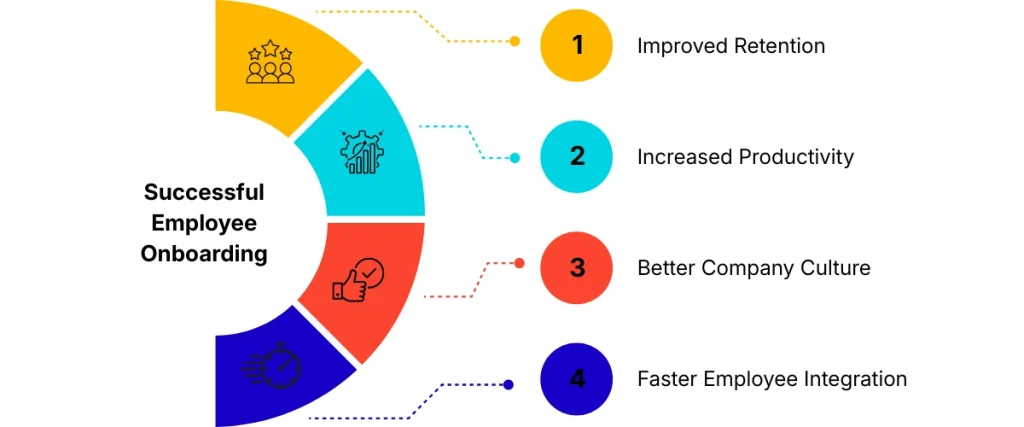
Improved Retention
The first few months of employment often influence an employee’s long-term perception of an organisation. A structured onboarding experience helps employees feel welcomed and supported, which can contribute to stronger engagement and retention. When employees understand expectations and receive the right guidance, they are more likely to remain committed to the organisation.
Increased Productivity
Employees perform more effectively when they have access to the tools, systems, and information they need from the start. A clear onboarding process reduces uncertainty and allows employees to focus on learning their responsibilities and contributing to business objectives. According to The Josh Bersin Company, organisations with effective onboarding programmes can improve new hire productivity by more than 60%, helping employees contribute more quickly to business goals.
Better Company Culture
Onboarding provides an opportunity to introduce employees to organisational values, working styles, and expectations. Consistent communication during the onboarding journey helps employees understand how teams collaborate and contribute to a positive workplace culture.
Faster Employee Integration
A well-planned onboarding programme helps employees build relationships with managers, colleagues, and stakeholders more quickly. This supports smoother collaboration and enables employees to become active contributors within their teams.
New Employee Onboarding Checklist
A successful new hire onboarding programme should be organised across different stages, beginning before the employee’s first day and continuing throughout the initial weeks.
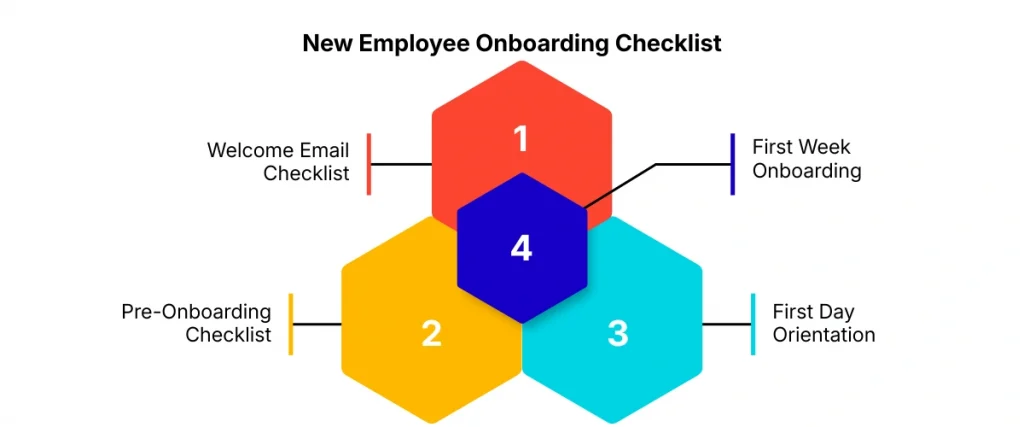
Welcome Email Checklist
The period between offer acceptance and joining is an important opportunity to engage employees.
- Send a welcome message introducing the organisation and team.
- Share joining instructions, reporting details, and contact information.
- Provide an overview of the employee’s first-week schedule.
- Share relevant resources or company information that may help employees prepare for their first day.
Pre-Onboarding Checklist
Before the employee joins, organisations should ensure that all necessary arrangements are in place.
- Complete documentation and compliance requirements.
- Prepare employment contracts and policy acknowledgements.
- Create email accounts and system credentials.
- Arrange workstation equipment and required software access.
- Notify internal teams about the new hire’s arrival.
First Day Orientation
The first day should focus on helping employees feel welcomed and informed.
- Introduce employees to team members and key stakeholders.
- Provide an overview of organisational policies and procedures.
- Conduct workplace or virtual environment tours.
- Ensure access to all required systems and applications.
- Review role expectations and immediate priorities.
First Week Onboarding
The first week should focus on learning, alignment, and relationship building.
- Conduct role-specific training sessions.
- Introduce employees to cross-functional teams.
- Discuss goals, responsibilities, and performance expectations.
- Schedule regular manager check-ins.
- Address questions and provide ongoing support.
Remote Employee Onboarding Checklist
Remote onboarding requires additional planning to ensure employees remain connected, engaged, and supported throughout the process.
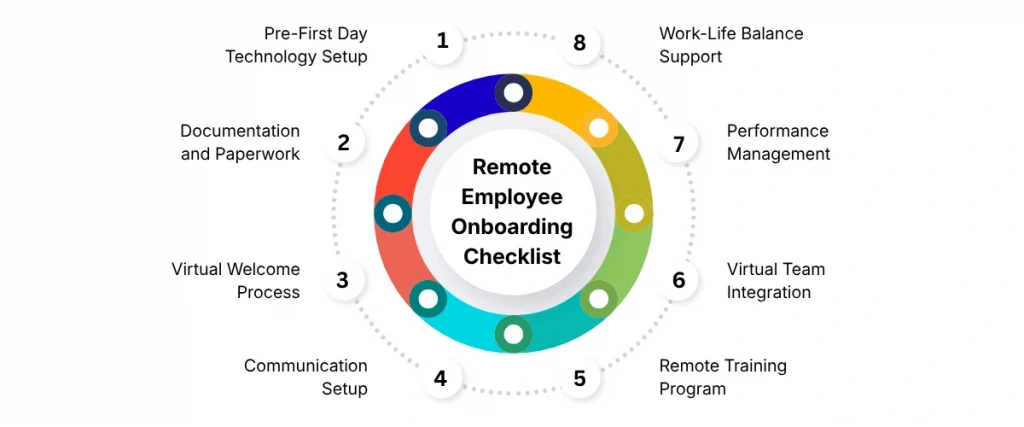
Pre-First Day Technology Setup
Technology preparation should be completed before the employee’s start date.
- Deliver required hardware and equipment.
- Configure devices and system access.
- Test software installations and login credentials.
- Provide technical support contacts.
Documentation and Paperwork
Digital onboarding processes can simplify documentation management.
- Complete employment forms electronically.
- Collect required identification documents securely.
- Share policies and compliance documentation digitally.
- Confirm completion of mandatory forms before onboarding begins.
Virtual Welcome Process
Remote employees should feel connected from the start.
- Schedule virtual welcome sessions.
- Introduce employees to managers and colleagues.
- Share organisational updates and team information.
- Encourage participation in introductory discussions.
Communication Setup
Clear communication expectations are particularly important in remote environments.
- Explain preferred communication channels.
- Share meeting and collaboration guidelines.
- Clarify working hours and availability expectations.
- Introduce employees to key points of contact.
Remote Training Program
Training should be accessible and easy to navigate.
- Provide access to digital learning resources.
- Schedule virtual training sessions.
- Share process documentation and knowledge repositories.
- Monitor training completion and participation.
Virtual Team Integration
Building relationships remains an important part of remote onboarding.
- Introduce employees to project teams.
- Encourage participation in team meetings.
- Assign a mentor or onboarding buddy.
- Create opportunities for informal interactions.
Performance Management
Setting clear expectations helps employees succeed in remote roles.
- Establish short-term goals and milestones.
- Conduct regular performance discussions.
- Review progress and development needs.
- Provide constructive feedback and support.
Work-Life Balance Support
Remote employees benefit from clear guidance around wellbeing and flexibility.
- Encourage healthy working habits.
- Discuss work-life balance expectations.
- Promote wellbeing resources and support programmes.
- Maintain regular communication with managers.
Employee Onboarding Checklist by Role
Successful onboarding requires collaboration across multiple teams and stakeholders.
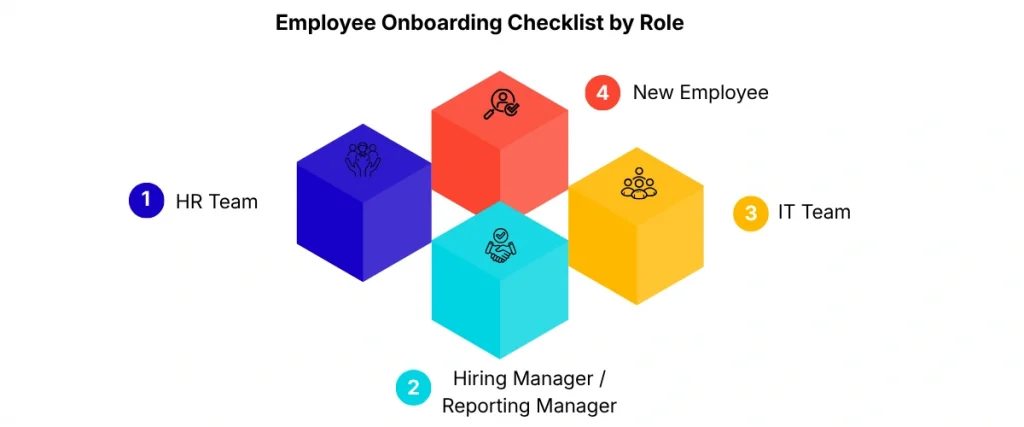
HR Team
HR teams are responsible for managing documentation, compliance activities, policy communication, payroll setup, and benefits administration. They help ensure that onboarding activities are completed accurately and on schedule.
Hiring Manager / Reporting Manager
Managers play a key role in helping employees understand their responsibilities, goals, and team dynamics. They provide role-specific guidance, conduct regular check-ins, and support employee development during the onboarding journey.
IT Team
IT teams are responsible for preparing devices, managing system access, configuring security settings, and providing technical support. Their involvement helps employees access the tools they need from day one.
New Employee
Employees are active participants in the onboarding process. They are responsible for completing required documentation, attending training sessions, asking questions, and engaging with colleagues and managers throughout the onboarding experience.
Benefits of Using an Employee Onboarding Checklist
Ensures Consistency Across All Departments
A structured employee onboarding checklist helps ensure that every employee receives a similar onboarding experience regardless of role, department, or location.
Streamlines Time Management and Resource Allocation
Clearly defined onboarding activities help teams plan resources effectively and reduce last-minute coordination challenges.
Enhances Compliance and Documentation
An onboarding checklist helps organisations track required documentation, policy acknowledgements, and regulatory requirements more efficiently.
Improves Communication and Coordination
Defined responsibilities improve collaboration between HR, managers, IT teams, and employees throughout the onboarding process.
Promotes Accountability
Assigning ownership to specific onboarding activities helps ensure tasks are completed accurately and on time.
Supports Cultural Integration
A consistent onboarding programme helps employees understand organisational values, behaviours, and ways of working from the beginning.
Essential Tools and Software for Streamlining Onboarding
Technology plays a critical role in creating consistent onboarding experiences across departments, locations, and workforce types. HR platforms can automate document collection, onboarding workflows, compliance activities, training delivery, and employee communications.
A study published by the Society for Human Resource Management (SHRM) indicates that implementing a structured onboarding framework enhances organizational outcomes significantly, driving a 52% increase in new hire retention and a 60% boost in overall productivity. This underscores the measurable financial and operational value of deploying technology-enabled onboarding programs.
How AI and Automation Personalise the Employee Onboarding Experience
AI and automation can help organisations create more efficient and personalised onboarding experiences. Automated workflows can manage routine activities such as document collection, welcome communications, task assignments, and training reminders.
AI-powered insights can also help identify relevant learning content, recommend training programmes, and support employee queries through self-service tools. By reducing administrative effort, HR teams and managers can spend more time focusing on employee engagement, development, and relationship building.
Best Practices for Effective Employee Onboarding
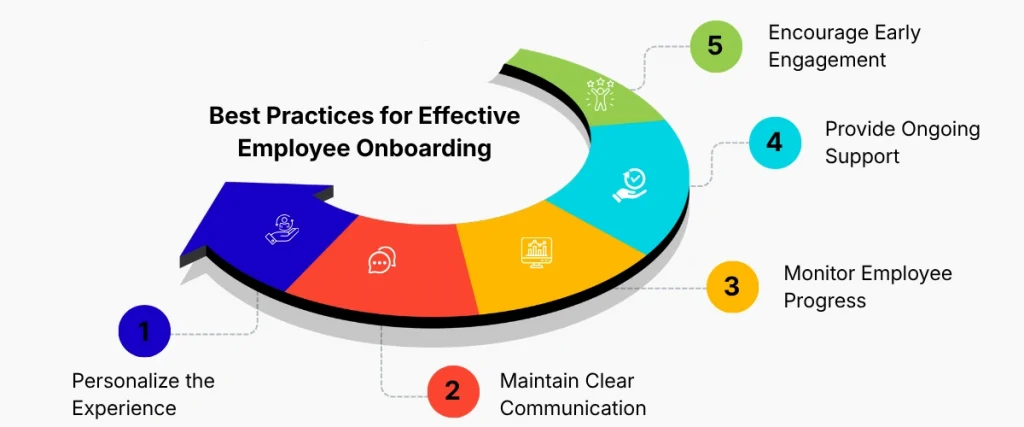
Personalize the Experience
Different roles have different onboarding requirements. Tailoring onboarding activities to the employee’s role, team, and responsibilities can improve engagement and relevance.
Maintain Clear Communication
Regular communication helps employees understand expectations, timelines, and available support throughout the onboarding journey.
Monitor Employee Progress
Tracking onboarding milestones allows organisations to identify potential challenges and provide timely assistance when required.
Provide Ongoing Support
Onboarding should continue beyond the first week. Ongoing support helps employees build confidence and adapt successfully to their new environment.
Encourage Early Engagement
Creating opportunities for employees to participate in discussions, meetings, and team activities can strengthen relationships and support integration.
Conclusion
A well-structured onboarding checklist for new hires helps organisations create a positive and consistent employee experience from the very beginning. By following a comprehensive onboarding process checklist, organisations can improve employee engagement, accelerate productivity, strengthen retention, and support long-term success.
Whether onboarding takes place in person or remotely, a practical new employee onboarding checklist provides the structure needed to help employees transition smoothly into their roles while enabling teams to collaborate effectively throughout the process.
Frequently Asked Questions
What is an onboarding checklist?
An onboarding checklist is a structured list of tasks and activities designed to help new employees transition smoothly into an organisation. It helps ensure that onboarding activities are completed consistently and efficiently.
How long should an onboarding checklist be?
While many onboarding activities take place during the first week, organisations often extend onboarding programmes for 30, 60, or 90 days to support employee integration and development.
Who should be involved in onboarding new employees?
HR teams, hiring managers, IT teams, and employees all play important roles in the onboarding process. Collaboration between these stakeholders helps create a successful onboarding experience.
What should be included in onboarding paperwork?
Onboarding paperwork typically includes employment contracts, tax forms, policy acknowledgements, payroll information, benefits documentation, and other compliance-related forms.
What are the required onboarding forms?
Required forms vary by organisation and location but commonly include employment agreements, tax declarations, identification documents, benefits enrolment forms, and policy acknowledgements.
Why should I use a new employee checklist template to facilitate the process?
An onboarding checklist template helps standardise onboarding activities, improve coordination between teams, and ensure that important tasks are completed consistently for every new hire.
How to create an onboarding checklist?
Begin by identifying the activities required before, during, and after an employee joins the organisation. Assign responsibilities to relevant stakeholders and establish clear timelines for completion.
Can an onboarding checklist be used for remote employees?
Yes, a remote onboarding checklist helps organisations manage technology setup, documentation, communication, training, and employee engagement activities in a virtual environment.
How do you prepare for a new hire’s first day?
Preparation typically includes setting up equipment, creating system access, completing documentation, notifying team members, and planning introductory activities.
What is the difference between traditional and modern employee onboarding?
Traditional onboarding often focuses on administrative activities, whereas modern onboarding combines compliance, training, engagement, technology, and ongoing support to create a more comprehensive employee experience.
How to measure the effectiveness and ROI of an employee onboarding program?
Organisations can evaluate onboarding effectiveness by tracking employee retention, engagement, productivity milestones, training completion rates, and employee feedback collected throughout the onboarding journey.