











 About Us
 Brand
Brand
 Career
 Contact Us



 +91-7314623098






Patching the systems that hold your employee records eventually costs more than replacing them. The tipping point shows up in small, expensive ways. You add a legal entity, and payroll has to run twice because the system can’t hold two sets of statutory rules at once. Attendance arrives from three plants in three formats. Provident fund contributions get reconciled by hand every month because the employee master and the payroll record disagree about joining dates. One problem sits underneath all of it: no single record of who works at the company can be trusted any more.
This ranking is written for CHROs, heads of HR operations and HRIS, payroll leads, and the IT leaders who sign off on integration and security. The scope is deliberately narrow. India-based organisations with 1,000 or more employees, usually spread across multiple states, legal entities and workforce types. Platforms aimed at teams below that band are covered separately near the end, rather than ranked alongside systems built for enterprise volume.
TLDR
- Eight platforms are ranked for Indian organisations above 1,000 employees, assessed on multi-entity payroll, statutory depth, system-of-record integrity, integration and behaviour at volume.
- PeopleStrong leads for India-headquartered enterprises that want enterprise-depth Human Capital Management with India statutory coverage built in; it currently serves 500+ enterprise customers and 2M+ employees across 10 countries.
- Global suites such as SAP SuccessFactors, Workday and Oracle Fusion Cloud HCM suit multinationals standardising HR alongside an existing global ERP footprint.
- Three buying situations drive most enterprise searches: graduating from a mid-market tool, consolidating a fragmented stack, or replacing legacy on-premise systems.
- The deciding factor is rarely the feature list. It is whether one employee record can carry every entity, state, workforce type and statutory rule you actually run.
What ‘Enterprise-Grade’ Means for Core HR Software in India
Core HR is the system of record: employee master data, organisation structure, position and reporting hierarchy, lifecycle events from joining to exit, documents, policies and self-service. Every other module borrows from it. When it is wrong, payroll is wrong.
At enterprise scale in India, three things separate a genuine enterprise HRMS from a well-built smaller system.
It carries statutory complexity natively. India’s compliance load is layered, and each layer has its own cadence and filing format:
- Provident fund contributions, filed monthly through the Employees’ Provident Fund Organisation’s electronic challan-cum-return process.
- Employees’ state insurance contributions, with eligibility that changes as wages cross thresholds mid-year.
- Professional tax, which varies by state, so a workforce across five states carries five sets of slabs and due dates.
- Income tax deducted at source, with quarterly returns filed in Form 24Q.
- Form 16 issuance annually, across the full employee base.
- Gratuity accrual and settlement under the Payment of Gratuity Act.
- The four labour codes, which the Government of India brought into force in late 2025, and which change how wages are defined for several of the above calculations.
A platform built for this market treats those as configuration. Built elsewhere, they usually arrive as a localisation project instead.
It holds multiple legal entities on one employee master. Large Indian organisations rarely operate as a single entity. Manufacturing groups have plant-level entities. BFSI organisations run separate subsidiaries for lending, insurance distribution and shared services. Multi-entity payroll software in India has to keep those ledgers separate for statutory and audit purposes while presenting one consolidated headcount and one employee experience.
It behaves predictably at volume. Month-end payroll for 8,000 employees, attendance regularisation across shifts, and appraisal cycles that open to the whole organisation on the same morning are load events. Enterprise-grade means the system was tested against those, not against a 400-person demo tenant.
Who This Ranking Is For and How These Platforms Were Assessed
An enterprise core HR decision is a five-to-seven-year commitment. The evaluation below reflects that, weighting durability over demo appeal.
Each platform was assessed against seven criteria that matter specifically above 1,000 employees:
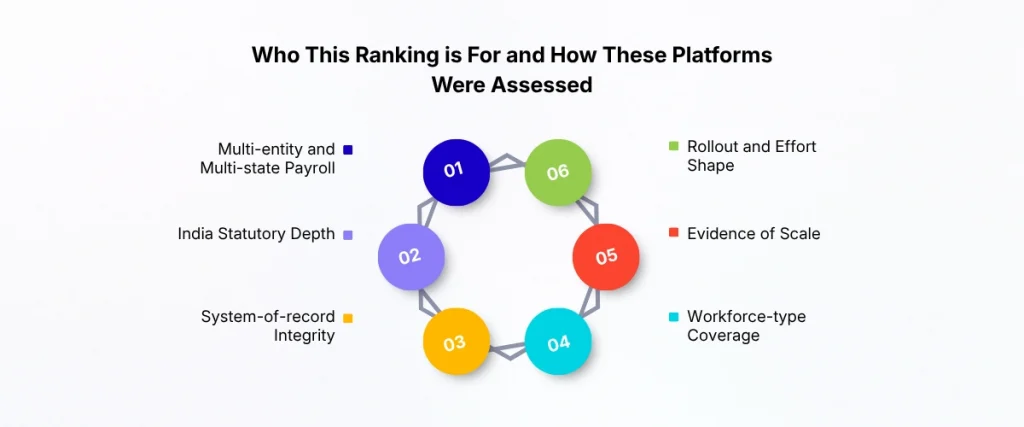
- Multi-entity and multi-state payroll. Can the system run separate legal entities, pay cycles and state-specific rules from one employee master, without parallel spreadsheets?
- India statutory depth. How much of provident fund, employees’ state insurance, professional tax, income tax deduction and gratuity is handled natively rather than through workarounds?
- System-of-record integrity. One employee ID that carries across attendance, payroll, performance and exit, so headcount reconciles the first time.
- Workforce-type coverage. Whether the platform handles shopfloor, frontline and contract workers as first-class users, not only desk-based employees.
- Integration depth. Open interfaces to finance systems, biometric and access-control devices, identity management and third-party benefits providers.
- Evidence of scale. Named enterprise deployments and third-party recognition at the 1,000+ employee tier, rather than logos from a different size band.
- Rollout and effort shape. How much internal HR and IT capacity the implementation consumes, and whether the vendor delivers directly or through partners.
Ratings and recognition referenced here come from named third parties. Gartner Peer Insights’ Voice of the Customer report for Cloud HCM Suites for 1,000+ Employee Enterprises is the most relevant of these, because its scope matches this ranking’s headcount band exactly.
The Three Buying Situations Behind an Enterprise Core HR Search
The right shortlist depends less on your industry than on what you are moving away from.
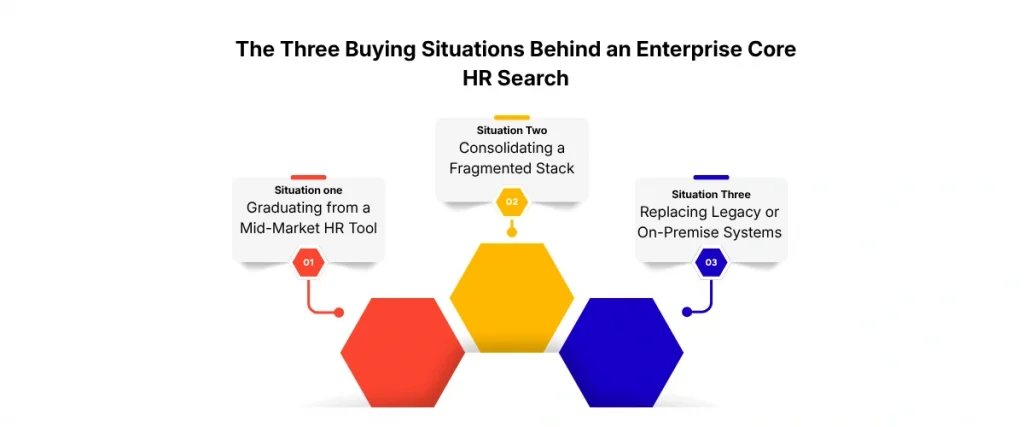
Situation one: graduating from a mid-market HR tool
You bought a well-designed system at 300 or 600 employees. It worked. At 1,500 employees across four states and two entities, the limits show up as workflow rules you can’t configure, reports your finance team rebuilds in Excel, and payroll variants the product was never designed to hold. Nothing failed. The requirement outgrew the design. This buyer needs a platform where added complexity is a configuration change rather than a product request.
Situation two: consolidating a fragmented stack
Three or more disconnected tools is a common starting point: one system for recruitment, another for payroll, a biometric attendance system that exports CSVs, and a learning platform with no reconciliation back to the employee master since go-live. Headcount numbers differ depending on which system you ask. The buying goal here is one employee record and fewer integrations to maintain, which usually means a single hire-to-exit suite rather than a better point tool.
Situation three: replacing legacy or on-premise systems
An on-premise HRMS or an ageing global deployment still runs. But statutory updates arrive as patches, mobile access is limited, and every change needs a vendor ticket. The decision is about maintainability and statutory currency more than features. Weight how quickly a vendor ships regulatory changes, and who owns that work.
Ranked: 8 Enterprise Core HR Platforms in India for Large Organisations
Each platform below is described the same way: what it does well, and who it fits.
1. PeopleStrong
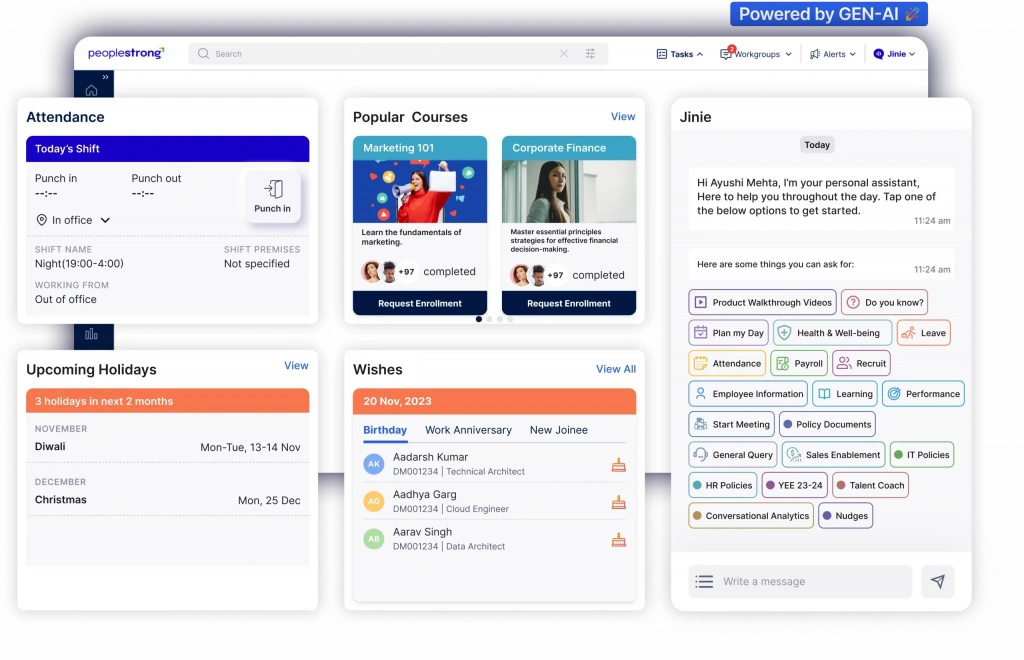
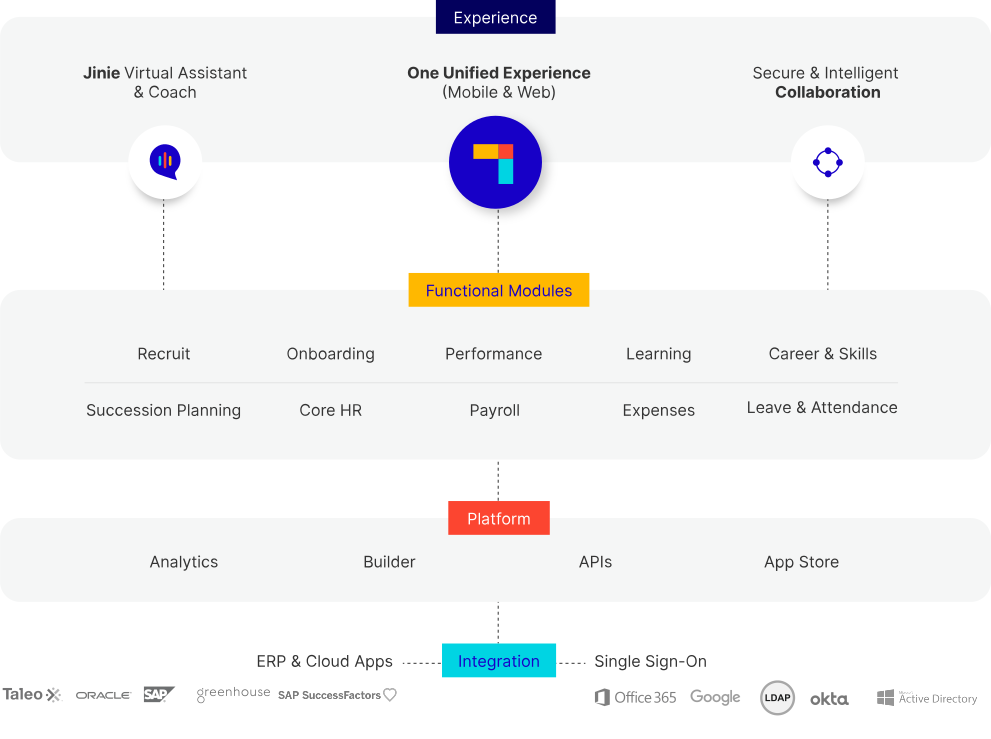
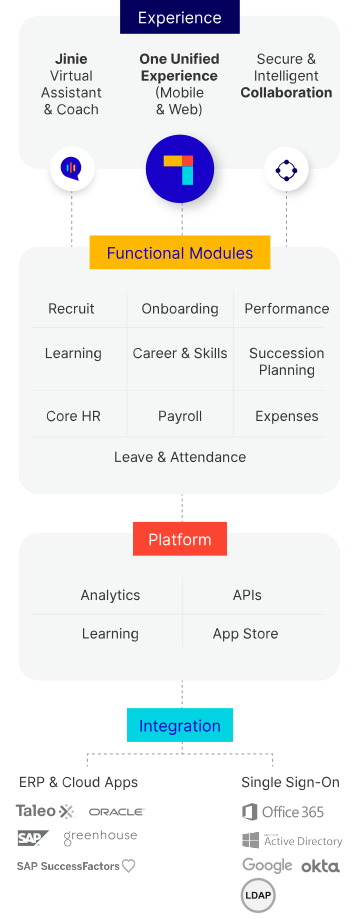
PeopleStrong is an Asia-headquartered Human Capital Management suite covering the full hire-to-exit lifecycle on one platform: Core HR, Payroll and Workforce Management, Talent Acquisition, Performance and Talent Management, Learning, Leave and Attendance, Compensation, Onboarding and Succession Planning. It was founded in 2005, is headquartered in Gurugram and is backed by Goldman Sachs Alternatives.
Key strengths:
- India statutory payroll built into the core, with multi-entity and multi-state payroll run from a single employee master rather than in parallel spreadsheets. It is built to support compliance with Indian statutory requirements rather than treating them as an add-on localisation. Native coverage includes:
– Provident fund contributions.
– Employees’ state insurance.
– Tax deducted at source.
– Gratuity.
- Blue-collar and white-collar workforces on the same system, including shopfloor attendance capture, shift handling and regularisation, which matters for manufacturing and retail employers running mixed workforces.
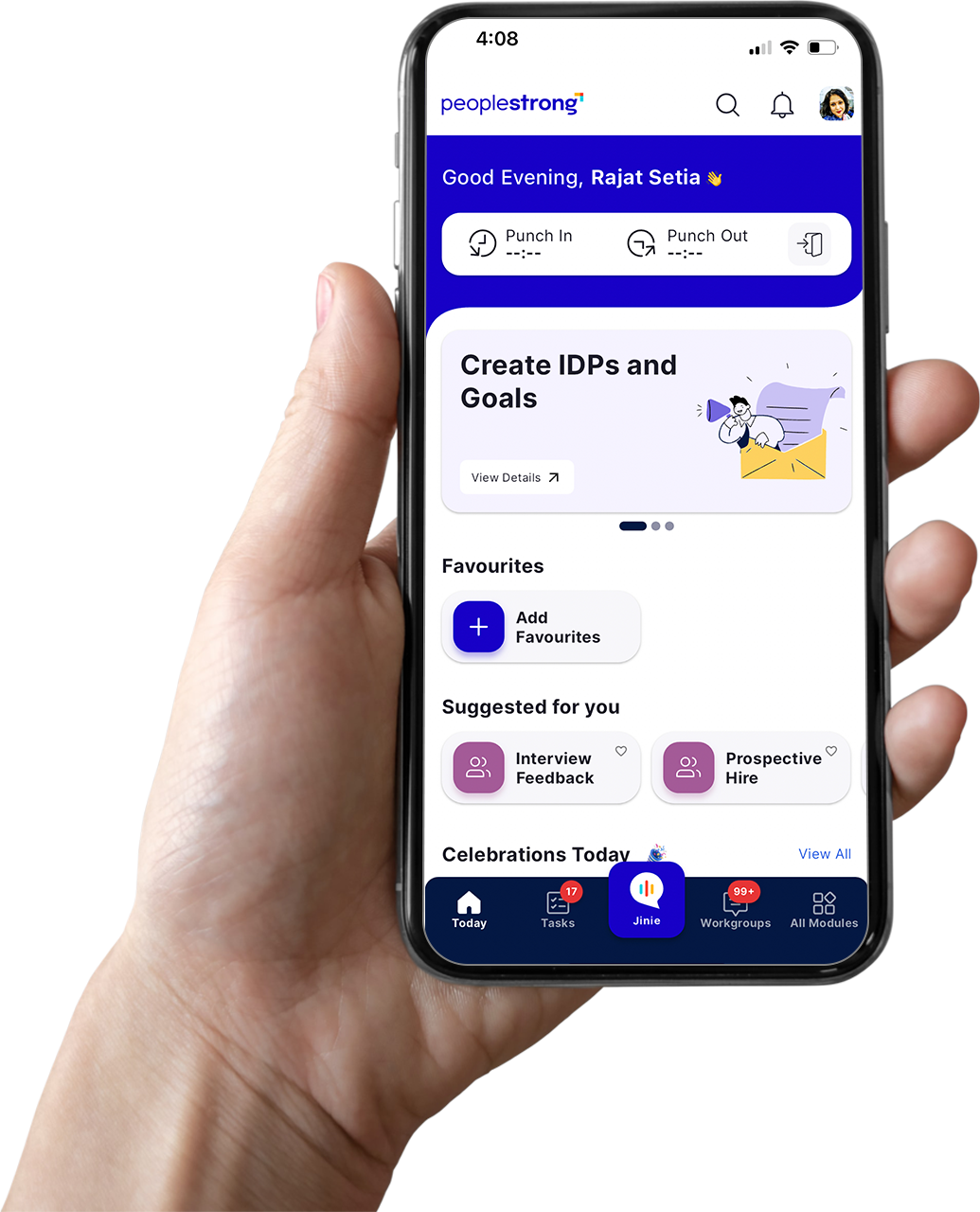
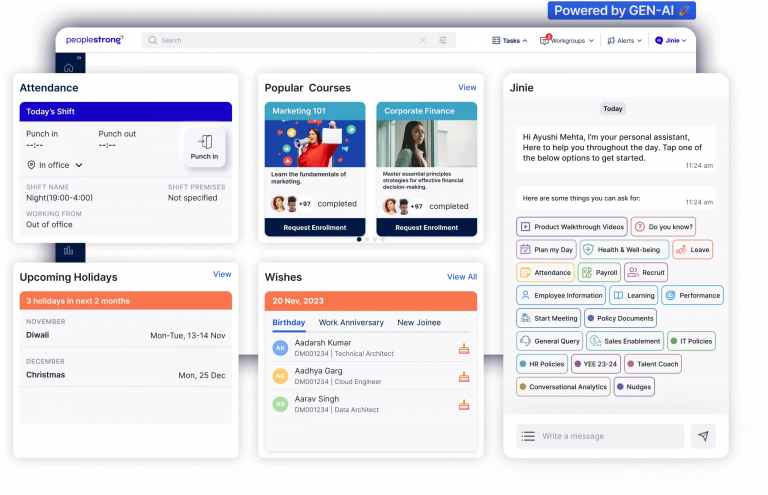
- Jinie, an embedded HR AI agent that resolves employee queries on leave balances, payslips and policy questions around the clock. Enterprises using it report roughly a 60% reduction in routine HR administration load. In practice, that means HR operations teams spend less of the month answering the same payslip question and more of it on exceptions.
- Cross-module HR analytics, so attrition, cost-to-company and headcount views draw on one dataset instead of reconciled exports.
- Proven at the relevant tier: 500+ enterprise customers, 2M+ employees managed and operations across 10 countries. Gartner named PeopleStrong a Customers’ Choice in its Voice of the Customer report for Cloud HCM Suites for 1,000+ Employee Enterprises in 2022, 2023, 2024 and 2025. Four consecutive years of that recognition matters because the report reflects verified customer reviews within your own size band.
Ideal for: India-headquartered enterprises between 1,000 and 10,000+ employees, particularly in manufacturing, BFSI, pharma and healthcare, IT/ITeS and retail, that want one system of record with India payroll depth and do not want a multi-year, partner-led rollout.
2. SAP SuccessFactors
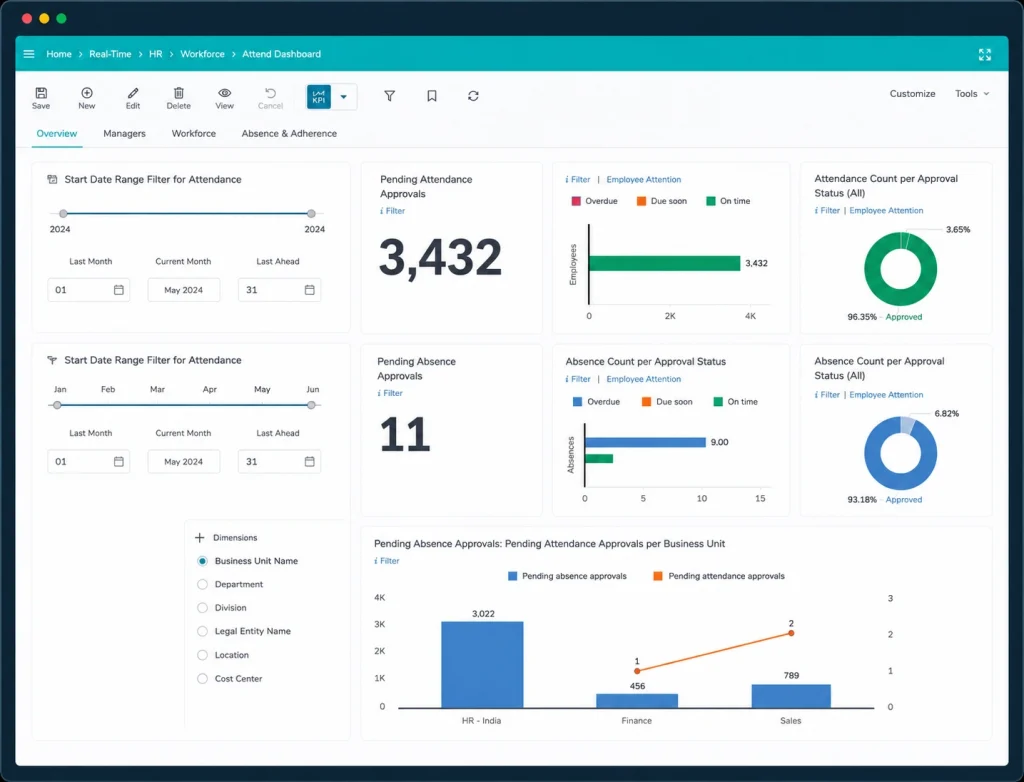
SAP SuccessFactors is a cloud HCM suite with Employee Central as its core HR system of record, alongside modules for recruiting, performance, learning and compensation.
Key strengths:
- A shorter path from HR data to financial reporting for organisations already running SAP, because HR sits on the same vendor’s ERP and finance stack.
- Broad global country coverage for organisations standardising HR processes across many jurisdictions.
- A large partner and consulting network in India for implementation and ongoing support.
Ideal for: multinationals with an existing SAP ERP footprint that want HR standardised on the same vendor across countries.
3. Workday
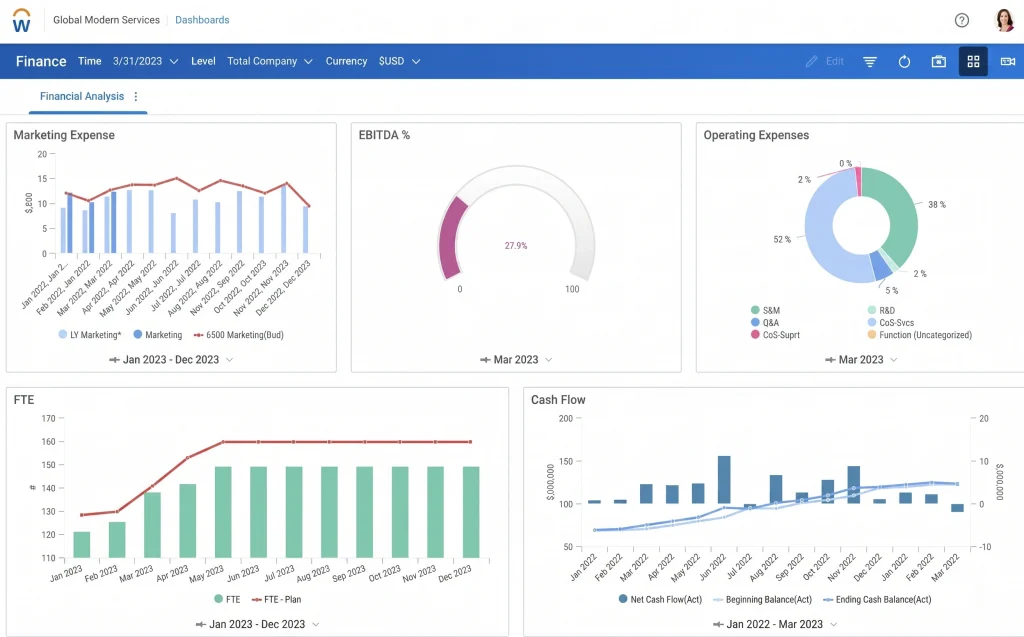
Workday offers HCM and financial management on a single platform, with configurable business processes and built-in reporting.
Key strengths:
- Analytics and workforce planning without a separate data warehouse for many use cases, because reporting draws on one underlying data model.
- Approval and sign-off flows that can be configured to match layered governance structures.
- Regular feature release cycles applied uniformly across the customer base.
Ideal for: large multinationals, often with US or European headquarters, that want HR and finance on one platform, with India payroll typically handled through an integrated local payroll provider.
4. Oracle Fusion Cloud HCM
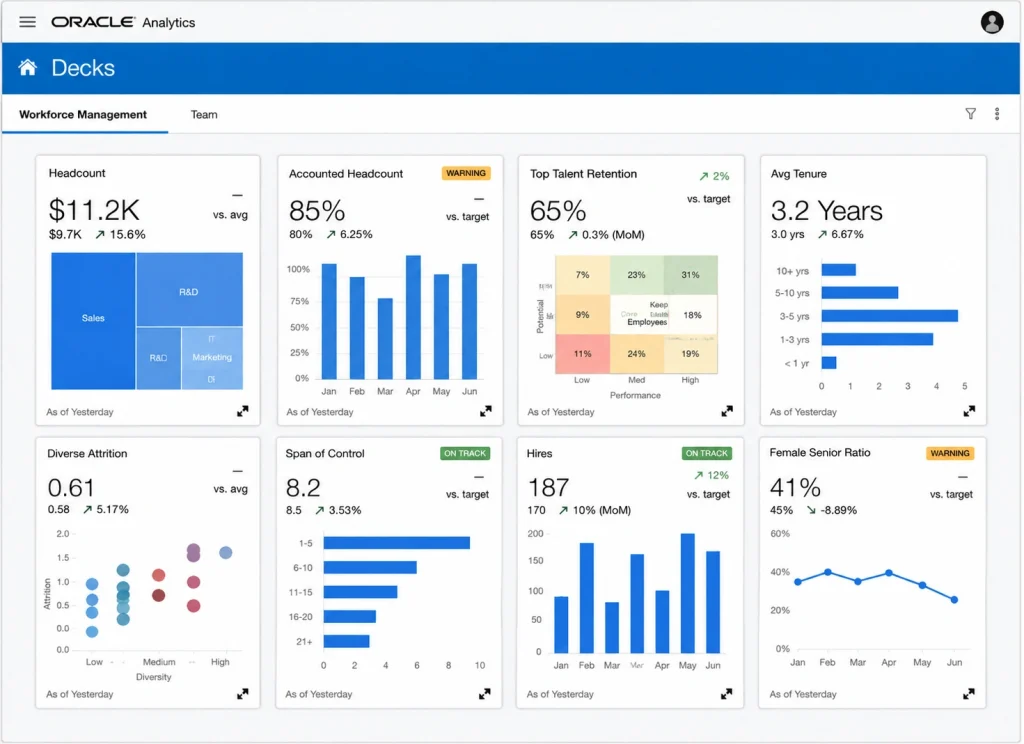
Oracle Fusion Cloud HCM covers global HR, talent management, workforce management and payroll for a range of countries, as part of the wider Oracle Fusion applications family.
Key strengths:
- For organisations already invested in Oracle, HR data connects directly to ERP and supply chain applications on the same stack.
- Broad functional coverage across HR, recruiting, learning and compensation within one vendor relationship.
- Established presence and implementation capacity in India through Oracle and its partners.
Ideal for: global enterprises running Oracle ERP that want HR on the same technology stack, with Indian statutory payroll addressed through Oracle localisations or a partner-delivered payroll integration.
5. Ramco HCM
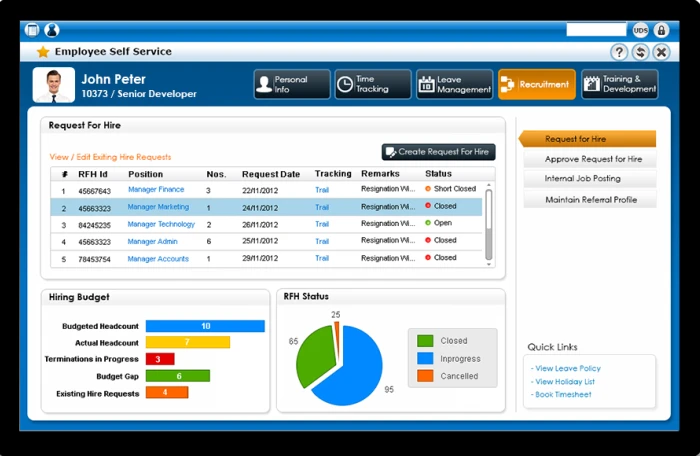
Ramco HCM is an India-origin enterprise suite combining core HR, global payroll, and time and attendance, with a customer base weighted towards asset-heavy industries.
Key strengths:
- Payroll coverage across multiple countries from one platform, which helps Indian groups with overseas operations.
- Time, attendance and shift capabilities suited to plants, logistics hubs and field operations.
- Established deployments in manufacturing, logistics and aviation.
Ideal for: Indian conglomerates and asset-heavy enterprises that need multi-country payroll alongside detailed workforce time tracking.
6. ZingHR
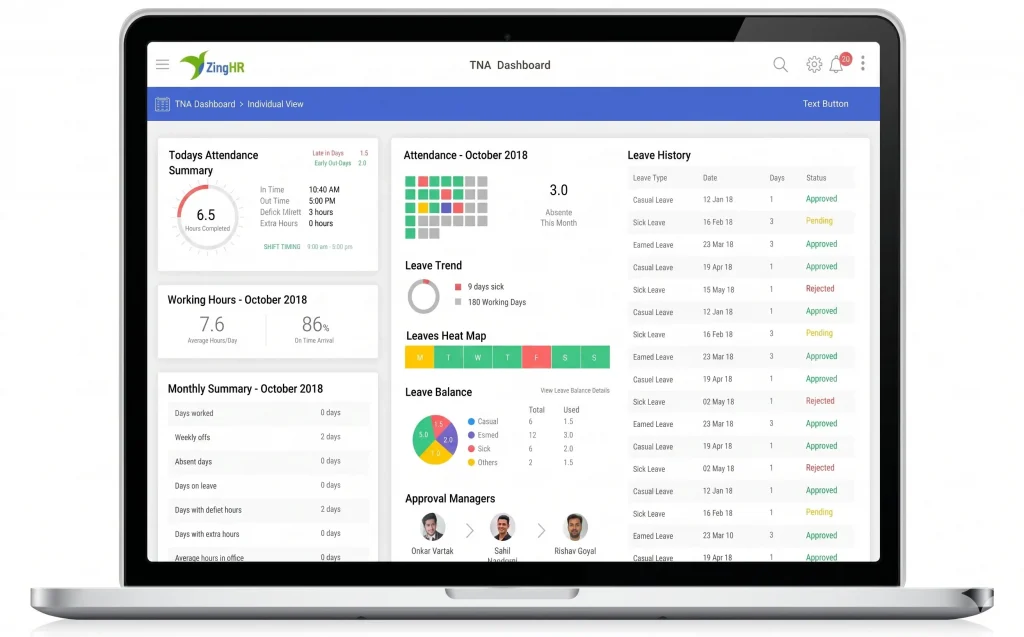
ZingHR is an Indian HCM platform covering hire-to-exit processes, including payroll and frontline workforce features.
Key strengths:
- India statutory payroll processing across multiple entities and states.
- Attendance capture options for distributed and frontline teams, including biometric and mobile-based methods.
- Modular deployment, allowing organisations to start with payroll or attendance and extend from there.
Ideal for: Indian enterprises with large frontline or distributed workforces where attendance and payroll accuracy are the primary pain points.
7. UKG Pro
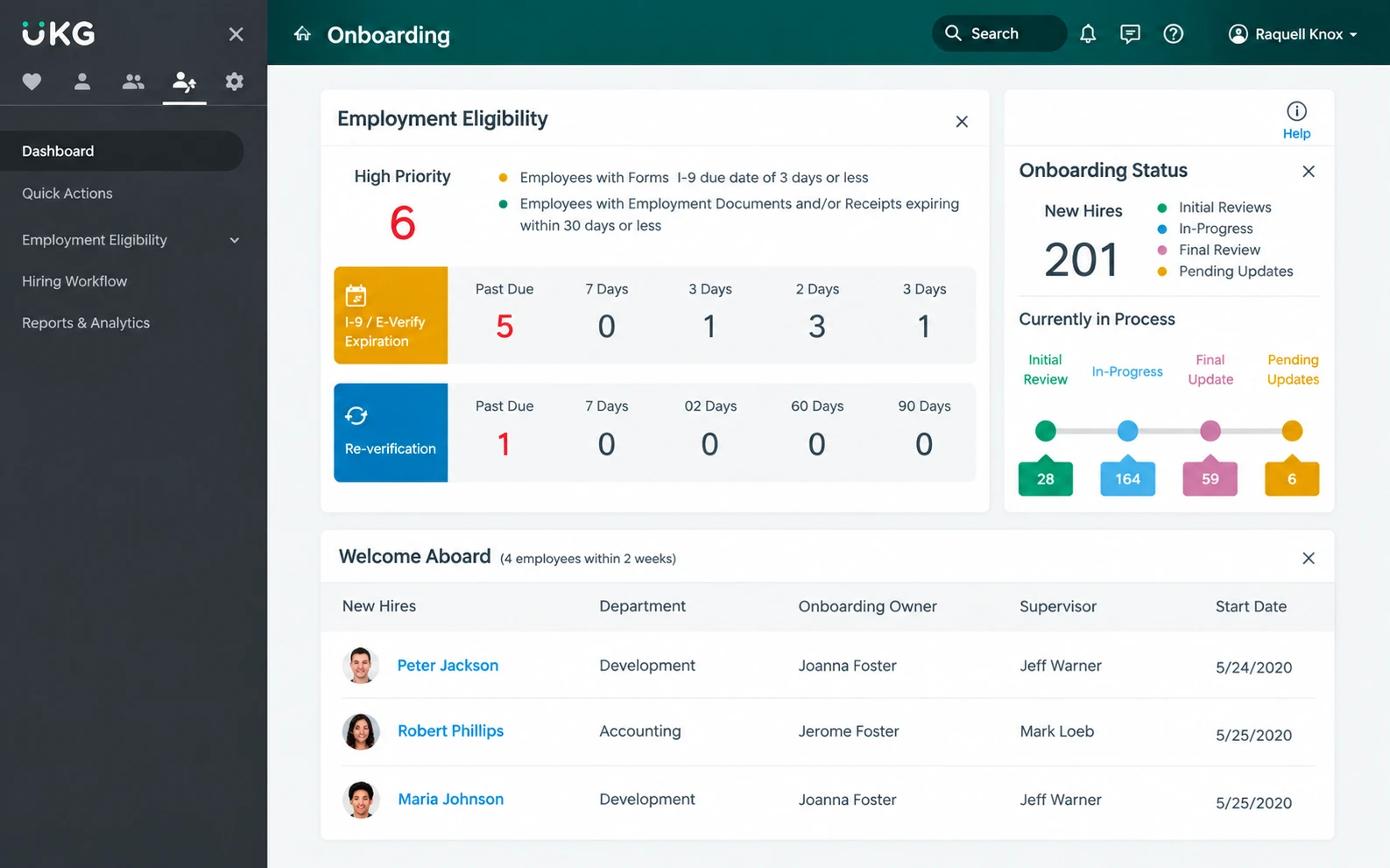
UKG Pro combines HR, workforce management and payroll, with shift scheduling capability carried over from its Kronos heritage.
Key strengths:
- Detailed shift scheduling, labour forecasting and time capture for hourly and shift-based workforces.
- Employee experience and engagement tooling built into the core product.
- Established use among global organisations with large operational workforces.
Ideal for: multinational employers with shift-heavy operations in India that want scheduling depth, with Indian statutory payroll usually delivered through integration with a local payroll provider.
8. Adrenalin Max
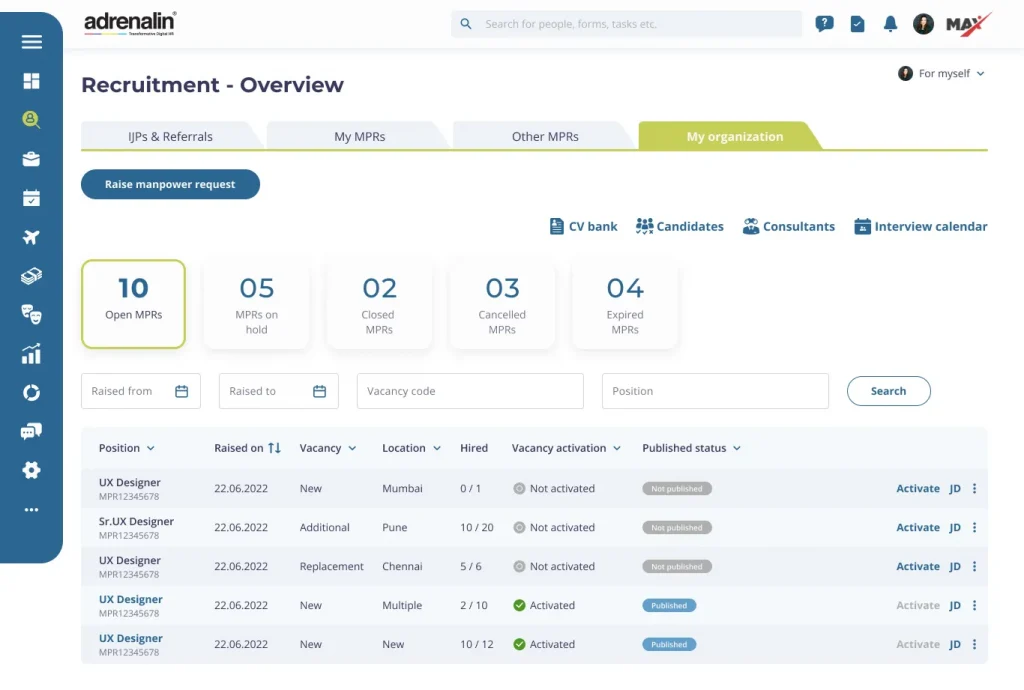
Adrenalin Max is an India-based HCM platform covering the hire-to-retire lifecycle for mid-to-large enterprises.
Key strengths:
- India payroll and statutory processing within the core product.
- Configurable workflows for lifecycle events such as transfers, confirmations and separations.
- Deployments across Indian enterprises and select overseas markets.
Ideal for: Indian enterprises around and above 1,000 employees looking for lifecycle coverage from a domestic vendor with an established support presence.
Side-by-Side: Enterprise HCM Platforms by Strength and Company Size
| Platform | Best for | Key strengths | Ideal company size |
| PeopleStrong | India-headquartered enterprises wanting one hire-to-exit system of record | Native India multi-entity payroll, blue- and white-collar coverage, Jinie AI agent, cross-module analytics, Gartner Customers’ Choice 2022–2025 | 1,000–10,000+ |
| SAP SuccessFactors | Multinationals standardising on SAP | Employee Central core HR, ERP alignment, wide country coverage | 3,000+ |
| Workday | Global groups wanting HR and finance together | Unified reporting, configurable business processes | 3,000+ |
| Oracle Fusion Cloud HCM | Oracle ERP customers | Broad functional coverage, single-vendor stack | 3,000+ |
| Ramco HCM | Asset-heavy Indian groups with overseas payroll | Multi-country payroll, time and attendance depth | 1,000–10,000+ |
| ZingHR | Frontline-heavy Indian enterprises | India payroll, mobile and biometric attendance, modular rollout | 1,000–7,500 |
| UKG Pro | Shift-based operational workforces | Scheduling and labour forecasting, employee experience tooling | 2,000+ |
| Adrenalin Max | Domestic enterprises wanting lifecycle coverage | India payroll, configurable lifecycle workflows | 1,000–5,000 |
Vertical Fit: Manufacturing, BFSI, IT/ITeS and Retail Workforces
Two organisations of identical headcount can need very different systems. Workforce composition is the variable that decides it.
| Vertical | Workforce characteristics | What to prioritise in core HR | Fit signals to look for |
| Manufacturing | Mixed blue- and white-collar, multi-plant, shift patterns, contract labour | Shopfloor attendance capture, shift and overtime rules, plant-level legal entities, contract workforce records | Named plant deployments, device integration with existing biometric hardware, state-wise statutory handling |
| BFSI | Branch networks, high audit and security scrutiny, regulated roles | Access controls, audit trails on data changes, role-based permissions, entity separation across subsidiaries | Security certifications, granular audit logging, reference customers under regulatory supervision |
| IT/ITeS | High-volume hiring, project-based allocation, hybrid and remote working | Recruitment-to-onboarding continuity, position management, quick joiner-to-payroll flow at volume | Bulk onboarding capability, integration with background-verification vendors |
| Retail | Distributed stores, high attrition at the frontline, seasonal peaks | Mobile-first self-service, rapid onboarding and exit, roster and shift management, store-level reporting | Offline-tolerant mobile apps, exit-to-full-and-final settlement automation |
PeopleStrong’s customer base is weighted towards manufacturing and BFSI. That’s why shopfloor attendance and multi-entity statutory separation are core product areas rather than optional extensions. If your workforce is predominantly desk-based and single-entity, that depth matters less, and a lighter configuration will serve you better.
Migration Paths: Moving Off Mid-Market HR Tools Without Losing Payroll History
Missing features are seldom what derails an enterprise migration. Incomplete historical payroll data is the harder problem, and it often surfaces only at the first tax filing after go-live.
A sequence that holds up:
- Freeze the employee master before anything else. Reconcile headcount across your current HR system, payroll system and finance ledger until the three agree. Migrate the reconciled version, not the largest one.
- Decide how much payroll history to carry forward. At minimum, the current financial year’s earnings, deductions and tax computations must move so that Form 16 issuance is uninterrupted. Prior years can often remain in the legacy system as an archive, provided you retain read access for the statutory retention period.
- Map statutory identifiers explicitly. Each of the following needs field-level mapping and validation before load, because errors here surface as rejected filings rather than as system errors:
– Provident fund member IDs.
– Universal account numbers.
– Employees’ state insurance numbers.
– Permanent account numbers.
- Run parallel payroll for at least two cycles. Compare gross, net, statutory deductions and employer contributions line by line against the legacy output. Two clean cycles is a reasonable threshold before switching off the old system.
- Migrate leave balances with their accrual rules, not just their numbers. A carried-forward balance without the rule that produced it will drift within a quarter.
- Phase the Talent Management modules after go-live. Core HR, leave, attendance and payroll first. Performance, learning and compensation once the record is stable. Attempting everything in one cutover puts payroll at risk for the sake of a launch date.
Where Smaller-Tier HR Software Still Makes Sense
Several Indian products are built for a different size band. Including them in a 1,000+ ranking would misrepresent both them and the buyer’s decision. Below that threshold, they remain the sensible choice.
- Keka covers payroll, performance and attendance in one product, with an interface aimed at growing companies.
- greytHR focuses on India payroll and statutory processing, for organisations that want payroll accuracy without a wider suite.
- HROne offers hire-to-exit coverage with mobile access for small and mid-sized organisations.
- Zoho People integrates closely with the Zoho application family, for teams already working inside that suite.
Under roughly 500 employees, operating from a single entity and one or two states? These products will likely do everything you need at a lower total cost. Organisations typically start evaluating enterprise platforms when entity count, state count or workforce types multiply faster than the tool’s configuration options.
Cost Shape, Implementation Time and Internal Effort to Plan For
Enterprise HCM pricing in India is quote-based and varies with modules, headcount and deployment scope, so published list prices are not a useful planning input. The shape of the cost is more predictable than the number.
Four components go into the budget:
- Subscription, usually per employee per month or per year, often stepped by headcount band and module selection.
- Implementation, covering configuration, data migration, parallel payroll runs and testing. Ask whether the vendor delivers this directly or through an implementation partner, because that determines who is accountable when a payroll variant does not behave as configured.
- Integration, including connections to finance systems, biometric devices, identity management and any benefits or insurance providers. Count the interfaces early. Each one carries build and ongoing maintenance effort.
- Internal effort, which is easy to underestimate because it never appears on a vendor quote. Expect a named project owner from HR operations, a payroll lead through parallel runs, and IT capacity for integration and security review.
On timelines, phase structure matters more than a headline duration. A realistic plan sequences the employee master and core HR first, payroll with parallel runs second, and Talent Management modules third. Ask every vendor on your shortlist for a phase plan tied to your entity count, your number of payroll variants and your integration list. Then compare those plans against each other, rather than comparing generic implementation estimates.
Limitations Worth Pressure-Testing, Including Ours
No enterprise platform is without trade-offs, and a shortlist built only on strengths tends to surface its gaps after contract signature.
Areas to pressure-test with any vendor:
- Performance under peak load. Ask for evidence from a customer of comparable size during payroll close or appraisal launch, not a general capacity claim.
- Depth of workflow and report customisation. Establish what is configurable by your own team versus what requires a vendor request, and what the turnaround on the latter looks like.
- Statutory update cadence. Given the labour codes now in force, ask how regulatory changes are delivered, tested and communicated.
- Interface consistency. Suites assembled over many years often have modules of differing vintage. Ask to see the least-recently-updated module, not only the newest one.
On PeopleStrong specifically, reviewers on public review sites have raised occasional slower loading and session timeouts, limits on deep customisation of certain workflows and reports, and interface areas that feel dated relative to newer mid-market products. We address these through ongoing performance work and configuration support during implementation. The honest guidance for a buyer, though, is to test them yourself: run a stress scenario with your own volumes, and ask your implementation team to build one non-standard workflow and one non-standard report during evaluation rather than after go-live.
The Deciding Criteria for Your Enterprise Core HR Platform
The shortlist narrows quickly once you weigh the factors that actually differ.
Run multiple legal entities across several Indian states with mixed blue- and white-collar workforces? Give native multi-entity payroll and shopfloor attendance depth the heaviest weighting. If you already run a global ERP and your India headcount is a fraction of a much larger international workforce, a global suite aligned to that stack will reduce integration work. Buyers graduating from a mid-market tool should weight configuration flexibility and statutory update cadence most heavily, because those are the constraints that prompted the move in the first place. And where audit scrutiny is constant, as it is in BFSI, make audit trails, role-based access and entity separation gating criteria rather than scoring criteria.
To see how a single employee record handles multi-entity payroll, state-wise statutory rules and shopfloor attendance at your headcount, schedule a demo of PeopleStrong’s Core HR platform using your own entity structure and payroll variants.
FAQs
What is the difference between core HR and a full HCM suite?
Core HR is the system of record: employee master data, organisation and position structure, lifecycle events, documents and self-service. A full Human Capital Management suite adds payroll, attendance, recruitment, performance, learning, compensation and succession on top of that record. Large organisations usually buy core HR first and extend into the other modules, because every additional module depends on the accuracy of the employee master.
Can one platform handle payroll for multiple legal entities and states in India?
Yes, provided the platform was designed for it. Multi-entity payroll software in India needs to keep entity-level ledgers separate. It also has to hold separate provident fund and employees’ state insurance registrations for each entity. Professional tax slabs differ by state and must follow each employee’s work location, while the platform still presents one consolidated headcount view. During evaluation, ask the vendor to configure two of your actual entities with different pay cycles and run a test payroll, rather than accepting a general capability claim.
How long does an enterprise core HR implementation usually take?
It depends on entity count, the number of distinct payroll variants, integration volume and how clean your existing employee data is. A phased approach is more reliable than a single cutover: employee master and core HR first, payroll with at least two parallel runs second, Talent Management modules afterwards. Ask each shortlisted vendor for a phase plan built against your specific entity and integration list, and compare those plans directly.
Do we need to migrate all historical payroll data into the new system?
Not usually all of it. At minimum, migrate the current financial year’s earnings, deductions and tax computations so that quarterly returns and Form 16 issuance continue without a break. Earlier years can often stay in the legacy system as a read-only archive, as long as you retain access for the statutory retention period and document where the data resides.
What should we ask during a reference check for a 1,000+ employee deployment?
Ask references of comparable size and workforce composition three specific things: how the system behaved during their first month-end payroll close, how long a non-standard workflow or report change took to deliver, and how statutory updates reached them after a regulatory change. Those three answers reveal more about a platform’s fit at enterprise scale than a feature comparison does.