












 About Us
 Brand
Brand
 Career
 Contact Us



 +91-7314623098



Payroll looks like a people process from one end of the business and a financial one from the other. On the HR side, a good month means everyone was paid on time and the query queue stayed quiet. Finance sees the same month differently. It only closes once the payroll journal ties to the general ledger, the provident fund remittance matches the deduction register, and year-to-date accruals survive audit sampling. Both teams can call that cycle a success and still be working from different numbers. The gap is rarely about effort or skill. Payroll financial reporting depends on data that was never designed to travel cleanly from the HR system to the payroll engine to the books.
This piece is built around one joint decision: keep payroll with an in-house team, or move it to a managed service. If you’re the CFO or the CHRO, you sign that off together. India, the UAE and Saudi Arabia are the markets in scope. India does most of the explanatory work here, because its filing calendar and statutory spread are the densest of the three. The two Gulf markets appear as the second-step extension most enterprises reach once they open an entity there.
TLDR
– In-house payroll teams usually reach a reporting and audit-evidence ceiling well before they reach a processing-volume ceiling, and that ceiling shows up during the financial close, not on payday.
– Managed payroll shifts processing, statutory filings and reconciliation packs to a provider, while approvals, master data ownership, funding and final sign-off stay with you.
– The CFO case rests on provisioning accuracy, general ledger integrity and the cost of correcting errors; the CHRO case rests on data integrity, employee trust and freeing HR operations capacity.
– Evaluate providers on reporting and compliance depth, statutory coverage across India and the Gulf, and how payroll data flows back into Core HR and analytics, alongside processing price.
– Sequence the switch around your close calendar, run parallel cycles, and treat the first two quarters after go-live as a monitored period with agreed accuracy and reconciliation measures.
What Managed Payroll Services Mean in Practice, and What Stays With You
Managed payroll is an operating model rather than a software purchase. A provider runs the payroll process on its own platform with its own specialists, delivers the outputs your finance and HR teams need, and takes accountability for statutory workflows. You keep the decisions.
The distinction matters, because the most common failure in a managed payroll relationship is an unclear boundary. Both sides assume the other owns master data changes, and a mid-month transfer gets missed. Agree the split before you contract.
| Activity | Usually handled by the managed payroll provider | Usually stays with you |
| Payroll processing and calculation | Runs the cycle on its platform, applies the rule set, produces the register | Approves the final register before disbursement |
| Master data (joiners, exits, transfers, revisions) | Consumes and validates the data, flags exceptions | Owns and enters it in your Core HR system of record |
| Statutory computation and filing preparation | Prepares returns, challans and remittance files | Signs, funds and authorises submissions |
| Reconciliations and the general ledger interface | Produces the payroll-to-GL mapping and variance reports | Reviews, posts and owns the accounting treatment |
| Employee payroll queries | Handles tier-one queries against the payroll record | Owns policy decisions and exception approvals |
| Audit support | Supplies registers, workings and evidence packs on request | Faces the auditor and defends the position |
Read that table as a governance document rather than a service description. Managed payroll for finance and compliance works when the provider’s outputs slot directly into your close process, and when the residual responsibilities sit with named people on your side, not a department.
Why In-House Payroll Teams Hit a Reporting Ceiling Before They Hit a Processing One
Most in-house payroll teams can run the cycle. Given enough spreadsheets and enough overtime in the last week of the month, they will get salaries out on time for 3,000 or 8,000 people. The strain appears somewhere else: in the evidence trail the cycle leaves behind.
The pattern is consistent. Attendance and leave data arrive from one system, variable pay from another, loan and advance balances from a third, and the reconciliation between them lives in a workbook maintained by one or two people. The numbers can be right and still be unverifiable. Ask why the gratuity provision moved by a given amount between two quarters, or why the tax deducted at source in the quarterly return differs from the payroll register by a rounding-level variance across 400 employees, and the answer takes days to assemble rather than minutes to produce.
This is a design gap, not a competence problem. In-house teams are usually structured around a payment deadline, so the process is optimised for disbursement. Financial reporting asks a different question. It asks for traceability: which input produced which output, who approved the change, and what the position was on a specific date. Deloitte’s Global Payroll Benchmarking Survey has repeatedly found accuracy and compliance ranking above cost as the concerns payroll leaders name first, which reflects how the risk actually lands.
The ceiling gets lower as complexity rises. Add a second state with a different professional tax slab, a third entity with its own establishment code, a manufacturing site with shift allowances, or a first branch in Dubai, and the workbook layer expands faster than the headcount does.
Payroll Financial Reporting Risks That Surface in the Audit File
Payroll problems rarely announce themselves on payday. They tend to appear months later, in the audit file, as questions the business cannot answer quickly.
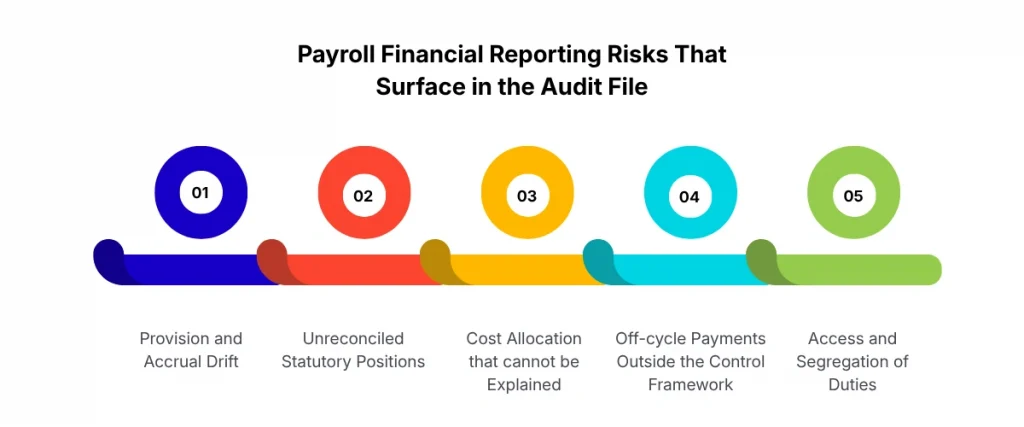
Provision and accrual drift. Gratuity, leave encashment and bonus provisions depend on assumptions about service periods, eligible salary components and headcount movement. Under Ind AS 19, employee benefit obligations must be measured and disclosed consistently. If the actuary’s data extract does not agree with the payroll master, the provision is defensible only until someone tests the sample.
Unreconciled statutory positions. In India, the sum of monthly TDS deductions in the payroll register should reconcile to Form 24Q and downstream to Form 16. Provident fund contributions in the register should reconcile to the EPFO electronic challan. Small, recurring differences from mid-month joiners, arrears or component reclassification accumulate quietly across a year.
Cost allocation that cannot be explained. Finance often needs payroll split by cost centre, project, legal entity and location. When the allocation logic lives outside the payroll system, restating a prior period becomes a reconstruction exercise.
Off-cycle payments outside the control framework. Full-and-final settlements, retention payouts and correction runs are the highest-risk transactions in payroll and frequently the least documented.
Access and segregation of duties. If the same person can change a bank account, approve a payment and edit the register, the control gap is real regardless of whether anything has gone wrong.
Each of these is a reporting risk before it is a compliance risk. That is why payroll financial reporting belongs inside the switching decision rather than downstream of it.
The CFO Case: Control, Provisioning Accuracy and Cost of Error
For a CFO, the argument for managed payroll centres on control quality and the arithmetic of correction. Headcount reduction is secondary.
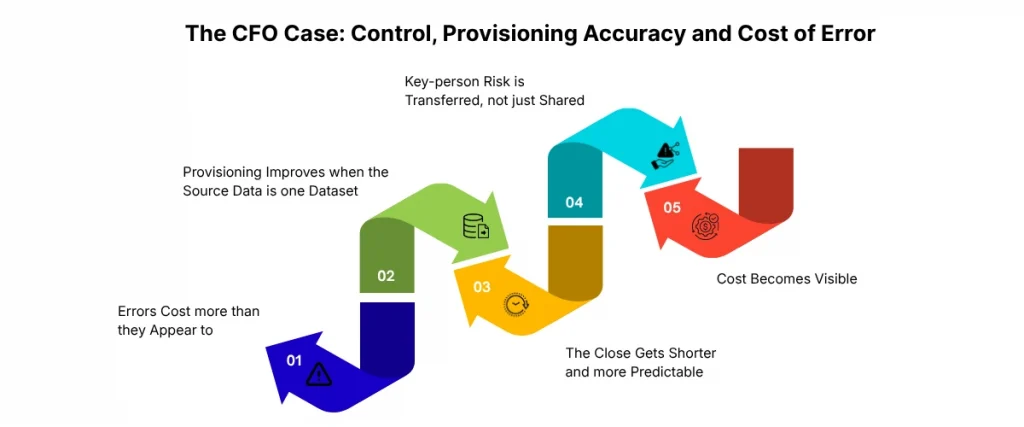
Errors cost more than they appear to. EY’s payroll research put the average cost of resolving a single payroll error at roughly $291 once investigation, correction and downstream rework are counted. At enterprise volumes, a low single-digit error rate is a recurring line item that never appears as one in the budget.
Provisioning improves when the source data is one dataset. When headcount, salary structure, service dates and component definitions come from a single Core HR record that feeds payroll directly, the actuarial and accrual inputs stop needing a manual bridge. That is where the accuracy gain sits.
The close gets shorter and more predictable. A provider that delivers a mapped GL journal, a variance analysis against the prior period and a reconciliation of statutory liabilities within an agreed number of working days changes the shape of the month-end. Finance moves from assembling payroll numbers to reviewing them.
Key-person risk is transferred, not just shared. Most in-house payroll functions have one person who understands the exception logic. A managed service replaces that dependency with a documented rule set and a contracted team.
Cost becomes visible. In-house payroll cost is usually understated, because the salaries of HR operations staff, finance reviewers, audit support time and correction effort are spread across departments. A managed contract prices the process. Whether it prices it lower depends on your volume and complexity. It does make the comparison possible.
The CHRO Case: Data Integrity, Employee Trust and HR Bandwidth
For a CHRO, the same switch is a different argument.
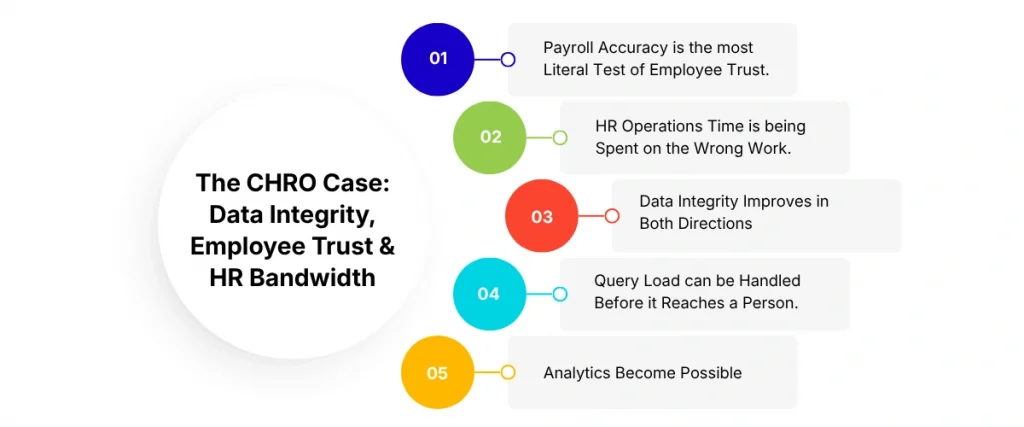
Payroll accuracy is the most literal test of employee trust. An employee will forgive a delayed appraisal letter. A wrong deduction, a missing arrear or a Form 16 that does not match the payslips triggers a different reaction, and it spreads fast. Payroll credibility is hard to rebuild once lost.
HR operations time is being spent on the wrong work. In most enterprises, the payroll fortnight consumes senior HR operations capacity that would otherwise go to workforce planning, onboarding quality or manager enablement. A managed model returns that capacity.
Data integrity improves in both directions. Managed payroll only works if the Core HR record is clean, which means the provider’s validation cycle becomes a standing audit of your master data. Errors that a payroll executive would have quietly absorbed now surface as exceptions.
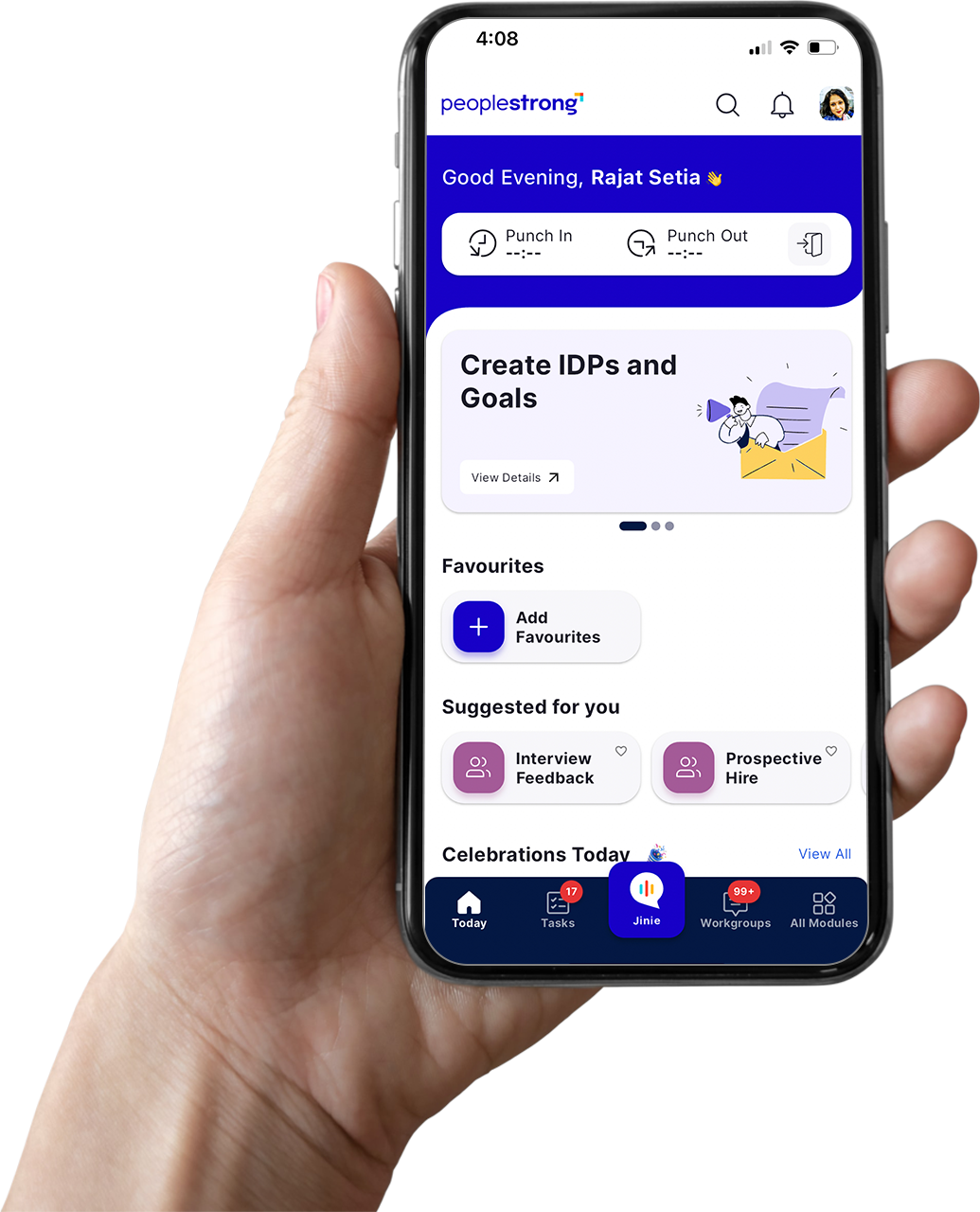
Query load can be handled before it reaches a person. Payslip, tax declaration and leave-balance questions make up a large share of HR ticket volume in the days after a payroll run. PeopleStrong’s embedded AI agent, Jinie, resolves these queries directly for employees, and customers using it report around a 60% reduction in HR administrative load. That is the concrete version of the bandwidth argument: fewer repeat questions reaching the HR operations inbox during the busiest week of the cycle.
Analytics become possible. Once payroll data sits alongside headcount, attrition and attendance in one HR analytics layer, cost-per-head, overtime concentration and location-level pay drift become reportable rather than requestable.
Multi-Country Payroll Compliance: India as the Lead Case, the Gulf as the Extension
India sets the bar. A single enterprise payroll may need to handle provident fund at establishment level, employees’ state insurance for eligible wage bands, professional tax that varies by state, labour welfare fund contributions, TDS under Section 192 with quarterly returns and annual certificates, gratuity under the Payment of Gratuity Act, and shops and establishments obligations that differ across locations. Each has its own calendar, its own filing format and its own correction mechanism.
The Gulf runs on a different logic. In the UAE, the Wage Protection System administered by the Ministry of Human Resources and Emiratisation requires salary payments to be transmitted through approved channels in a prescribed file format, and end-of-service gratuity accrues under the labour law rather than through a statutory fund. Saudi Arabia runs its own wage protection regime alongside GOSI contributions. Saudisation requirements make the nationality and category of each employee a payroll-adjacent data point rather than an HR footnote.
For a multi-entity group, the practical problem is consolidation. Finance needs one view of employment cost across entities and currencies, with local statutory treatment preserved underneath. A provider that runs each country on a separate engine can still produce that view, but the reconciliation effort falls back to you. A provider running a single payroll platform across these markets produces it as an output of the process.
PeopleStrong operates across 10 countries with India and Gulf statutory rules built into the payroll engine, which is the practical reason enterprises with an Indian base and a Dubai or Riyadh entity tend to shortlist it alongside global suites.
A Capability Checklist for Payroll Reporting, Analytics and Compliance
Use this as the evaluation script when providers present. The right-hand column is the reason each item belongs in a joint CFO and CHRO evaluation rather than a purely operational one.
| Capability | What to ask the provider to show | Why both finance and HR need it |
| General ledger interface | A live GL journal mapped to your chart of accounts, by entity and cost centre | Determines whether payroll posts to the books or gets re-keyed |
| Statutory reconciliation pack | Register-to-challan and register-to-return reconciliations for a real client month | This is the evidence an auditor will ask for first |
| Provision and accrual reporting | Gratuity, leave and bonus workings with the underlying employee-level data | Directly affects reported liabilities and disclosure |
| Retro and arrear handling | How a backdated increment across two financial years is computed and reported | The most common source of unexplained variance |
| Off-cycle and settlement control | Approval workflow and audit log for full-and-final and correction runs | Highest-risk transactions in the cycle |
| Core HR to payroll data flow | Whether payroll reads from your system of record or from an import file | Import files are where master data drift begins |
| Real-time reporting and analytics | Self-service dashboards for cost, overtime and headcount movement | Removes the request-and-wait cycle for routine numbers |
| Employee query handling | Volume, resolution path and what employees can answer themselves | Determines whether HR bandwidth is actually returned |
| Access control and segregation of duties | Role matrix and change logs | Fails an internal audit faster than a calculation error |
| Multi-country coverage | Statutory rule maintenance process for India, the UAE and Saudi Arabia | Regulatory change is continuous, not periodic |
Ask for a real reconciliation pack from an anonymised client, not a template. The difference between a provider that produces these outputs monthly and one that assembles them on request shows up in about ten minutes of looking at the document.
Managed Payroll Providers Compared on Reporting and Compliance Depth
The market splits into global payroll specialists, enterprise suites with payroll modules, and regional HCM platforms with managed payroll offerings. Each is described here on the same basis.
| Provider | Best for | Reporting and compliance strengths | Ideal company size |
| PeopleStrong Payroll Services | Enterprises in India and the Gulf moving off in-house payroll onto a unified HCM record | India statutory depth, UAE and Saudi coverage, payroll data feeding Core HR analytics on one platform | 1,000–10,000+ employees |
| ADP | Multinationals consolidating payroll across many countries | Broad country coverage, established managed-service delivery, GL interface files | Mid-market to large multinational |
| Ramco Global Payroll | Multi-country payroll across Asia-Pacific and the Middle East | Single payroll platform across a wide country set, statutory rule maintenance | Mid-market to large enterprise |
| SAP SuccessFactors Employee Central Payroll | Groups standardised on SAP for finance and core HR | Tight alignment with SAP financial structures and reporting | Large and very large enterprise |
| Workday Payroll | Organisations already running Workday as the HR system of record | Unified reporting within Workday, local payroll delivered via connectors in many markets | Large and very large enterprise |
| ZingHR | Indian enterprises wanting HCM and payroll from one regional vendor | India statutory processing, workforce-heavy deployments | Mid-market to large enterprise |
| greytHR | Smaller organisations in India and parts of the Gulf | Payroll and statutory compliance features aimed at leaner teams | Small to mid-sized businesses |
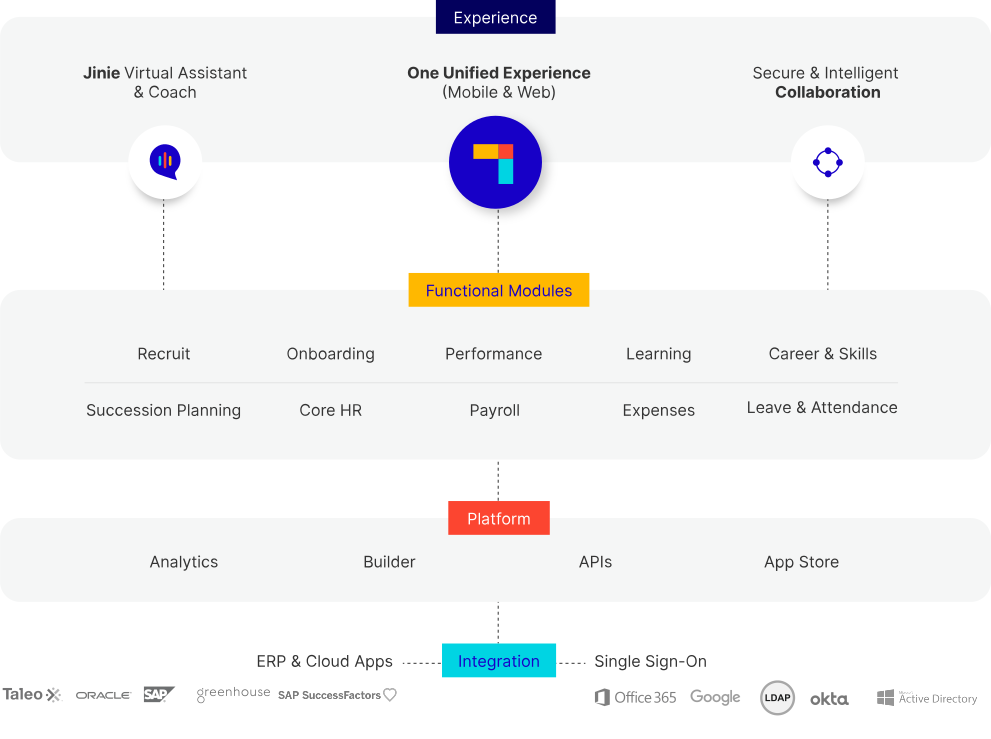
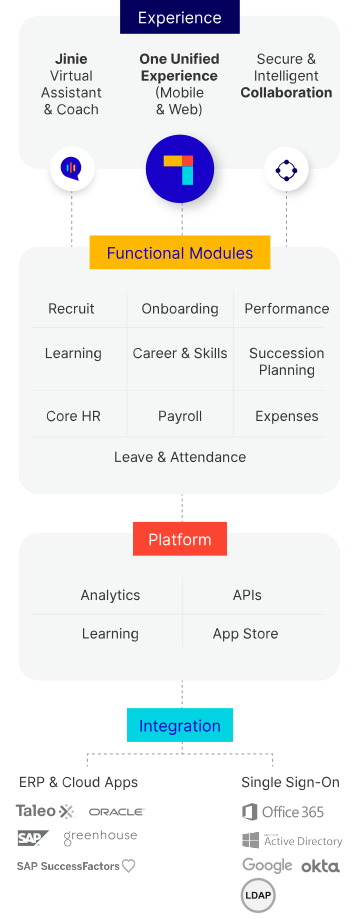
PeopleStrong Payroll Services runs payroll on the same platform that holds your Core HR record, leave and attendance data, and compensation structures, which removes the import layer between HR data and payroll calculation. Statutory handling covers Indian requirements including provident fund, employees’ state insurance, professional tax, TDS workflows and gratuity, alongside UAE and Saudi requirements. Reporting includes GL-ready journals, statutory reconciliations and workforce cost analytics available to HR and finance from the same dataset. Ideal for: enterprises of 1,000 to 10,000+ employees in India and the Gulf that have outgrown an in-house team and want payroll, compliance workflows and HR analytics under one system of record.
ADP provides managed payroll and payroll outsourcing across a large number of countries, with established service delivery teams and standard interfaces into financial systems. Ideal for: multinationals seeking a single payroll partner across a wide geographic footprint.
Ramco Global Payroll offers payroll across Asia-Pacific and the Middle East on a unified platform, with statutory rule maintenance handled centrally. Ideal for: enterprises whose country mix sits largely within Asia and the Gulf.
SAP SuccessFactors Employee Central Payroll delivers payroll aligned to SAP’s core HR and financial data structures, with country-specific versions. Ideal for: groups whose finance function already runs on SAP and wants payroll inside the same reporting architecture.
Workday Payroll provides native payroll in a defined set of countries and connects to local payroll providers elsewhere, with reporting consolidated in Workday. Ideal for: organisations that have standardised globally on Workday as their HR system of record.
ZingHR offers HCM with payroll for Indian enterprises, including deployments with large frontline and shopfloor populations. Ideal for: India-centric enterprises wanting a regional vendor across HR and payroll.
greytHR focuses on payroll and statutory compliance for smaller organisations in India and select Gulf markets. Ideal for: small and mid-sized businesses with straightforward structures.
Sequencing a Switch Without Disrupting the Financial Close
Transition risk in a payroll switch concentrates in two places: opening balances and the first close.
Pick the cutover date from the tax calendar, not the project plan. In India, a 1 April cutover aligns with the financial year and avoids splitting Form 16 across two systems. A mid-year move is possible, but it requires the provider to carry forward year-to-date taxable income, exemptions already claimed and perquisite values with full accuracy.
Freeze and reconcile master data before migration. Every employee record, bank detail, salary structure, loan balance, leave balance and statutory identifier should be reconciled against the current payroll register and signed off by HR operations. Migration exposes historical data problems. That is a benefit, provided you budget time for it.
Run parallel for at least two cycles. Both systems process the same month independently, and the outputs are compared employee by employee, not in aggregate. Aggregate matching hides offsetting errors. Agree in advance what variance is acceptable and what forces a third parallel run.
Test the close, not just the payslip. Before go-live, finance should post a dry-run GL journal from the new provider’s output into a test ledger. Most integration problems appear at this step rather than in the payroll calculation.
Define the exception path. Decide who can authorise an off-cycle payment, in what timeframe, and what documentation accompanies it. This is the control that gets improvised if nobody writes it down.
Communicate to employees before the first new payslip. Payslip format changes cause query spikes even when every number is correct. A short note explaining what will look different removes most of that volume.
What to Watch For in the First Two Quarters After Go-Live
Treat the first six months as a monitored period with named measures, reviewed jointly by finance and HR.
Error and correction rate. Track corrections per thousand payslips and their root cause. A rate that falls month on month is normal. A flat rate points to a data source problem rather than a processing one.
Reconciliation turnaround. Measure the working days from payroll close to a delivered, reviewed GL journal and statutory reconciliation. This should stabilise by the third cycle.
First statutory filing cycle. The quarterly TDS return, the first WPS submissions for Gulf entities and the first provident fund challans after cutover deserve line-by-line review rather than sampling.
Query volume and resolution. Watch both the number of payroll queries and where they resolve. Rising self-service resolution alongside falling escalations means the model is working.
Limitations to Plan Around, and How to Mitigate Them
No platform fits every requirement, and a payroll switch is the wrong moment to discover the edges. Reviewers of PeopleStrong on G2 and Capterra highlight the breadth of what the platform covers on one system and its leave and attendance handling. Some also flag slower load times at peak, occasional session timeouts, and limits on deeply custom report and workflow configuration compared with lighter mid-market tools.
The practical mitigation for a payroll switch is to specify your non-standard reports and approval workflows during scoping rather than after go-live, and to agree which will be delivered as standard outputs and which need configuration. Raise the same question with every provider you shortlist. The answer tells you more than a feature list will.
Where PeopleStrong Fits for Enterprises Graduating from In-House Payroll
PeopleStrong sits between two other approaches. Mid-market HR tools are built for leaner structures, lighter configuration needs and simpler entity maps. Global suites are built for functional breadth across a wide country footprint, with the implementation scale and partner involvement that comes with it. PeopleStrong offers enterprise depth with regional statutory specificity.
Founded in 2005 and backed by Goldman Sachs Alternatives, PeopleStrong currently serves 500+ enterprise customers, manages payroll and HR data for over 2 million employees, and operates across 10 countries. Gartner named PeopleStrong a Customers’ Choice in its Voice of the Customer report for Cloud HCM Suites for enterprises with over 1,000 employees in 2022, 2023, 2024 and 2025, which reflects sustained customer feedback rather than a single year’s analyst view.
For a payroll switching decision, three things tend to matter to the CFO and CHRO evaluating together. Payroll runs on the same platform as Core HR, leave and attendance, so the master data feeding calculation is the record of truth rather than a copy of it. Statutory handling for India and the Gulf is built into the product rather than bolted on for a region, and the platform is built to support compliance with local requirements as those rules change. Payroll data also lands in the same HR analytics layer as headcount, attrition and attendance, so employment cost reporting stops being a monthly extract exercise. Jinie handles the routine payslip and tax-declaration questions that follow each run, with customers reporting roughly a 60% reduction in HR administrative load.
Signing Off Together: The Decision CFOs and CHROs Should Make Jointly
Payroll fails as a joint decision when it is made as a single-function one. Set the criteria inside one function and something predictable gets left out: processing cost without the HR data flow behind it, or employee experience without the reporting trail that surfaces at audit.
The workable version is a shared evaluation with two sets of acceptance criteria. Finance signs off on the GL interface, the reconciliation pack, the provisioning workings and the control framework. HR signs off on master data flow, employee experience, query handling and the analytics that come back. Both agree the parallel-run threshold, the cutover date and the measures reviewed for the first two quarters. Neither signs alone.
If you’re building that joint business case, the most useful next step is to see the reporting outputs against your own structure rather than a demonstration dataset. Schedule a demo with PeopleStrong and ask the team to walk through a payroll-to-GL journal, a statutory reconciliation and a workforce cost dashboard for an entity that looks like yours.
FAQs
How long does it take to move from an in-house payroll team to a managed payroll service?
For a single-country enterprise, plan for eight to twelve weeks from contract to first live cycle, with most of that time spent on master data reconciliation and parallel runs rather than configuration. Multi-entity or multi-country moves usually run longer, because each entity brings its own statutory identifiers and opening balances. Aligning the cutover to the start of a financial year removes the additional work of carrying year-to-date tax positions across systems.
Does managed payroll mean we lose visibility into our own payroll data?
No, provided the contract specifies data access. In a platform-based managed service, your HR and finance teams retain access to registers, dashboards and reports directly, and the provider handles processing and statutory workflows rather than owning the data. Confirm during evaluation that you can pull employee-level detail and cost reports yourself, without raising a service request each time.
Who is responsible if a statutory filing is late or incorrect?
Responsibility is split and should be documented in the service agreement. The provider is typically accountable for preparing accurate returns and remittance files on the agreed timeline. The employer remains the legal filer and is responsible for authorisation and funding. Ask specifically how errors are identified, who bears correction costs, and what the escalation timeline looks like before signing.
Can managed payroll support both Indian and Gulf entities on one contract?
Yes, and this is one of the more common reasons enterprises switch. Test whether the provider runs those countries on a single platform or on separate engines, because that determines whether consolidated cost reporting is an automatic output or a manual reconciliation your finance team performs each month. Ask to see a consolidated multi-entity cost report during the evaluation.
What payroll reports should finance receive every month without asking?
At minimum: a GL-ready journal mapped to your chart of accounts by entity and cost centre, a month-on-month variance analysis with explanations for material movements, a statutory liability schedule showing amounts computed against amounts remitted, and provisioning workings for gratuity and leave. If any of these arrive only on request, the close will stay dependent on individual availability rather than on process.