











 About Us
 Brand
Brand
 Career
 Contact Us



 +91-7314623098



The only India-based company on Everest’s agentic AI list.
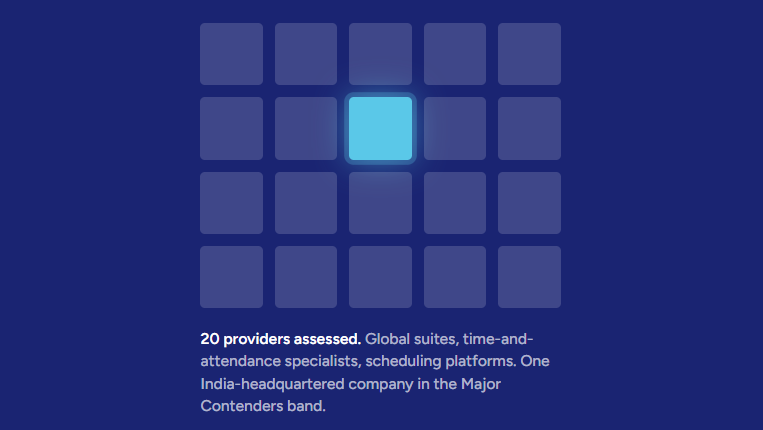
Everest Group has just published its map of who actually ships agentic AI in HR. Twenty-five vendors worldwide: the enterprise suites everyone knows, the horizontal AI platforms with the big funding rounds, the HR specialists who have been at this for years. PeopleStrong is on that map, and we are the only company on it that was built and is headquartered in India.
I’m not going to be coy about this. We didn’t get there by accident, and we didn’t get there late. Two years ago we made a call that most of the market is only making now: Stop treating AI like an afterthought or a plugin for HR and put it in the core. That decision is now a production platform, with 45 AI capabilities live, eleven named agents, and seven out of ten employee questions resolved without anyone in HR touching them. Everest looked at the entire market and put us on the same page as vendors many times our size. We belong there, and this post is about why.
What the report actually is
Quick primer if you don’t live in analyst land. Everest Group advises large enterprises on what to buy. Innovation Watch is their series on categories that are still forming. This edition looked at agentic AI in HR, scored 25 vendors on market presence, breadth and depth of use cases, agentic maturity, pricing, partnerships and investment, and then plotted everyone on a map with four zones: Luminaries, Influencers, Fast Followers and Seekers.
We’re a Fast Follower. For a category this young, that’s a good place to be standing, and it’s a testament of our AI-first philosophy across the employee lifecycle.
Four things in the abstract I’d underline, with my read on each:
- Agentic AI is moving from task automation to governed workflow orchestration.The chatbot era is over. The vendors who last will be the ones who can let an agent act and still show its work afterwards. That governance layer is the thing we built first, because payroll doesn’t forgive mistakes.
- The money is going where workflows repeat and ROI is easy to prove.Service delivery, recruitment and onboarding, which is exactly where our first agents went live, and that was no coincidence.
- Employee and manager facing work is where the value is right now.Everest cites 60 to 70 percent autonomous resolution in early deployments. We’re at the top of that range across our customer base, and the number is below.
- Buyers want AI-native pricing and a predictable bill.Hybrid pricing, meaning subscription plus bundled consumption, is winning. That’s how Jinie MAAX is priced. I’ll do a separate post on why per-conversation billing catch a few people completely off guard.
The full report has provider profiles and the chart itself. It’s available through Everest Group, and worth reading if you’re buying in this space.
Why the India part matters
Around two million people open a PeopleStrong app to get paid, book leave or check a goal. A lot of them are on a factory floor, in a branch, or on a pharma sales route, on a phone, in Hindi. Most HR technology was designed for someone at a desk with a laptop in one time zone. We grew up with the other workforce, with payroll at the centre because pay is the reason people open the app in the first place.
So when I say the only India-based company on the list, I don’t mean it as a regional footnote. The problems that matter to the fastest-growing workforces on the planet are being solved by a platform that was built for them. I’d put our understanding of a 40,000-person manufacturing payroll, or a field force spread across 400 towns, against anyone on that map.
The recognition is for work that’s already live. The interesting part is how much the analysts haven’t seen yet.
What’s live today
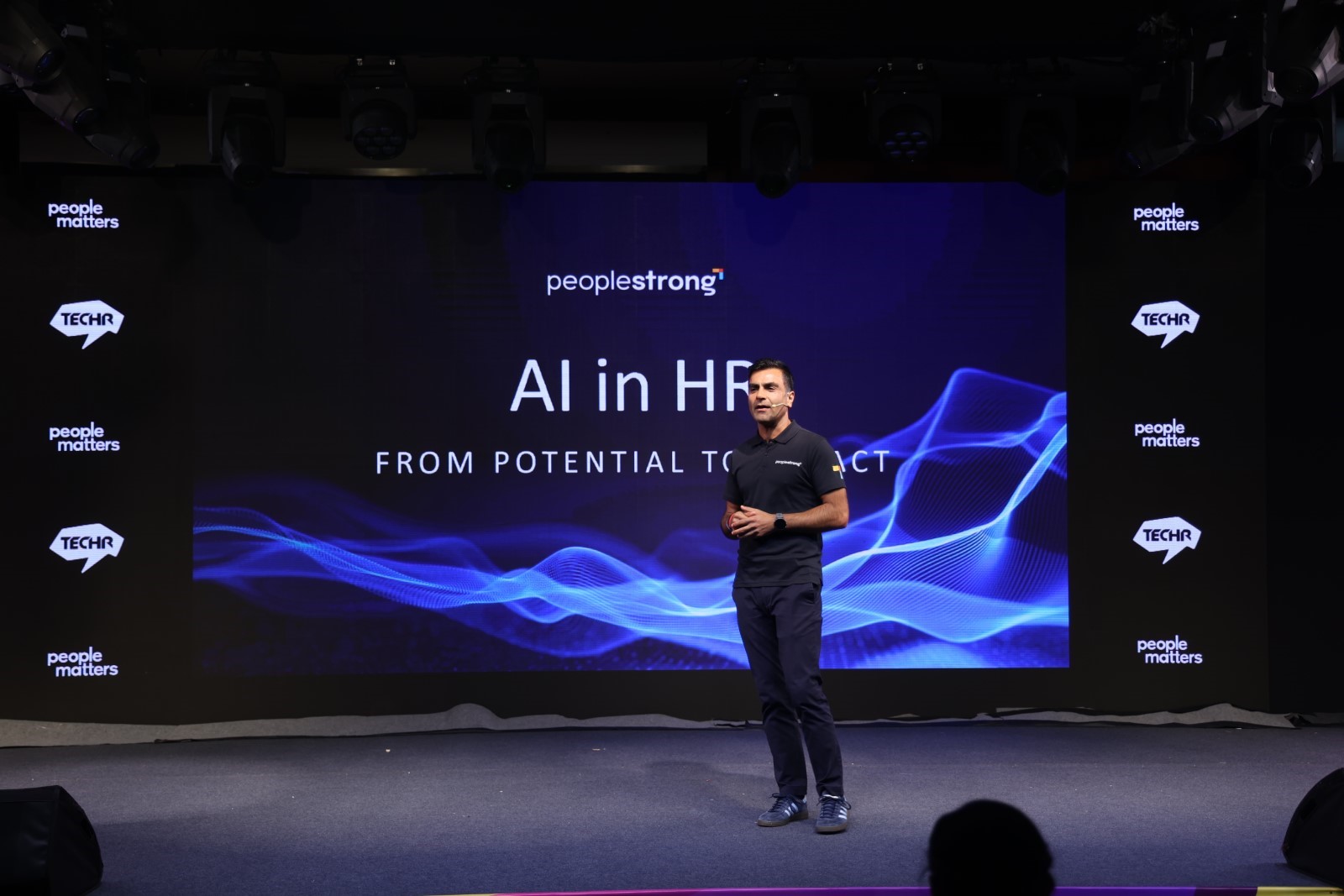
At TechHR last month I showed one slide. A normal enterprise HR estate: twelve systems, 78 point-to-point integrations to keep alive, and still no single record of the employee. Every AI pilot in the industry has been landing on that floor, which is why fewer than half the HR leaders in our own AI Ground Report are happy with their AI results. Our answer was to rebuild the floor. We call it MAAX, and this is what’s in production right now.
| 45 AI capabilities live in production across the customer base in FY26 | 30 of those act on their own; the other 15 generate content for a human to act on |
| 11 named agents across the lifecycle, from hiring through payroll to performance | 70% of employee questions across our customers resolved by the Employee Agent, no ticket raised |
MAAX, the platform under the agents
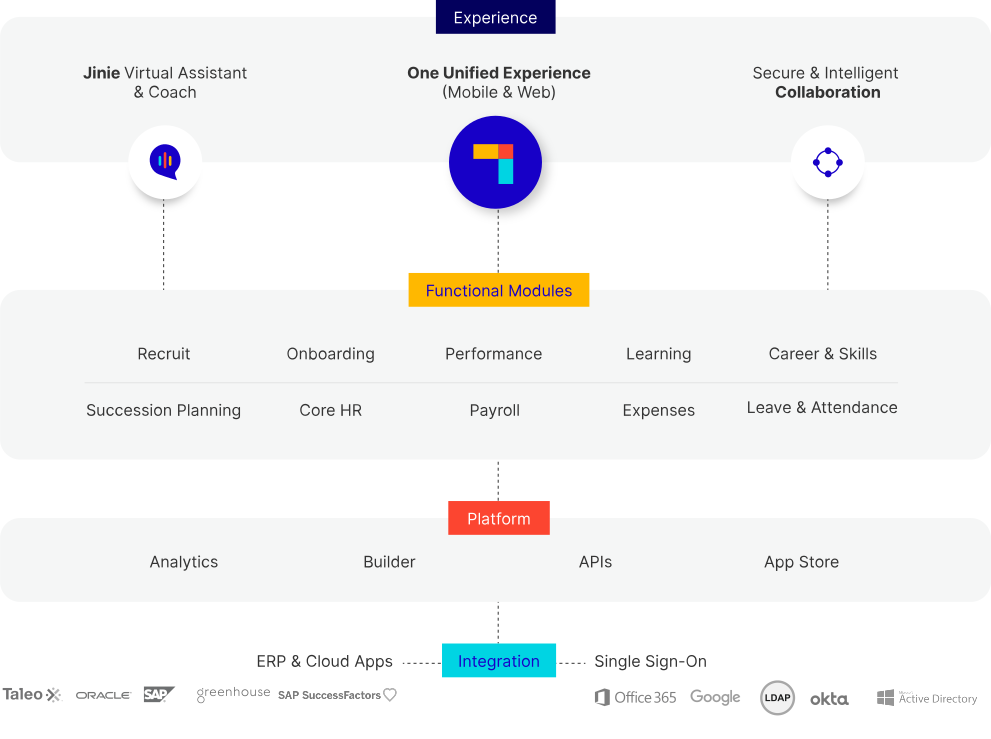
AI-first at the top, where people meet the agents. AI-ready underneath, where the record lives and the rules get enforced. Each layer depends on the one below it.
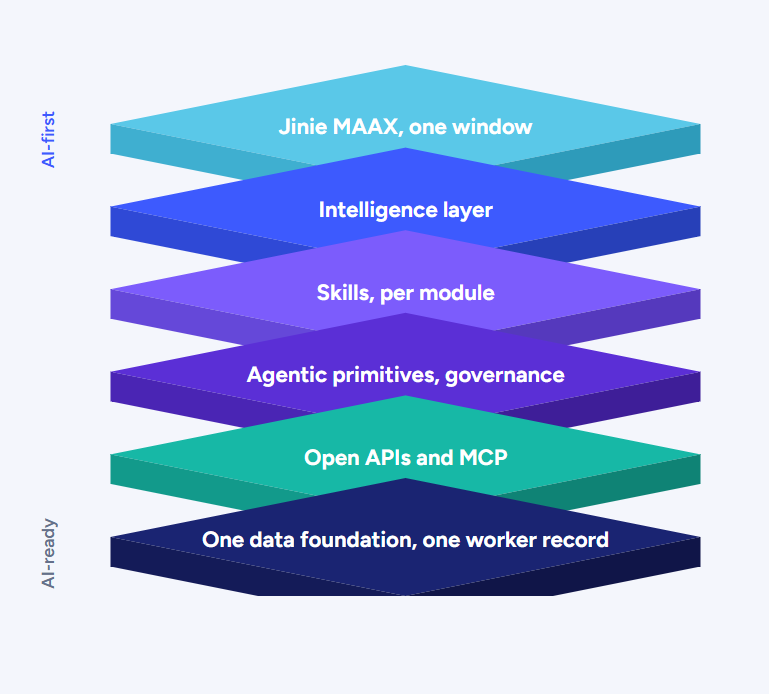
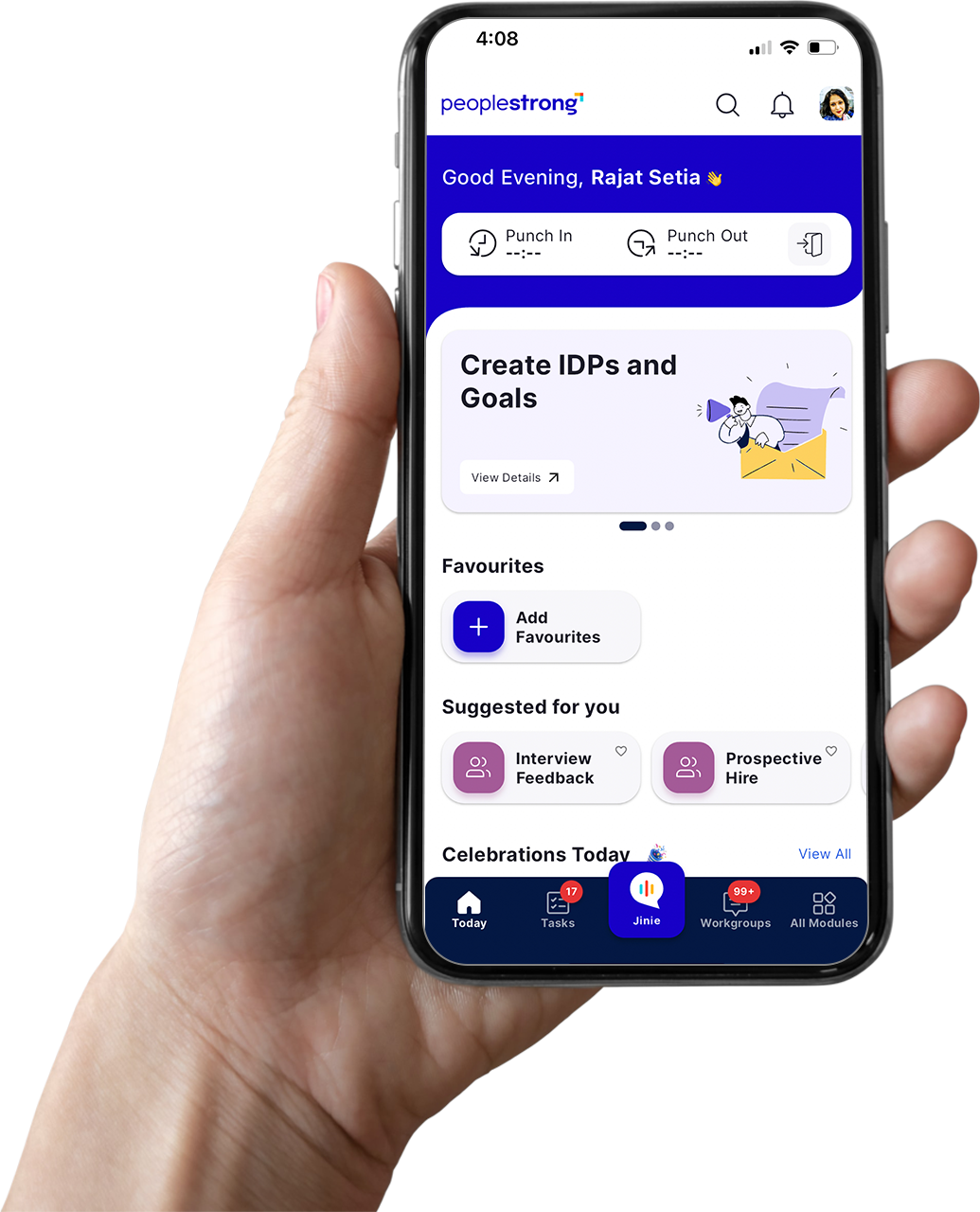
One window: Jinie MAAX puts chat, voice and live widgets in one place, so nobody learns a different agent for every task.
One intelligence layer: Reasoning plus context memory, every step traced and evaluated, so an answer can be explained after the fact.
Skills, built per module: Each module, recruit through payroll, exposes what it can do as skills the agents call directly.
Every agent governed: Gateway, access control, rate limits and an audit trail under every agent, ours or a partner’s.
Open APIs and MCP: Third-party agents and tools come in under the same rules, so customers can bring their own.
One data foundation: One worker record, observable down to the data layer. Everything above depends on this.
Jinie MAAX, one window in front of eleven agents
Organised by where someone is in their life with the company, because that’s how the questions arrive. All of them sit behind one window, inside the apps people already use, policy-checked and logged by default.
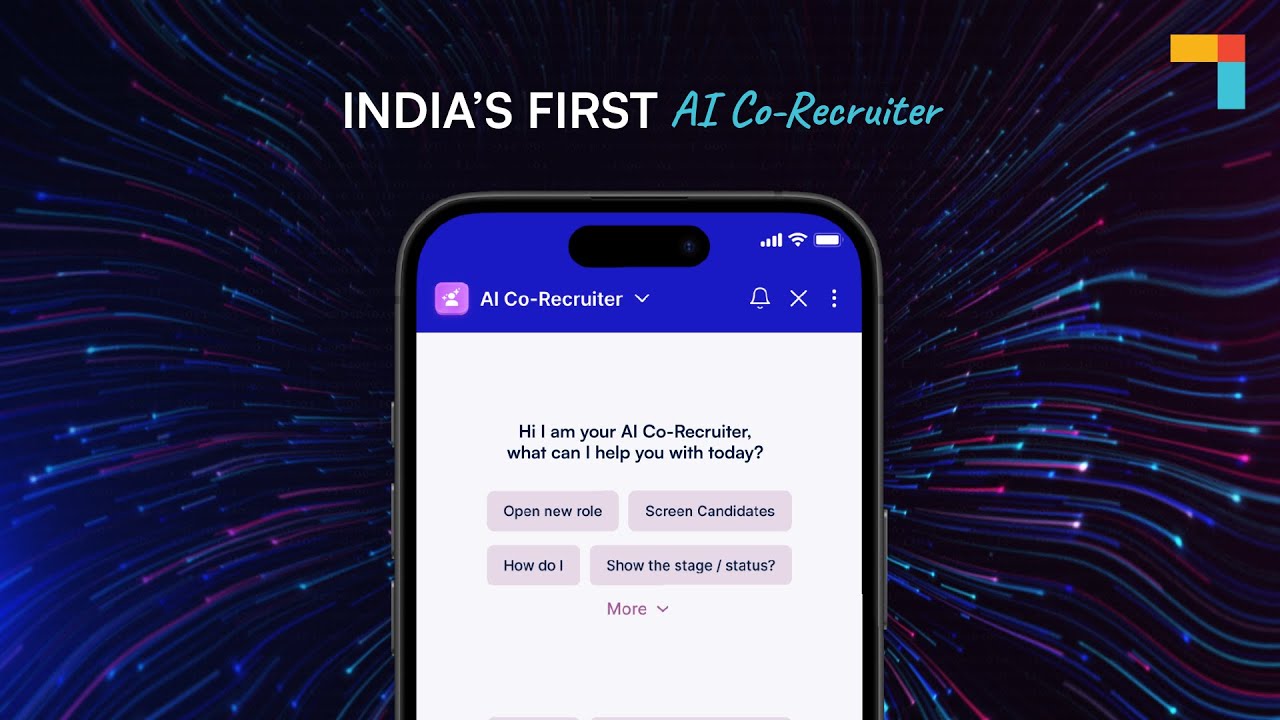
| Attract and hire Co-Recruiter: hiring workflows Candidate Engagement: outreach and nurture | Onboard Onboarding Agent: new-hire setup |
| Pay and comply Payslip Agent: salary and deductions Payroll Specialist: run and validate | Manage and serve WFM Agent: workforce management Employee Agent: helpdesk and queries |
| Develop and grow Talent Enrichment: skills and profiles Talent Partner: goals and reviews | Running across every stage: the Reporting Agent, for analytics and insight end to end. |
Counts and agent names as of FY26 production releases. Some capabilities depend on which modules a customer runs.
The 70 percent is the number I keep coming back to. Seven out of ten employee questions never reach a human in HR anymore, because the agent can read the record and act on it. That’s resolution, not deflection, and it only works because the agent sits on the same data the payroll and leave engines run on. You can’t fake that with a chatbot and a search index.
What’s next
What the analysts saw is the platform as it stood earlier this year. The pipeline behind it is the busiest I’ve seen in my time here. Without stealing the launches’ thunder, here’s the shape of it:
- Agents that act before you ask. The agent detects the issue, decides, and resolves it, with the human approvals already wired in.
- Workflows you describe in a sentence. Say what you want and the approval flow or policy rule gets built, instead of you configuring forms and fields.
- Agents handing work to each other, and to a customer’s own agents, under one set of rules.
- Reach beyond HR. MCP and connector support so Jinie can act on the systems around HR, not just inside it.
- Deeper agentic layers across recruitment, onboarding, talent and workforce planning over the next few releases.

Xponential, 18 November, Mumbai
Our product conclave, where we’ll show where all of this goes. If you’re a customer, expect a call from us.
Thank you
None of this is one person’s work. Product, design and engineering shipped 45 capabilities in a year while keeping the platform that pays two million people every month boringly reliable, which is the highest compliment I know for a payroll system. Our customers took a bet on agents inside HR before it was fashionable and told us, sometimes loudly, what to fix. And our investors backed a company from India to compete in a category the world’s largest software vendors are spending billions on. Thank you, all of you.
If you want to see any of this on your own data instead of a slide, my team will set it up. If you’re a CHRO or CIO working out what agentic HR should look like, read the report, then come talk to us. We’re the only name on that list that already built for a workforce like yours.
Everest Group, Innovation Watch: Agentic AI Applications in HR, August 2026 (EGR-2026-24-CA-8373). Full report available to Everest Group members or for purchase at everestgrp.com. The list of 25 assessed providers and the assessment axes are as published in the complimentary abstract.
PeopleStrong, The AI Ground Report 2026, survey of 500+ HR leaders across 16 industries in India.
PeopleStrong production metrics are FY26 figures across the customer base and are not drawn from the Everest Group report.