











 About Us
 Brand
Brand
 Career
 Contact Us



 +91-7314623098







Every business thrives on the people behind it, and that’s why Human Resources (HR) is often considered the backbone of an organization. But with the rise of AI and automation, many are left wondering: Is HR still relevant in today’s tech-driven world?
Well, the numbers don’t lie. The HR industry is projected to grow at a 12.7% CAGR by 2030, and 41% of companies are planning to increase their HR tech budgets. Clearly, HR is not just surviving; it’s evolving.
Read on as we explore the seven key HR processes that are crucial for building stronger, more resilient businesses in the modern world.
What Is an HR Process?
An HR process refers to the activity carried out by an HR manager to manage their employees. Its primary aim is to streamline employee management throughout their time with the company while helping organizations attract, develop, and retain a skilled workforce.
Some common HR processes include recruitment, onboarding, training and development, payroll management, compliance, etc.
Suppose company ABC is hiring a new employee. To do so, its HR manager will implement a set of HR processes, such as:
- Recruitment: They will post the job description and interview interested candidates.
- Onboarding: After selecting the best fit for the role, they will follow the steps to officially onboard the employee into the company.
- Performance management: HR will conduct regular evaluations and performance appraisals to ensure performance efficiency.
- Training and development: While they are with the company, the employee will receive regular training and development to improve their skills.
- Offboarding: When the employee decides to leave, the company will conduct the offboarding process to ensure a smooth exit.
Why Do HR Processes Matter?
HR processes do more than just manage the employee lifecycle. Below are some key reasons why these processes matter:
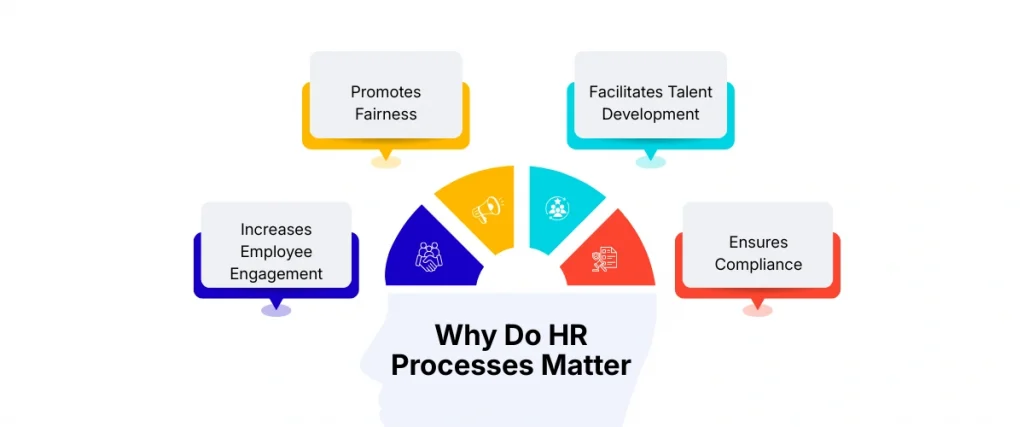
Promotes Fairness
Workplace bias is one of the most common organizational challenges. According to data, as many as 60% of employees experience this issue at some point in their careers! This creates internal tension between coworkers, adversely affecting collaboration and work efficiency.
However, HR processes prevent this. By establishing clear, standard procedures regarding crucial decisions like hiring and appraisal, they eliminate the chances of bias and promote fairness across the organization.
Increases Employee Engagement
Effective execution of certain HR processes is proven to increase employee satisfaction and engagement. For instance, 92% of employees believe regular workplace training helps them stay more actively engaged in their roles. This highlights the importance of ongoing development and support in keeping employees motivated.
Ensures Compliance
For companies, ensuring compliance with local, national, and international laws is a major challenge. However, well-structured HR processes reduce some of the burden by helping organizations comply with labor laws, reducing the risk of penalties and legal issues.
Facilitates Talent Development
HR processes like training and development and performance management are designed to help employees improve their skills. This helps organizations cultivate a workforce equipped with the knowledge and skills to respond to a business’s changing needs.
7 Vital HR Processes for Every Business
HR processes are the foundation for building a strong, efficient, and engaged workforce. Whether you’re running a startup or managing a large enterprise, certain core HR processes are essential for creating a smooth and productive work environment.
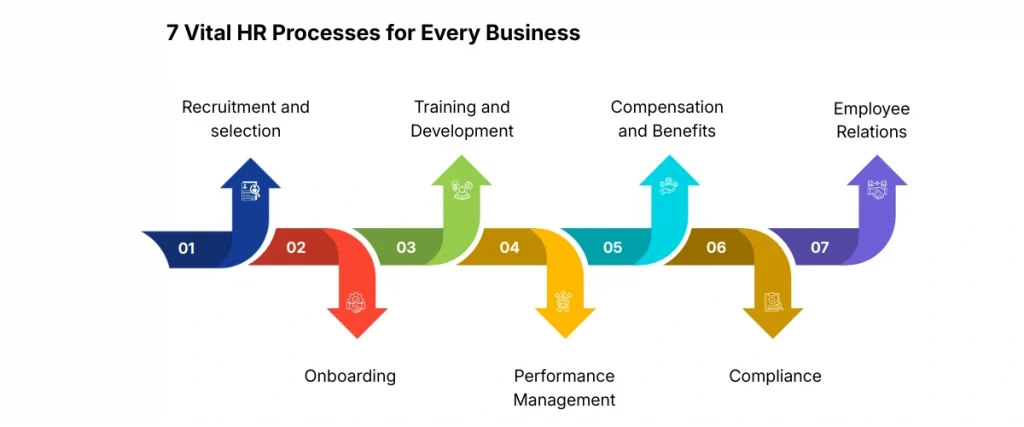
Here are the seven key HR processes that every business should prioritize:
1. Recruitment
Every employee’s journey with an organization starts with recruitment. It refers to the process of attracting the right candidates for a job and hiring the most qualified one. There are a series of steps involved in this process.
Recruitment begins with a vacancy, i.e., when there’s a position to be filled within the organization. To hire the most qualified person for the role, the HR manager creates a job description that highlights the responsibilities, benefits, etc., and posts it on job boards, professional networking platforms, and social media.
Then, they screen the resumes of the candidates who applied for the job and call the most fitting ones for an interview. After a thorough evaluation of every applicant’s skills, knowledge, past experience, etc., the HR manager extends a formal job offer to the one who best aligns with the role and its requirements.

Suggested Read:
Recruitment Process Guide For HRs to Hire Top Talent
2. Onboarding
After recruitment comes onboarding; this process aims to integrate the new hire into the company. But that’s not all—successful onboarding also lays the foundation of long-term association by helping the new employee feel welcomed and supported from the beginning.
So, as soon as the applicant accepts the offer letter, the HR team prepares a formal orientation session. In this session, the new hire is introduced to the company’s mission, ethics, values, work environment, policies, etc. Some organizations also host a small meet-and-greet wherein the existing employees of the company introduce themselves to their new team members.
Once done, the new hire is given the necessary training, tools, and resources to start the job. Apart from this, onboarding also involves the completion of certain administrative tasks like benefits enrollment and payroll setup. To ease this workload and improve onboarding efficiency, many companies hire a virtual assistant to handle document coordination, benefits setup, and employee data entry during this stage.
3. Training and Development
Training and development is an ongoing HR process. It ensures every employee receives the opportunity to enhance their skills and knowledge. This helps them advance in their careers and allows organizations to build a skilled workforce.
Although training and development may take place at any time in the organization, it is conducted shortly after onboarding for new recruits. It mainly includes providing job-specific learning opportunities to the new hires to build their hard and soft skills for the role. These opportunities are provided either through workshops, online courses, or field training sessions.
4. Performance Management
Performance management is a systematic approach to assessing the efficiency of employees. This process has two main goals.
First, to recognize and reward high performers to boost their job satisfaction. Second, to identify struggling employees and provide training to improve their skills and efficiency.
Performance management generally occurs once or twice a year in an organization. To conduct this process, managers set performance goals at the beginning of the year and provide regular feedback to employees. Toward the end of the year, they formally assess every employee’s performance, highlighting achievements and areas for improvement.
Suggested Read:
9 Best Performance Management Software In India
5. Compensation and Benefits
For as long as an employee stays associated with an organization, they receive regular compensation and benefits for the work they do. The point of conducting this process is to retain top talent by boosting employee satisfaction. After all, 62% of employees choose employers based on this very criteria.
Traditionally, compensation and benefits include both—financial and non-financial rewards. But for the most part, they involve determining competitive salaries, offering performance-based bonuses, and in certain cases, sharing profits. As for the non-financial rewards, they include providing healthcare packages, retirement plans, paid time-offs, employee discounts, etc.
6. Compliance
Compliance is a key HR process that refers to the need for organizations to abide by the laws, regulations, and internal policies governing business and employee relations. This not only helps them prevent legal risk but also enforces equality, non-discrimination, and fairness in the workplace.
Compliance mainly involves ensuring a company’s compliance with labor laws, tax regulations, workplace safety guidelines, etc. It also includes keeping up with any new law amendments and making relevant adjustments to an organization’s internal policies.
7. Employee Relations
Lastly, employee relations is an HR process that aims to foster healthy relationships between employees and the organization. This way, it promotes employee satisfaction, engagement, and motivation.
Managers build strong employee relations in several ways, such as resolving conflicts, addressing grievances, maintaining open communication, and using regular feedback mechanisms.
Tips to Streamline Your HR Processes
Managing every HR process effectively can be a challenge, especially for large organizations. So, here are a few tips that can help you streamline them:
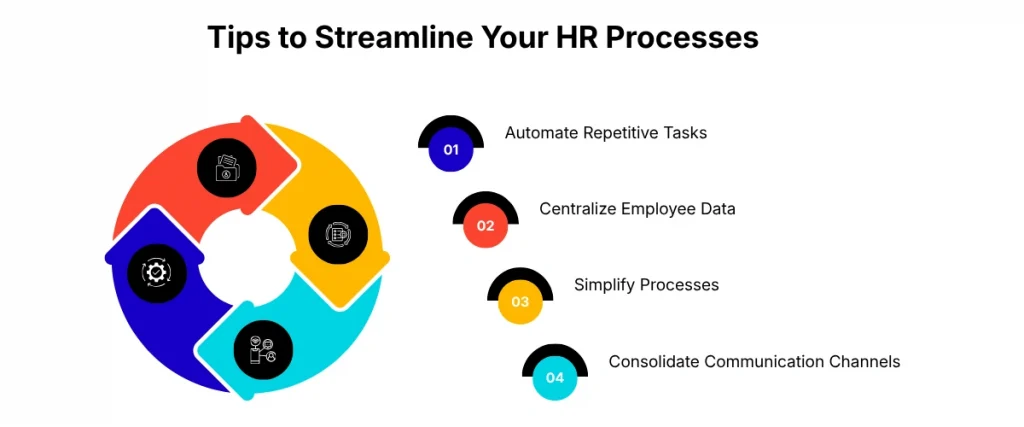
Automate Repetitive Tasks
Every HR process consists of a lot of repetitive work. For instance, data entry, payroll processing, leave tracking, etc.
Automating them will not only help you save time but also shift your attention toward more important, strategic elements. So, implement tools and software like HR Management Systems (HRMS), payroll software, employee self-service portals, etc., to automate these tasks.

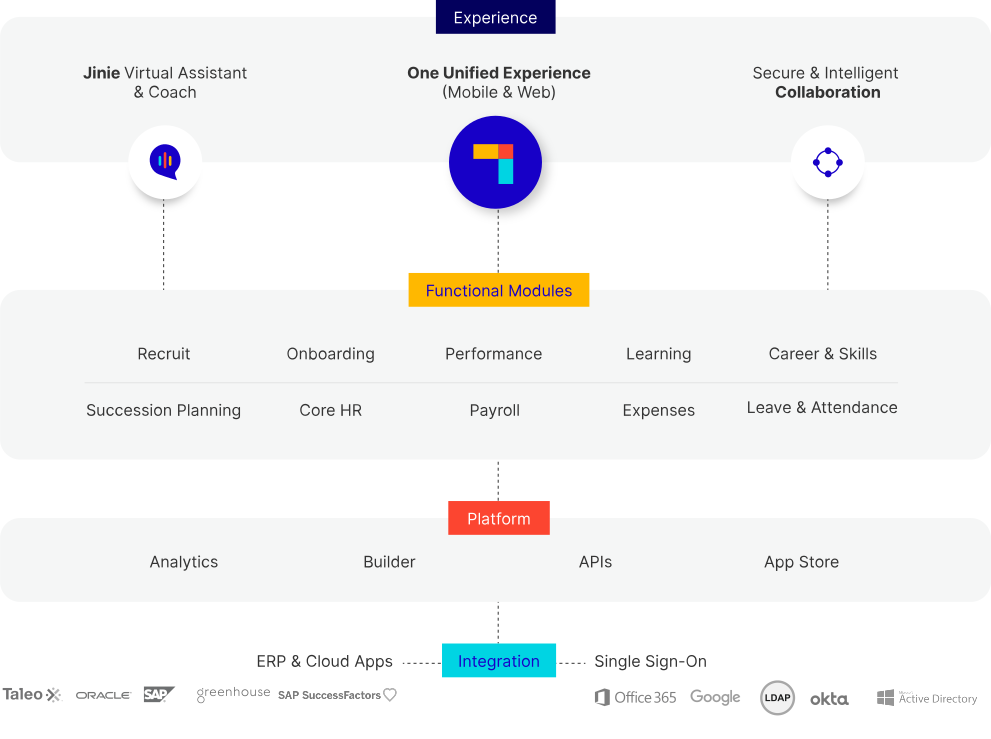
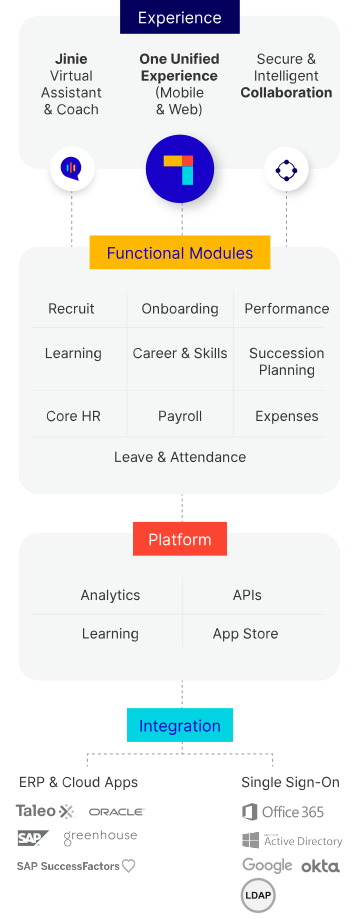
Pro Tip: Instead of implementing several tools, turn to PeopleStrong! A unified solution for all things HR, PeopleStrong’s versatile range of solutions can automate all core HR processes like recruitment, payroll, performance management, and more. Sign up to get started!
Centralize Employee Data
Effective execution of HR processes starts with impeccable centralization of employee data. If your employee records are scattered and stored in multiple locations, retrieving and implementing them for processes like onboarding, offboarding, etc., will become challenging. So, use a centralized cloud system to store and manage all your employee data.
Simplify Processes
As an organization, one of the best things you can do to streamline your HR processes is to create ones that are easy to adopt and replicate.
For instance, build standard workflows, use digital tools to collect documents, or simply eliminate unnecessary steps from a process. This way, you will be able to execute every process much more quickly and effectively.
Consolidate Communication Channels
It’s essential that teams communicate clearly and effectively with each other to execute any HR process efficiently.
The best way to do that is by consolidating your communication channels. Use a single platform or messaging app to streamline HR-related policies, discussions, updates, etc. This will save time and keep all your important information in one place.
Final Words
Implementing effective HR processes is crucial for building a strong workforce and maintaining smooth business operations. From recruitment and onboarding to performance management and compliance, these processes shape employee experiences and drive organizational success.
However, managing them manually can be tedious, time-consuming, and prone to errors. Without the right tools, businesses may struggle with inefficiencies, delayed decision-making, and disengaged employees.
That’s where PeopleStrong comes in. As an all-in-one SaaS platform, PeopleStrong offers a comprehensive suite of Core HR solutions that streamline and automate your entire HR ecosystem. With our tools, you can simplify your processes, reduce manual work, and focus on what truly matters: empowering your people and driving business growth.
In this regard, you can check out PeopleStrong. An all-inclusive SaaS platform, PeopleStrong’s Core HR solutions can help you build and automate all of your HR processes with ease and efficiency.
Get in touch today for more info!

FAQs
How do HR processes work?
HR processes are structured workflows that support employees throughout their lifecycle within an organisation. These processes typically include recruitment, onboarding, attendance, payroll, performance management, learning, and offboarding. Together, they help organisations manage workforce operations consistently while ensuring employees have the support, information, and resources needed at every stage of their journey.
What is mapping HR processes?
HR process mapping is the practice of documenting and visualising the steps involved in a specific HR workflow. It helps organisations understand how tasks move between employees, managers, HR teams, and systems. By creating a clear process view, businesses can identify inefficiencies, improve accountability, and streamline activities such as recruitment, onboarding, leave management, and performance reviews.
What is end-to-end HR process management?
End-to-end HR process management involves managing employee-related activities as connected workflows rather than separate functions. It ensures information flows seamlessly across recruitment, onboarding, payroll, performance, learning, and workforce management processes. This approach helps improve data accuracy, reduce administrative effort, and deliver a more consistent employee experience throughout the employee lifecycle.
What are the benefits of automating HR processes?
HR process automation helps organisations improve efficiency by reducing manual effort and standardising routine activities such as approvals, payroll processing, attendance tracking, and document management. According to Gartner, automation remains a key priority for HR leaders seeking to improve productivity and employee experience. Automated workflows also help improve accuracy, strengthen compliance, and allow HR teams to focus on higher-value workforce initiatives.
How do well-managed HR processes impact company culture?
Well-managed HR processes help create transparency, consistency, and fairness across the employee experience. Clear processes for hiring, performance management, career development, and employee communication help employees understand expectations and workplace policies. This can strengthen trust, improve engagement, and contribute to a more positive and inclusive organisational culture.
What documentation is required for HR processes?
HR processes typically require documentation related to employment, payroll, compliance, performance management, workplace policies, and employee development. Common examples include employment contracts, policy acknowledgements, payroll records, performance reviews, training records, and separation documentation. Maintaining accurate records supports compliance requirements and helps organisations manage workforce information more effectively.
What role does technology play in HR processes?
Technology helps organisations manage HR processes more efficiently by centralising employee information and automating routine tasks. Modern HR platforms support activities such as payroll, attendance, leave management, performance tracking, learning, and workforce analytics. By providing a single source of workforce data, technology helps improve operational efficiency, reporting, and decision-making across the organisation.
What is the role of HR?
The role of HR is to support organisational objectives through effective workforce management, employee development, and workplace governance. HR teams oversee activities such as recruitment, onboarding, learning, performance management, employee engagement, and compliance. In addition, HR plays an increasingly strategic role in workforce planning, organisational change, and the creation of positive employee experiences.
What are the challenges involved in effective recruitment?
Organisations often face challenges such as talent shortages, changing candidate expectations, competition for specialised skills, and lengthy hiring processes. Attracting and engaging qualified candidates requires a combination of strong employer branding, effective workforce planning, and efficient recruitment practices. Addressing these challenges can help organisations improve hiring outcomes and reduce time-to-fill positions.
Can HR processes improve employee retention?
Yes, effective HR processes can contribute significantly to employee retention. Structured onboarding, regular feedback, learning opportunities, career development pathways, and performance management programmes help create positive employee experiences. Research from Gallup has consistently shown that engaged employees are more likely to remain with their organisations. Well-designed HR processes support employee growth while strengthening workforce stability and retention.
Can HR processes help with productivity?
Yes, effective HR processes improve productivity by reducing operational delays and enhancing the employee experience. Streamlined workflows, clear communication, structured training, and efficient workforce management practices enable employees to focus on their core responsibilities. When employees have access to the right tools, information, and support, organisations are better positioned to achieve stronger workforce performance and business outcomes.