
Maintaining professionalism in the workplace is essential for a positive and productive environment. Employees are expected to interact respectfully with their managers and colleagues. However, there are situations where unprofessional behavior disrupts the workplace, affecting team morale and overall efficiency.
In such cases, a warning letter to an employee for unprofessional behavior with a manager becomes a necessary step. This letter serves as a formal notice, clearly outlining the misconduct and setting expectations for improvement. It also helps document the issue in case further action is required.
In this blog, we will cover everything you need to know about issuing a warning letter for workplace misconduct. From recognizing when it's necessary to understand its key components and structuring it correctly, we’ll walk through the entire process—including a sample letter for reference
When Should You Issue a Warning Letter for Misbehavior?
Every workplace operates on mutual respect and professionalism. When an employee disregards these expectations, especially towards a manager, it creates a disruptive work environment. Before issuing a warning letter to an employee for misbehavior, assessing the situation and determining if formal action is necessary is important.
Defining Unprofessional Behavior in the Workplace
Unprofessional behavior can range from minor infractions to serious violations. It includes actions that show a lack of respect, responsibility, or adherence to workplace ethics. In the case of manager-employee interactions, this could mean ignoring instructions, using disrespectful language, or showing outright defiance.
Common Examples of Misconduct Towards Managers
Here are some instances where a warning letter might be required:
- Disrespectful communication: Raising one’s voice, using rude language, or speaking in a dismissive manner.
- Insubordination: Refusing to follow reasonable instructions or challenging a manager’s authority in an unprofessional way.
- Offensive language or gestures: Making inappropriate remarks, using abusive words, or displaying rude body language.
- Disruptive behavior: Engaging in arguments, spreading negativity, or undermining a manager’s decisions.
Company Policies on Workplace Professionalism and Respect
Most organizations have clear guidelines on professional conduct outlined in their employee handbook or code of conduct. Employees are expected to adhere to these policies, and violations can lead to disciplinary action. A warning letter to an employee for unprofessional behavior with a manager should reference these policies to reinforce company expectations.
The Role of Verbal Warnings Before Issuing a Formal Letter
A written warning should not always be the first step. In many cases, a verbal warning or discussion can help address the issue without escalating the matter. However, if the behavior continues or is severe, a written warning becomes necessary to document the misconduct formally.
Key Components of a Warning Letter for Unprofessional Behavior
A well-structured warning letter to an employee for unprofessional behavior with a manager should be clear, professional, and aligned with company policies. It serves as an official record of misconduct while outlining the necessary corrective actions. Below are the essential components to include:
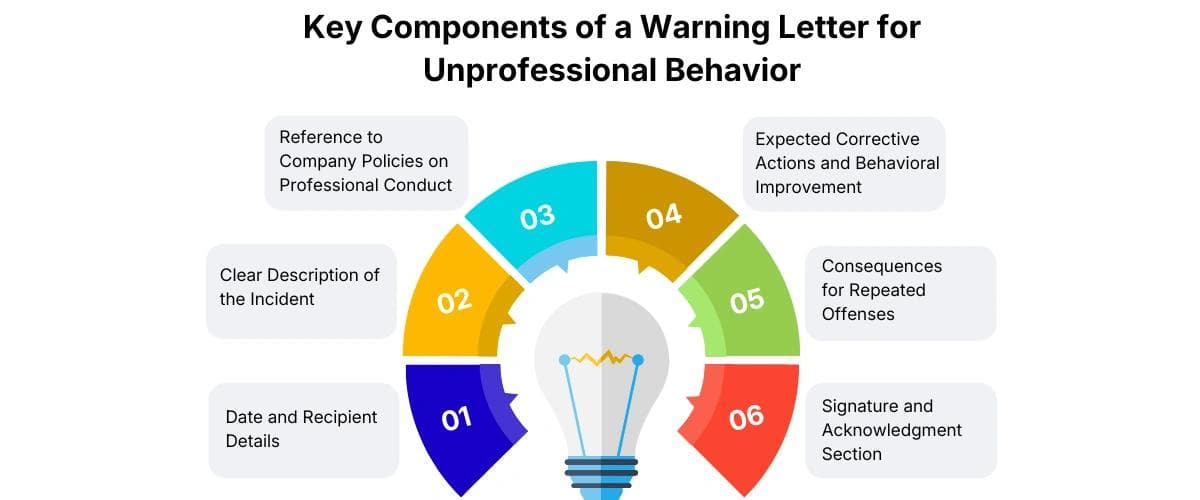
1. Date and Recipient Details
Every warning letter should begin with the date of issuance and the recipient’s details, including their full name, job title, and department. This ensures clarity and proper documentation.
2. Clear Description of the Incident
The letter should provide a factual and objective account of the unprofessional behavior. It should specify:
- The date and time of the incident
- The location where it took place
- A brief but precise description of what occurred
Avoid vague language or personal opinions. The goal is to document the facts in a way that is easy to understand.
3. Reference to Company Policies on Professional Conduct
Citing company policies strengthens the letter by providing a clear basis for why the behavior is unacceptable. Reference specific sections from the employee handbook, code of conduct, or company guidelines on workplace behavior.
4. Expected Corrective Actions and Behavioral Improvement
The letter should outline what is expected from the employee moving forward. This can include:
- A requirement to maintain respectful communication
- Following workplace protocols
- Attending a meeting with HR to discuss improvements
Clearly state that continued violations may result in further disciplinary action.
5. Consequences for Repeated Offenses
If the employee does not correct their behavior, there should be clear consequences. This could range from suspension to termination, depending on company policy and the severity of the issue.
6. Signature and Acknowledgment Section
The letter should include a space for the employee’s signature, confirming they have read and understood the warning. If they refuse to sign, HR should note the refusal in their records and have a witness present when delivering the letter.
How to Write a Warning Letter to an Employee for Unprofessional Behavior with Manager
Drafting a warning letter to an employee for unprofessional behavior with a manager requires a structured approach. The goal is to communicate the issue clearly while maintaining professionalism and fairness.
Here’s how to write an effective warning letter:
1. Structure the Letter Professionally
A formal warning letter should follow a clear structure:
- Subject Line: Briefly state the purpose (e.g., Warning Letter for Unprofessional Behavior).
- Introduction: Mention why the letter is being issued.
- Incident Details: Clearly describe the incident, including date, time, and location.
- Company Policies: Reference the workplace rules that were violated.
- Expected Behavior Change: Explain the corrective actions the employee needs to take.
- Consequences: Outline the next steps if the behavior continues.
- Signature Section: Include a place for the employee to acknowledge receipt.
2. Ensure Clarity and Fairness in the Message
Use straightforward language to explain the misconduct and expected improvements. Avoid emotional or accusatory tones—stick to facts. Instead of writing "You were rude to your manager in front of the team," say "On [date], during a team meeting, you raised your voice and used disrespectful language when speaking to [manager’s name]."
3. Address the Issue Without Personal Bias
The letter should focus on workplace behavior rather than personal judgments. Keep the tone neutral and professional. Instead of saying "You have a bad attitude," state "Your communication in the meeting did not align with company standards for professionalism."
4. Common Mistakes to Avoid When Drafting the Warning Letter
- Being too vague: Clearly state what happened rather than using general phrases like “unacceptable behavior.”
- Using harsh or emotional language: The letter should remain professional, not personal.
- Failing to mention company policies: Always reference specific rules or guidelines.
- Not including consequences: The employee should understand the seriousness of the issue and what could happen if it continues.
A well-written warning letter sets clear expectations while giving the employee a fair chance to correct their behavior.
Sample Warning Letters to Employees for Misbehavior
Below are seven warning letter samples addressing various unprofessional behavior toward a manager. Each template maintains a professional tone while clearly outlining expectations for corrective action.
Sample 1: General Warning for Unprofessional Behavior
Subject: Formal Warning for Unprofessional Conduct |
Sample 2: Warning for Insubordination
Subject: Warning Letter for Failure to Follow Instructions |
Sample 3: Warning for Using Offensive Language
Subject: Formal Warning for Use of Inappropriate Language |
Sample 4: Warning for Disruptive Behavior
Subject: Written Warning for Disruptive Workplace Conduct |
Sample 5: Final Warning Before Disciplinary Action
Subject: Final Warning for Unprofessional Conduct |
Sample 6: Warning for Disrespectful Attitude Towards Manager
Subject: Formal Warning for Disrespectful Behavior |
Sample 7: Warning for Aggressive Behavior Towards Manager
Subject: Official Warning for Workplace Misconduct |
Conclusion
A warning letter to an employee for unprofessional behavior with a manager helps maintain workplace professionalism by addressing misconduct clearly and formally. It sets expectations for improvement while reinforcing company policies.
The goal is not just discipline but encouraging corrective action. Fair and consistent handling of such cases fosters a respectful and productive work environment.
Frequently Asked Questions
What is a warning letter for unprofessional behaviour?
It's a formal written notice from an employer flagging that an employee's conduct has fallen short of what's expected at work, whether that's a single serious incident or a pattern that's built up over time. Think disrespectful remarks, poor handling of disagreements, inappropriate language, or behaviour that's making it harder for the rest of the team to function properly. Once it's in writing, it becomes part of the official disciplinary record and gives the employee a clear signal of exactly what needs to change.
How do you write a warning letter to an employee for unprofessional behaviour?
Start by being specific. Vague complaints don't hold up well, either to the employee or later on if the matter escalates, so name the incident, the date, and anyone who witnessed it. Tie it back to the relevant policy or code of conduct, mention if there have already been informal chats about it, and be clear about what needs to change and by when. A warning letter to an employee for unprofessional behaviour tends to land better when it reads as firm but fair rather than accusatory, and it should always leave room for the employee to explain their side before anything further happens.
Can an employee be terminated for repeated unprofessional behaviour?
In most cases, yes, though it's rarely a single-step process. Organisations typically work through a few stages of formal warnings first, each one spelling out what's expected and what happens if things don't improve, before termination becomes a real option. That said, if the behaviour is serious enough on its own, some companies will move more quickly rather than working through the full sequence.
How can employees respond to a warning letter for misbehaviour?
Read it properly before reacting. If there's context the employer might not have, that's worth putting in writing calmly rather than firing back an emotional reply. A response that acknowledges the concern and sets out what the employee plans to do differently tends to go down far better than one that pushes back defensively. It's also entirely reasonable to ask for a follow-up conversation with a manager or HR if something in the letter needs clarifying.
Does a warning letter become part of an employee's personnel record?
Generally, yes. Most organisations keep it on file, and it can come up again if there's a later performance review or a further disciplinary matter. How long it stays on record varies from one company to the next, but it's common for it to remain there for as long as the person is employed, particularly once it's been referenced in something else.
What are the consequences of ignoring a warning letter for unprofessional behaviour?
If the behaviour doesn't shift within the timeframe given, things usually move up a level: a final written warning, a formal improvement plan, being passed over for a bonus or promotion, and in persistent cases, dismissal. None of this tends to happen overnight, but ignoring the letter altogether rarely works out well.
Can a warning letter be issued for disrespectful behaviour towards a manager?
Yes, and it's one of the more common reasons one gets issued. Where the conduct undermines a manager's authority or disrupts how the team operates, a warning letter to an employee for unprofessional behaviour with the manager involved is entirely appropriate. As with any warning, it needs to be grounded in specific, documented incidents rather than a general sense that things "aren't going well," and it should follow the same fair process the company applies to other conduct issues.
Is a warning letter for unprofessional behaviour legally valid in India?
A warning letter for unprofessional behaviour is completely valid, as long as you follow a proper procedure when issuing it. Indian laws do require a formal warning letter to have proof of response (in writing) before any further disciplinary action is taken so that the accused employee(s) receive due process.
In addition, one must be very careful to mention that the warning letter must be issued according to the organisation's own set of rules. In case you wish to write an objection letter to someone for their unprofessional conduct, then stick to the facts.
What is the purpose of a warning letter for workplace misconduct?
Fundamentally, it is a matter of clarity rather than retribution. The warning letter makes the issue official and communicates clearly to the employee what is expected in future. Moreover, it serves as a chance for the employee to make amends for whatever mistake he has committed. It also serves the organisation because there is a document in place which cannot be disputed at a later point in time.
Related Templates
- 6 Sample Warning Letters to Employee for Misconduct
- 5 Sample Employee Warning Letter for Absenteeism Templates
- 6 Sample Warning Letter to Employee for Late Coming
- 6 Sample Employee Termination Letter Templates for Different Scenarios